


Circle vs Disco for AI Education
.png)
TL;DR
For AI fluency programs that need to deliver measurable workforce transformation, Disco is the superior choice. While Circle offers basic learning features bolted onto a community platform, Disco was built from the ground up as an AI-native learning platform that delivers curriculum generation, sophisticated cohort management, and enterprise-grade analytics that Circle simply cannot match. Circle may work for casual discussion groups, but organizations serious about developing AI skills at scale—with completion rates, compliance tracking, and ROI metrics to prove it—consistently choose Disco. The difference isn't marginal; it's foundational.
Why platform choice matters for AI fluency training
AI fluency is no longer optional. A 2025 survey found that 77% of businesses consider reskilling their workforce to work alongside AI their top strategy. Yet only 11% of organizations feel "extremely confident" in their skills-building readiness. This gap between AI adoption and workforce preparedness creates massive opportunity for training businesses and L&D teams who can deliver programs that actually work.
The platform you choose shapes every aspect of the learning experience. Community platforms like Circle excel at fostering discussion and connection. Learning platforms like Disco are engineered to move people from confused to competent through structured progression, adaptive content, and measurable outcomes.
For AI fluency specifically, the stakes are high. Employees need more than awareness. They need practical skills in prompt engineering, understanding AI outputs, recognizing bias, and knowing when human judgment should override algorithmic recommendations. The platform must support this transformation, not just host content.
Disco vs Circle Features
AI features compared: where the differences show
Both platforms market AI capabilities, but they solve different problems.
Circle's AI Co-Pilot lives in the post editor and helps community managers write faster. It generates discussion prompts, rewrites content in different tones, summarizes announcements, and translates for international members. The tool only sees content you actively provide in the editor, which maintains privacy but limits its ability to learn from your broader curriculum.

Circle's AI Agents, available on Enterprise and Plus plans, act as always-on extensions of community managers. They answer member questions using content you train them with, handle basic support, and escalate complex issues to humans. This reduces the burden of repetitive questions in active communities.
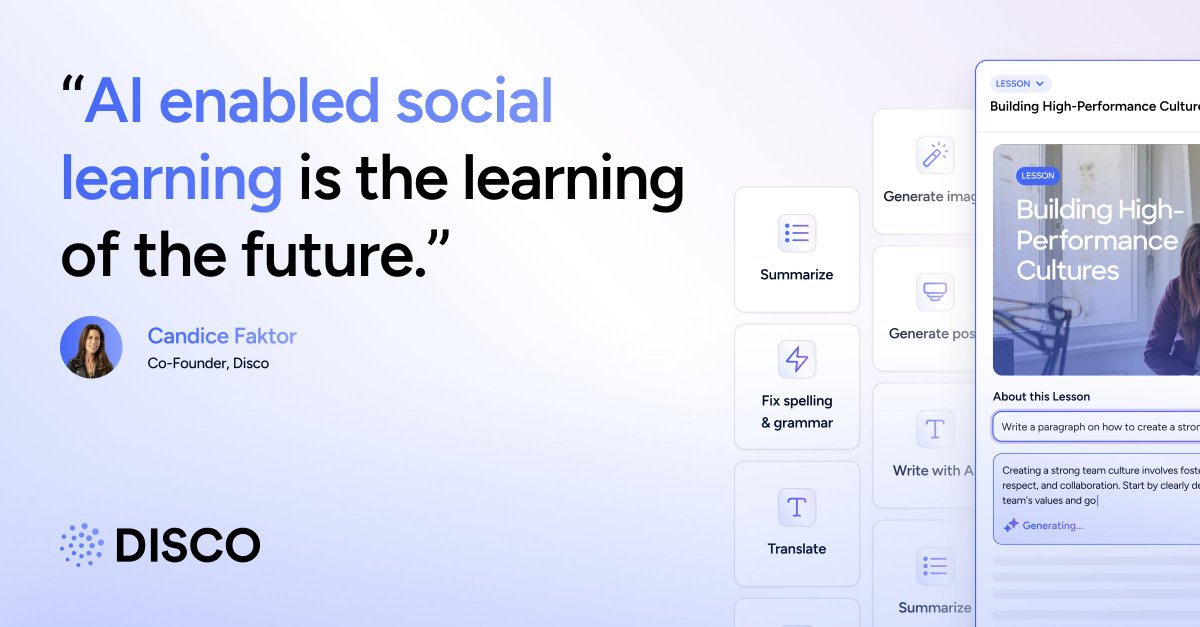
Disco's AI operates at the program level, not just the content level. The Learning Design Agent assists in creating lessons, quizzes, and assignments in minutes rather than weeks. The Operations Agent handles scheduling, reporting, and repetitive administrative tasks. The Learning Coach provides personalized support to each learner, adapting recommendations based on their progress and engagement patterns.
For AI fluency programs specifically, Disco's approach means you can upload existing AI training materials, company policies, and tool documentation, then generate a structured curriculum that adapts to different roles and skill levels. Circle requires more manual curriculum construction, though its community features support peer learning once content exists.
Cohort-based learning: the critical difference
AI fluency programs work best when delivered in cohorts. Learners benefit from peer accountability, shared practice sessions, and the social pressure to complete alongside colleagues. Both platforms support some form of cohort delivery, but the depth differs significantly.
Circle handles cohorts through scheduled courses and time-gated content. You can release lessons on a schedule and organize members into groups. However, the platform lacks native tools for cloning courses across cohorts, managing version control when content updates, or automatically transitioning alumni to ongoing community spaces.
Disco was designed around cohort-based learning from the start. Training businesses running repeated programs benefit from course cloning with version control, the ability to update content across all versions or target individual cohorts, and automated workflows for alumni transitions. These features matter when you scale from dozens to thousands of learners.
One training business described their experience switching to Disco: "We replaced four tools, saved thousands annually, and delivered a modern, AI-powered learning experience to 3,000+ staff without increasing headcount."
Enterprise requirements: authentication, compliance, analytics
Organizations running AI fluency training for employees or customers face requirements that consumer-focused platforms struggle to meet.
Authentication presents a common challenge. Enterprise customers often need magic link authentication with no usernames or passwords, SSO integration with existing identity providers, or SAML 2.0 support for compliance. One customer chose Disco specifically because their data privacy contracts with sports teams and leagues required magic link authentication, which their previous platform could not provide.
Compliance tracking matters for organizations using AI fluency training as part of professional development requirements. Disco provides audit-ready attendance and progress reporting, group-level analytics showing engagement and completion across cohorts, and individual member tracking for certification maintenance. Circle's analytics focus more on community engagement than learning outcomes.

For organizations in regulated industries or those serving enterprise clients, these capabilities often determine whether a platform is viable regardless of other features.
When Disco makes sense
Disco fits AI fluency programs where transformation is the goal, not just engagement. Training businesses selling AI fluency programs to corporate clients need the professional polish, enterprise features, and completion tracking that justify premium pricing. Disco delivers these while reducing the operational work of running cohorts.
Customer education teams building AI fluency programs for product adoption benefit from Disco's integration capabilities and white-label options. The platform can deliver branded learning experiences that drive product stickiness while reducing support burden as customers become more capable AI users.
Internal L&D teams responsible for upskilling employees across the organization need the scale and analytics that Disco provides. When HR or leadership asks for completion rates, skills assessments, and ROI metrics, Disco surfaces this data without manual tracking.
The platform particularly shines when you have existing content to transform. Upload your AI policy documents, tool training videos, and best practices PDFs, then let Disco's AI generate a structured curriculum. This accelerates time-to-launch significantly compared to building courses from scratch on any platform.
Making the decision
The choice between Circle and Disco comes down to what success looks like for your AI fluency initiative.
If success means vibrant ongoing discussion, peer learning, and community connection around AI topics, Circle provides excellent tools for fostering that engagement. The platform has matured significantly and serves 17,000+ communities effectively.
If success means measurable skill development, completion rates that exceed industry averages, and programs that scale without adding headcount, Disco's AI-native architecture delivers those outcomes. Organizations report 4x higher engagement than traditional LMS platforms and completion rates that dramatically outperform the 15% industry average.
For AI fluency specifically, consider how your learners will apply their new capabilities. If they need practical skills with measurable proficiency to transform how they work, structured learning with adaptive AI support creates better outcomes. If they need ongoing access to a community of practitioners who share insights and stay current on rapidly evolving tools, community-first design serves that need.
Most organizations running serious AI fluency initiatives will benefit from Disco's learning architecture. The platform's ability to generate curriculum from existing materials, manage cohorts at scale, and track progress with enterprise-grade analytics addresses the specific challenges of workforce AI transformation.
Frequently asked questions
Can I migrate content from Circle to Disco?
Yes. Disco's implementation team assists with content migration, and the AI curriculum builder can transform existing materials into structured learning programs. Many customers consolidate multiple tools when moving to Disco.
How does Disco's AI curriculum generator actually work?
Upload your existing training materials—PDFs, videos, slide decks, or documentation—and Disco's AI analyzes the content to generate a complete curriculum with lessons, quizzes, and assignments. The system structures content around clear learning objectives and adapts difficulty based on learner progress. You maintain full editorial control to refine what the AI generates, but most customers report 70-80% time savings on course creation compared to building from scratch.
How long does it take to launch an AI fluency program on Disco?
Most organizations launch their first cohort within 2-4 weeks. Disco's implementation team provides onboarding support, the AI curriculum builder accelerates content creation, and the platform's templates for AI fluency programs give you a head start. If you're migrating from another platform, timeline depends on content volume, but Disco handles the technical heavy lifting.
What kind of analytics does Disco provide for enterprise reporting?
Disco delivers audit-ready analytics including individual learner progress tracking, cohort-level completion and engagement rates, time-to-completion metrics, skills assessment results, and exportable reports for compliance documentation. The dashboard shows real-time data across all cohorts, and you can drill down to individual learner activity when needed. This level of reporting is essential when leadership asks for ROI metrics or when maintaining professional development certifications.
Does Disco support white-label branding and custom domains?
Yes. Disco offers complete white-label customization including custom domains, branded login pages, personalized email templates, and custom color schemes that match your organization's identity. This is particularly valuable for training businesses selling AI fluency programs under their own brand or customer education teams delivering branded learning experiences.
Ready to see how Disco can accelerate your AI fluency programs? Start your free trial to experience the platform, or book a demo to discuss your specific requirements with the team.


