


Best alternatives to Teachable for businesses in 2026

TL;DR
Teachable works well for individual creators selling simple self-paced courses. But businesses running cohort programs, customer academies, or training organizations that need community features and AI automation consistently hit its ceiling. This guide covers the best alternatives and what to look for when choosing where to move.
Teachable gets a lot of businesses started. It's approachable, handles payments, and gets a first course live without much friction. But the limitations that don't matter at the beginning start to matter a lot as programs become more complex.
Transaction fees on lower-tier plans eat directly into revenue at scale. Customization is rigid, making it difficult to create a genuinely branded experience. Community features are limited and feel secondary to the course delivery architecture. And there's no native infrastructure for cohort-based programs where groups of learners need to move through content together with live sessions, peer accountability, and shared timelines.
When those gaps start affecting learner engagement, completion rates, or the business model itself, it's time to evaluate alternatives. Here's how the top options compare.
What to prioritize when evaluating alternatives
Social learning and native community. Platforms where community is central to the learning experience consistently outperform those where it's an add-on. Discussion, peer interaction, and live events should live inside the curriculum, not in a separate tab or a third-party tool.
Cohort-based learning infrastructure. Self-paced courses average 3 to 15% completion. Cohort programs achieve 85% or higher. The platform needs to support group timelines, live sessions, and the community dynamics that make cohorts work without requiring workarounds.
AI capabilities across the full program lifecycle. Basic AI for writing course outlines is table stakes. The platforms that move outcomes use AI for content generation, real-time learner support, operational automation, and engagement insights.
Pricing that scales with growth. Transaction fees that penalize revenue as enrollment grows are a structural problem. The right platform's pricing should align with your business model rather than work against it.
Best alternatives to Teachable for businesses in 2026
1. Disco
Disco is purpose-built for businesses that need more than a course hosting tool. It combines cohort-based learning, native community features, AI automation, and monetization in one platform, with no transaction fees.
The AI Canvas generates programs from existing knowledge in minutes. Ask AI provides learners with instant, curriculum-specific answers around the clock. Smart nudges and automated workflows handle the operational layer. Live events, discussion channels, and gamification keep cohorts engaged through to completion.
Fractional People, a leadership training company, used Disco to scale their cohort-based programs to 1,500+ members, growing their training business without fragmenting the learner experience across multiple tools. Read the Fractional People story.
Explore the full Disco AI suite, or see how it fits your use case in minutes.
2. Thinkific
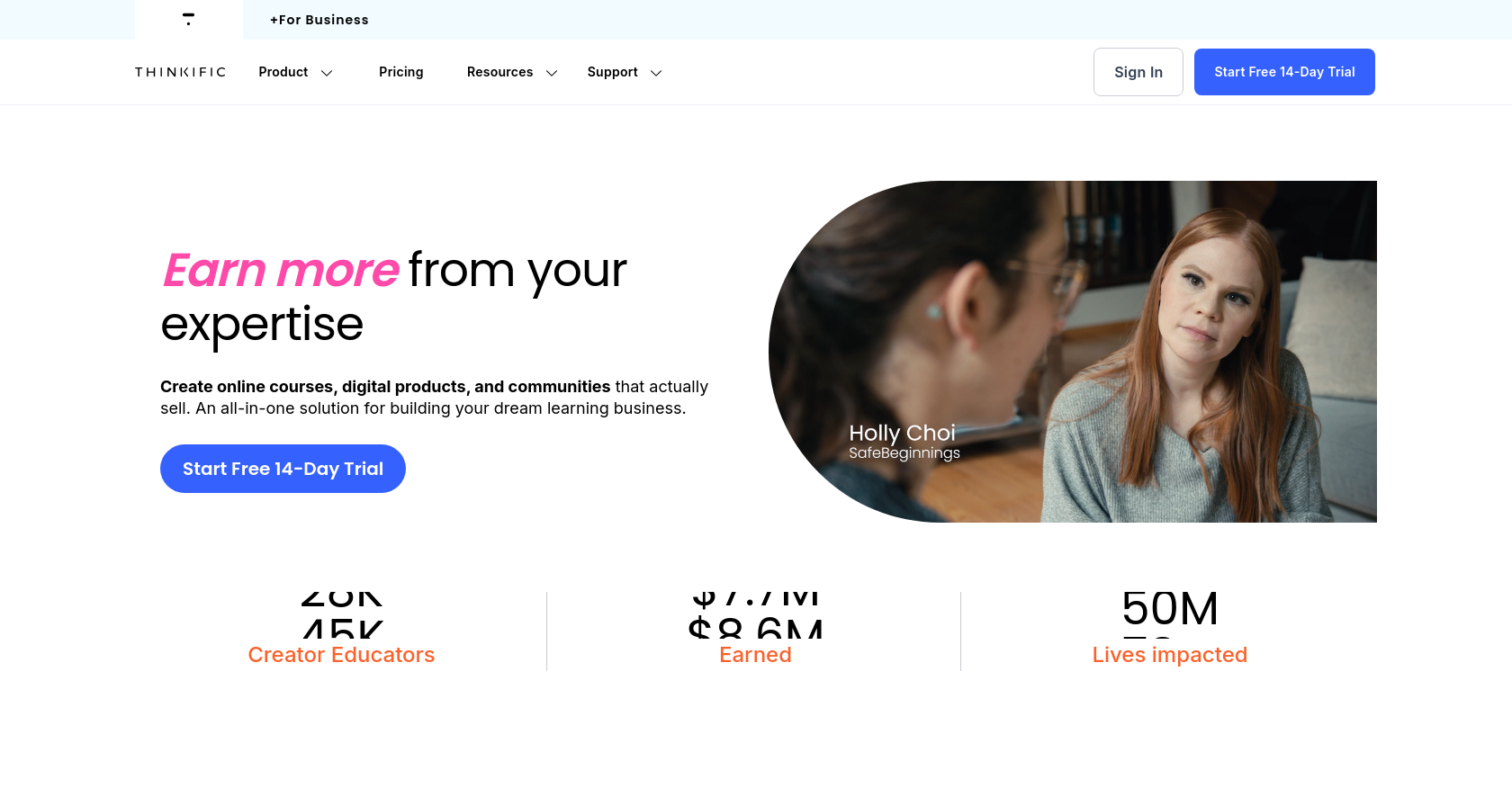
Thinkific is a strong option for businesses that want more customization than Teachable offers and no transaction fees. It supports a more flexible site builder and SCORM compliance, which is useful for corporate training environments. Community features have improved but still feel secondary to the course delivery architecture. Running a genuine cohort program typically requires external tools for live sessions and deeper peer interaction.
3. Kajabi
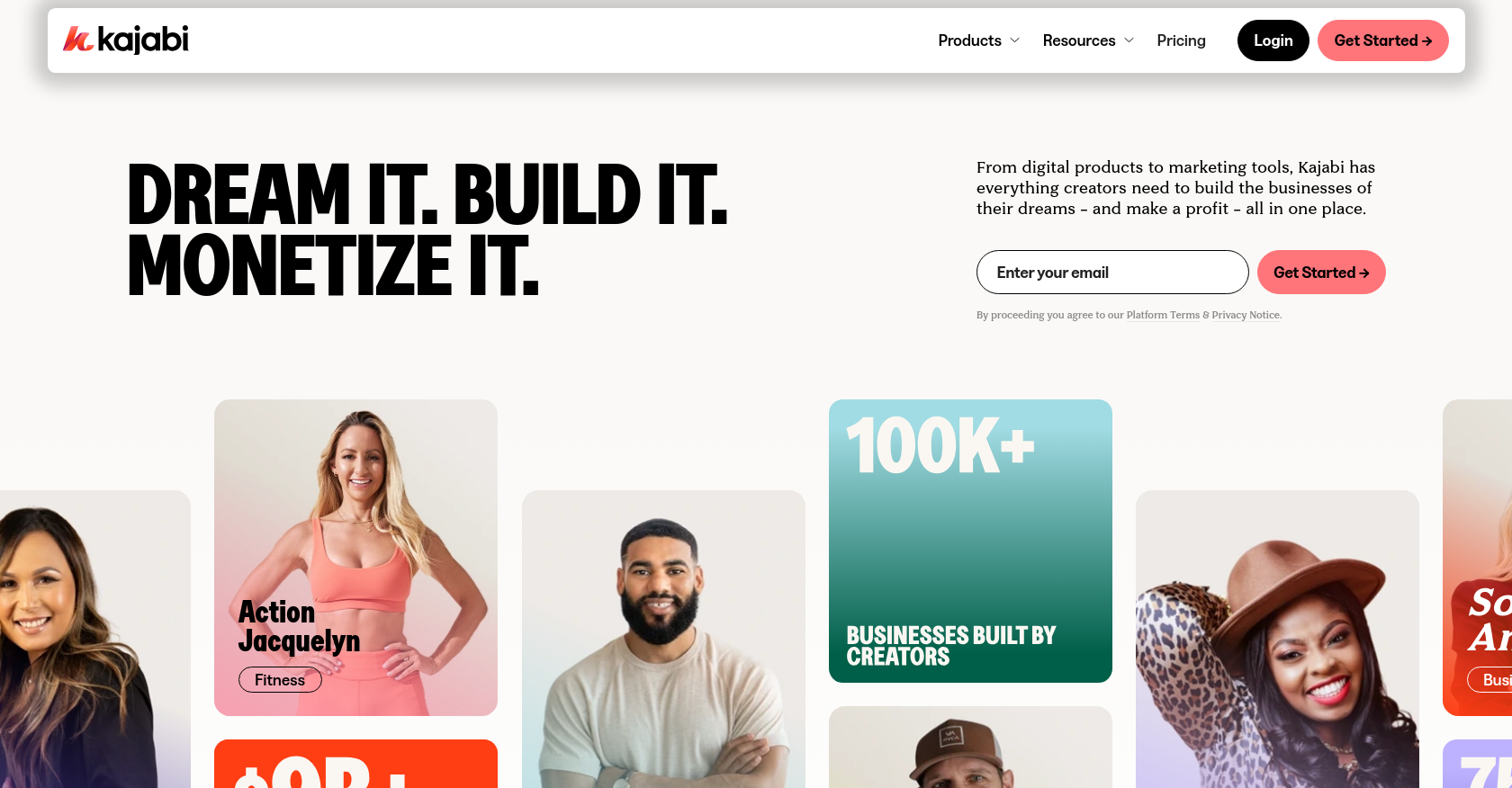
Kajabi positions itself as an all-in-one platform combining course hosting with email marketing, sales funnels, and website building. If consolidating your marketing and course delivery into one tool is the priority, it's a solid fit. The learning environment itself is less interactive compared to social learning platforms, and its premium pricing makes it a significant investment for smaller businesses.
4. LearnWorlds
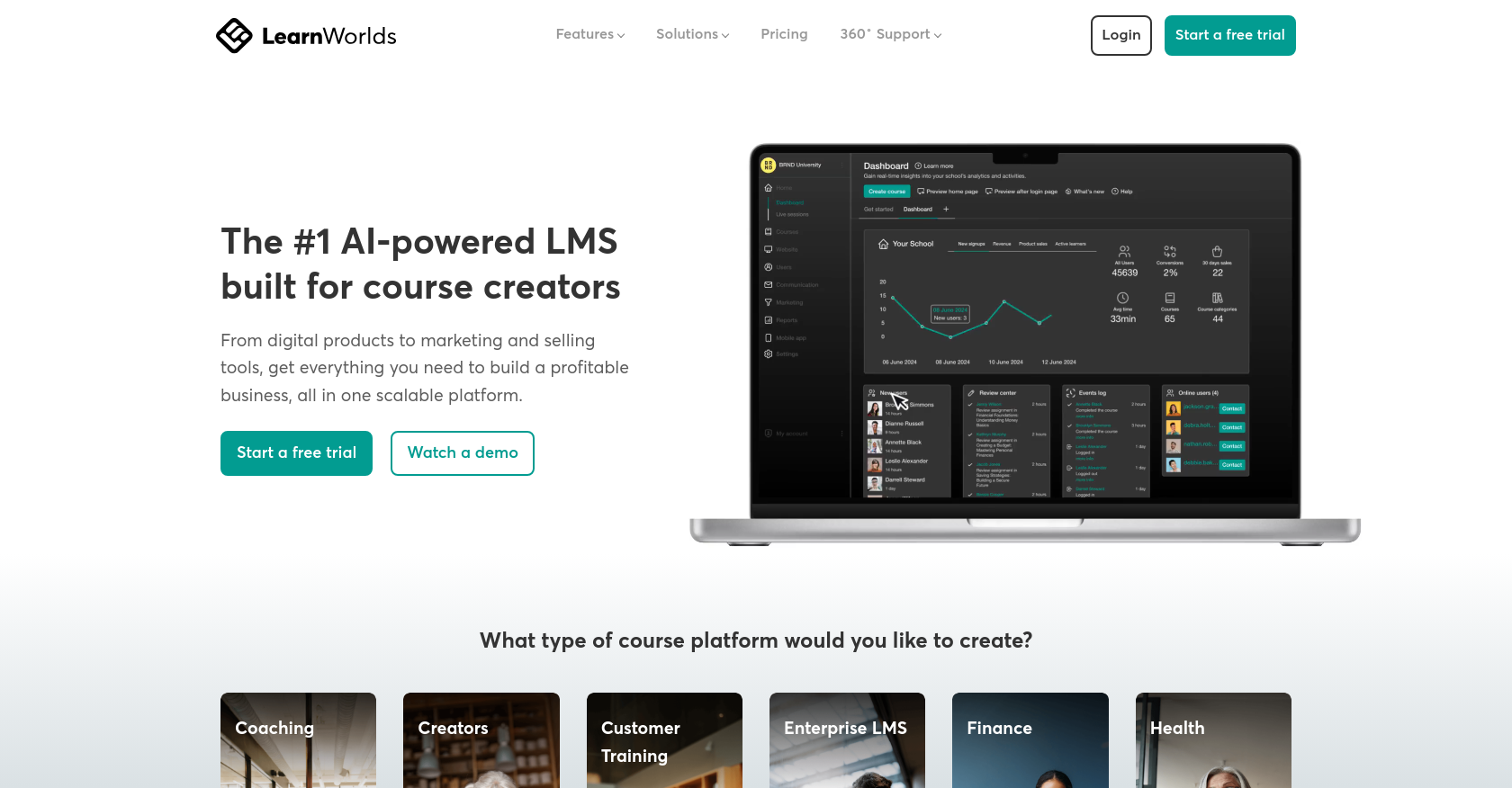
LearnWorlds stands out for interactive video tools that let you embed quizzes, transcripts, and interactions directly into course videos. It also offers a white-label mobile app option. The interface is more complex than other platforms, with a steeper learning curve for administrators. Community features are not as seamlessly integrated as purpose-built social learning platforms.
5. Skilljar

Skilljar is an enterprise-grade platform designed primarily for customer and partner education, with deep CRM integrations that connect learning activity to retention metrics. It's well suited for large SaaS companies running formal customer onboarding and certification programs. For mid-market training businesses or organizations that prioritize ease of use and community-driven learning, the complexity and pricing are often disproportionate.
6. 360Learning

360Learning focuses on collaborative learning for internal corporate teams, giving employees tools to create and share content with each other. It handles peer-to-peer knowledge sharing in large enterprises well. For businesses selling courses externally or building customer academies, its architecture is oriented toward internal use rather than monetization and external community building.
7. Mighty Networks
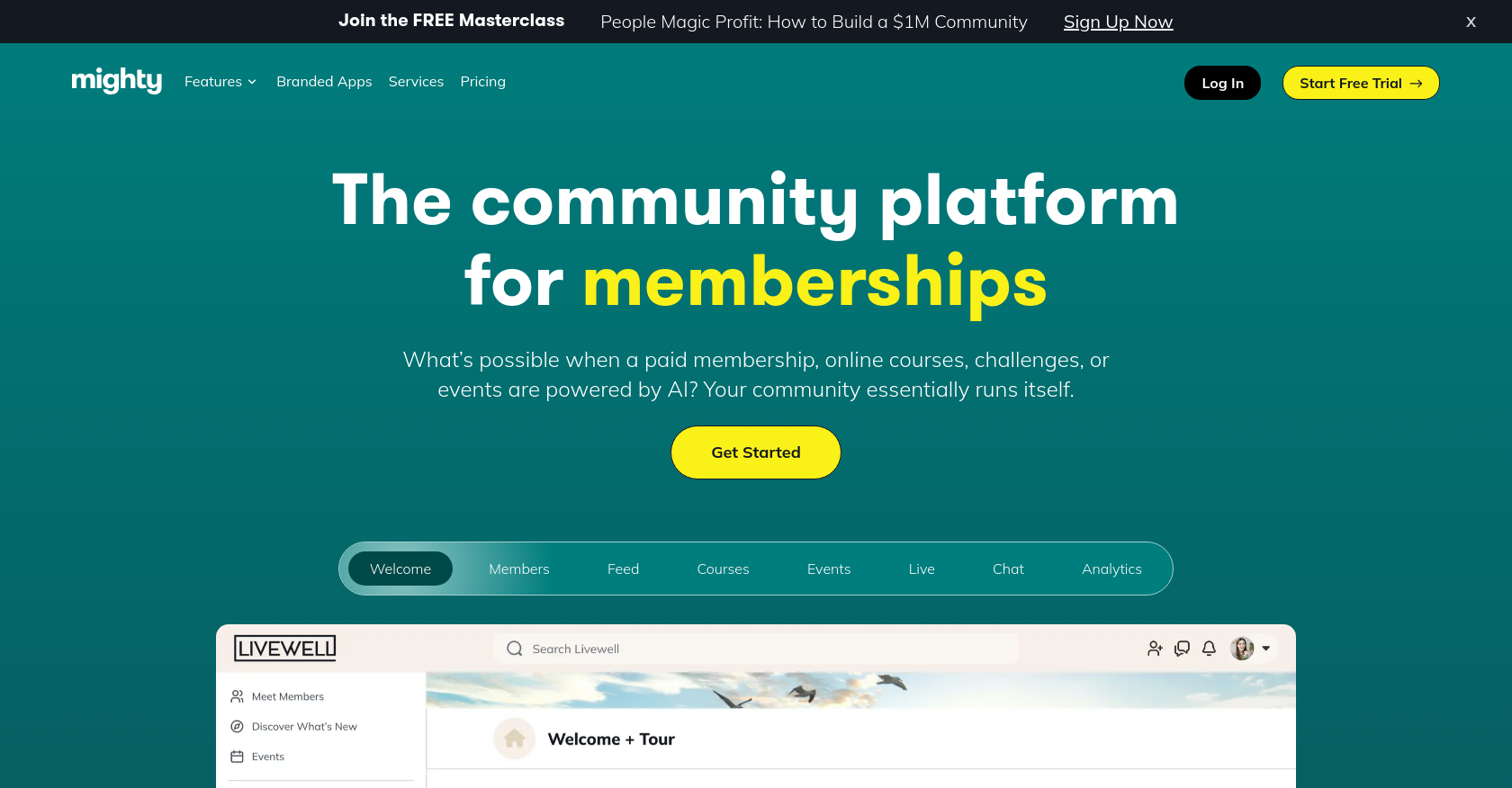
Mighty Networks is a community-first platform that allows creators to build courses, memberships, and events within a social network. The community features are strong. Course creation and delivery tools are less robust, and businesses that need detailed learning analytics, complex curriculum design, or advanced assessments will find the learning management capabilities limited.
Platform comparison
| Platform | Best for | Community depth | Transaction fees |
|---|---|---|---|
| Disco | Training businesses, cohort programs, customer academies | Native, deeply integrated | None |
| Thinkific | Customizable self-paced courses | Moderate | None |
| Kajabi | All-in-one marketing and course sales | Basic | None |
| LearnWorlds | Interactive video courses, white-label mobile | Moderate | None |
| Skilljar | Enterprise customer and partner education | Minimal | None |
| 360Learning | Internal enterprise L&D | Moderate (internal) | N/A |
| Mighty Networks | Community-first organizations | Strong | None |
How to choose the right alternative
Match the platform to your learning model. If cohort-based delivery is central to your programs, choose a platform where that's native, not a workaround. If community is the core of your value proposition, it needs to live inside the learning environment, not alongside it.
Evaluate the full cost of the platform. Transaction fees are the most visible cost, but they're not the only one. Time spent on manual administrative work, friction from stitching together external tools, and completion rates that drop when the learner experience is fragmented all have real costs. A higher subscription that eliminates those inefficiencies often costs less overall.
Think about where you're going, not just where you are. Platforms that work well at your current scale don't always support the learning model you're building toward. Choosing a platform that requires a re-migration in 18 months means paying migration costs twice.
For a detailed side-by-side breakdown of how Teachable compares to other platforms across specific use cases, our guide to the best Teachable alternatives in 2026 covers the evaluation criteria in more depth.
Conclusion
Outgrowing Teachable is a sign of growth, not a problem. The right alternative depends on the learning model you're running and where you want to take it. For businesses that need cohort infrastructure, community tools, AI automation, and monetization without transaction fees, the platform architecture needs to match that ambition.
Disco is built for exactly that use case. See how it fits your business in minutes.
FAQs
What are the main reasons businesses switch away from Teachable?
The most common reasons are transaction fees on lower-tier plans, limited customization for branded experiences, lack of native community tools, no cohort-based learning infrastructure, and restricted features behind expensive plan tiers. As programs become more complex, these structural limitations start affecting learner engagement and business profitability.
Does Disco charge transaction fees?
No. Disco doesn't charge transaction fees on sales. You keep 100% of the revenue generated from courses and memberships, which is a significant difference from Teachable's lower-tier plans that take up to 7.5% per transaction.
Can I migrate my courses from Teachable to Disco?
Yes. Course content including videos, documents, and resources can be transferred to Disco. The AI Canvas and intuitive builder make rebuilding programs fast, and Disco's team provides support to ensure a smooth transition for both administrators and existing learners.
What makes cohort-based learning better for businesses than self-paced courses?
Cohort programs achieve completion rates of 85% or higher compared to 3 to 15% for self-paced alternatives. The shared timeline creates accountability, live sessions create commitment, and peer relationships create motivation that passive content delivery can't replicate. Higher completion rates translate directly to better learner outcomes and stronger word-of-mouth for your programs.
Do I need separate tools for community and course hosting?
Not with Disco. Curriculum, community channels, live events, and direct messaging are integrated into one platform. This eliminates the need to connect Slack, Zoom, and a course tool separately, which reduces the administrative burden and creates a better learner experience.
Is Disco suitable for internal employee training as well as external programs?
Yes. Disco supports both external training businesses and internal employee learning programs. The cohort infrastructure works equally well for onboarding new hires as it does for running premium training products sold to external customers.


