


Best Circle Alternatives for Corporate Training
TL;DR
Circle has earned its reputation as a modern community platform. The clean interface, strong engagement features, and recent AI additions make it attractive for creators and brand communities. But corporate training teams face a different challenge entirely.
When you're running leadership development programs, AI fluency initiatives, or customer education at scale, you need a platform designed for learning outcomes, not community engagement metrics. You need curriculum depth, assessment tools, cohort management, and AI that supports the entire training lifecycle.
This guide breaks down the best Circle alternatives for corporate training, starting with platforms purpose-built for transformational learning experiences.
What corporate training teams actually need
Before evaluating alternatives, it helps to understand where Circle falls short for corporate use cases.
Circle excels at community operations. Its AI Agents answer FAQs and help with onboarding. AI Workflows automate moderation and re-engagement. The Content Co-Pilot drafts posts and announcements. These features reduce manual community management significantly.
But corporate training requires a different set of capabilities:
Learning pathways and progression: Structured curricula with modules, lessons, prerequisites, and clear learning paths. Circle's course builder is solid but not designed for complex multi-track programs.
Assessments and certifications: Quizzes, assignments, competency mapping, and certification workflows. Circle focuses on participation and engagement rather than measured skill gain.
HRIS and enterprise integrations: Connections to Workday, SAP SuccessFactors, and existing HR systems. Circle is built for creator communities, not enterprise IT stacks.
Compliance and audit trails: Detailed reporting on completions, assessment scores, and training compliance. Circle analytics lean toward community activity metrics.
AI for learning, not just community: Content generation, curriculum design, learner Q&A bots trained on your materials. Circle's AI focuses on community operations.
AI corporate training software alternatives
1. Disco: Best for AI-powered social learning

Best for: Training businesses, virtual academies, leadership programs, and AI readiness initiatives
Disco sits at the intersection of LMS rigor and community engagement, where AI supports not just operations but the full training lifecycle. Unlike Circle's community-first approach, Disco was built from day one for cohort-based training, leadership programs, and upskilling initiatives.
What sets Disco apart:
Disco's AI doesn't just write posts. It helps you design curricula, build training materials, and support learners with an AI Q&A bot trained on your content. The platform combines structured curriculum (modules, assignments, quizzes) with social learning (peer discussions, live events, cohort spaces) in one branded academy.
Complete feature set for corporate training:
Disco delivers everything corporate training teams need:
Learning pathways and progression: Structured curricula with modules, lessons, prerequisites, and clear learning paths. Course cloning with version control enables easy program replication and iteration.
Assessments and certifications: Quizzes, assignments, and certification workflows track learner competency and skill gain rather than just participation metrics.
Enterprise integrations: Magic link authentication, SSO, SAML 2.0, and custom authentication options connect with existing HR systems and enterprise IT stacks.
Compliance and audit trails: Group-level reporting, completion tracking, and detailed learner progress analytics support compliance requirements and training effectiveness measurement.
AI for the full training lifecycle: The AI curriculum builder generates course outlines and content from prompts or source materials. The learner-facing Q&A bot pulls from your entire curriculum, recordings, and discussions to answer participant questions. Event summaries automatically distill live sessions into actionable recaps.
Cohort management: Automated alumni transitions, cohort spaces, and version control support both synchronous cohort programs and self-paced learning at scale.
For cohort management, Disco supports course cloning with version control, automated alumni transitions, and group-level reporting. The platform handles both B2C training businesses and B2B corporate programs selling to enterprise clients.
Enterprise readiness:
The platform supports tens of thousands of learners with personalized content at company, role, and individual levels. White-label capabilities enable fully branded experiences with custom domains for B2B2C deployment.
Pricing: Plans start at $399/month for virtual academies and bootcamps. Enterprise tier starting at $30,000/year includes API access, webhooks, SSO, and dedicated customer success manager.

Learn more: Disco's AI-powered LMS features
2. 360Learning: Best for collaborative internal L&D
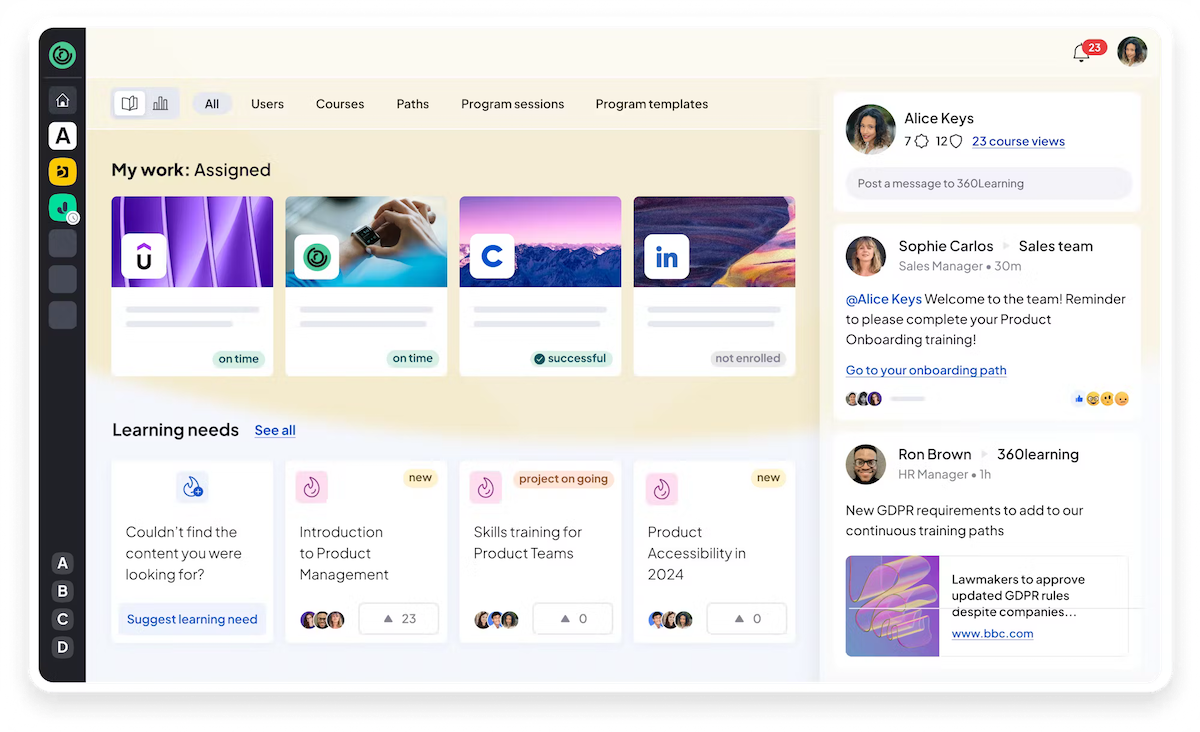
Best for: Internal teams, peer-driven content creation, and organizations that want subject matter experts to contribute courses
360Learning takes a collaborative approach to corporate learning. Instead of a top-down model where L&D teams create all content, it enables employees and subject matter experts to author courses that get peer-reviewed and improved over time.
Key features:
The platform combines LMS fundamentals with social features designed for internal teams. Discussion forums, feedback loops, and collaborative authoring create engagement without requiring a separate community tool.
For L&D teams, 360Learning provides strong analytics around course effectiveness, learner engagement, and business impact. The platform integrates with enterprise systems and supports compliance training workflows.
Where it fits vs. Circle:
360Learning is purpose-built for corporate L&D, while Circle is designed for creator communities. If your primary use case is internal employee training with collaborative content creation, 360Learning provides deeper functionality. If you need external-facing branded academies or community-driven programs, other options may serve better.
Pricing: Contact for enterprise pricing.
3. Docebo: Best for enterprise compliance and scale
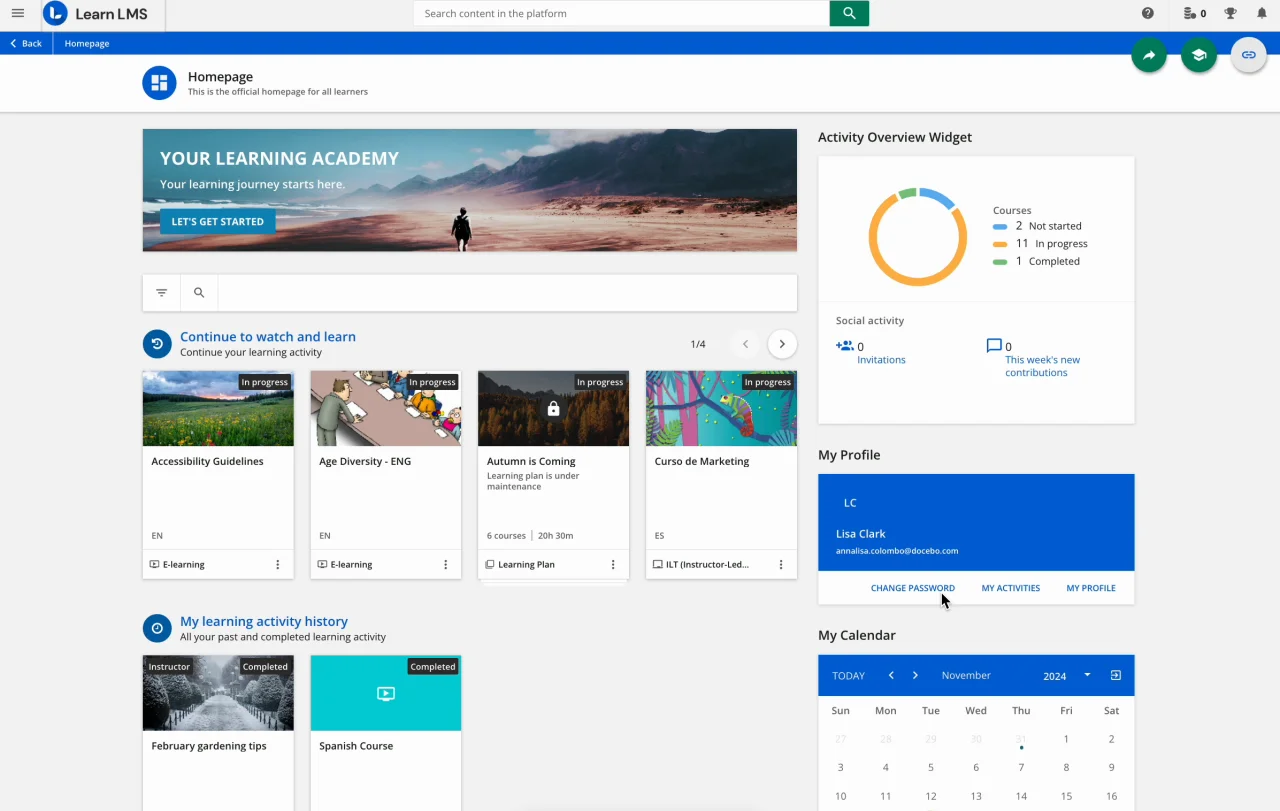
Best for: Large enterprises with complex compliance requirements, multi-region rollouts, and extensive HR system integrations
Docebo is a full-featured enterprise LMS with AI capabilities for personalized recommendations, content authoring, and analytics. It's designed for organizations that need compliance training, certification management, and integration with enterprise HR stacks.
Key features:
AI-powered personalization recommends content based on learner behavior and skills gaps. The platform supports extended enterprise use cases (customer training, partner certification) alongside internal L&D.
Docebo offers deep integrations with Workday, SAP SuccessFactors, Salesforce, and other enterprise systems. Compliance features include audit trails, certification tracking, and detailed reporting.
Where it fits vs. Circle:
Docebo is a traditional enterprise LMS with community features available as premium add-ons. The platform excels at compliance and scale but lacks the modern community UX that Circle provides. If community engagement is important to your training strategy, Docebo may feel more transactional.
Pricing: Enterprise pricing typically starts at $25,000+ annually with complex implementation requirements.
4. LearnWorlds: Best for customer education with AI
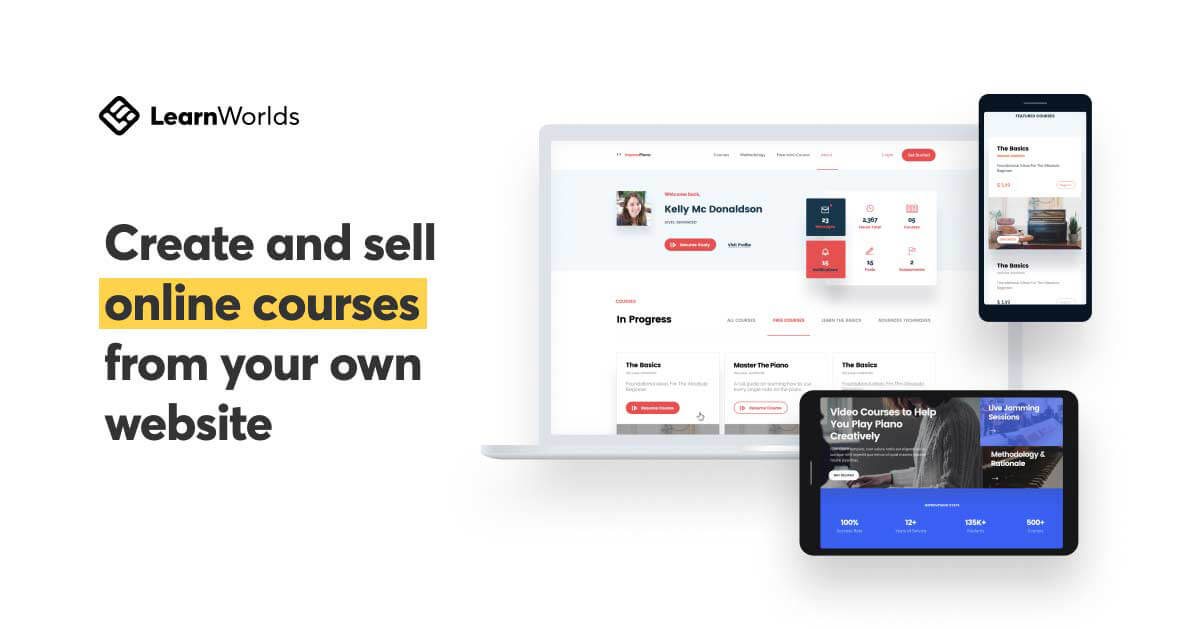
Best for: Customer education programs, training businesses focused on self-paced content, and organizations that want strong interactive video capabilities
LearnWorlds has positioned itself as an AI-powered LMS targeting both corporate training and customer education. The platform offers interactive video, assessments, and AI tools for content creation and learner feedback.
Key features:
The AI course planner helps structure course designs. AI-enhanced assessment tools provide automatic scoring and instant feedback on learner responses. The platform tracks engagement, completions, and skills, correlating with business metrics.
LearnWorlds supports white-label academies with custom branding, making it suitable for customer education and B2B training.
Where it fits vs. Circle:
LearnWorlds is LMS-first rather than community-first. Social features exist but aren't the primary focus. For training businesses that prioritize structured learning over community engagement, LearnWorlds offers deeper curriculum and assessment capabilities than Circle.
Pricing: Starting around $29/month for basic plans, with higher tiers for advanced features and enterprise capabilities.
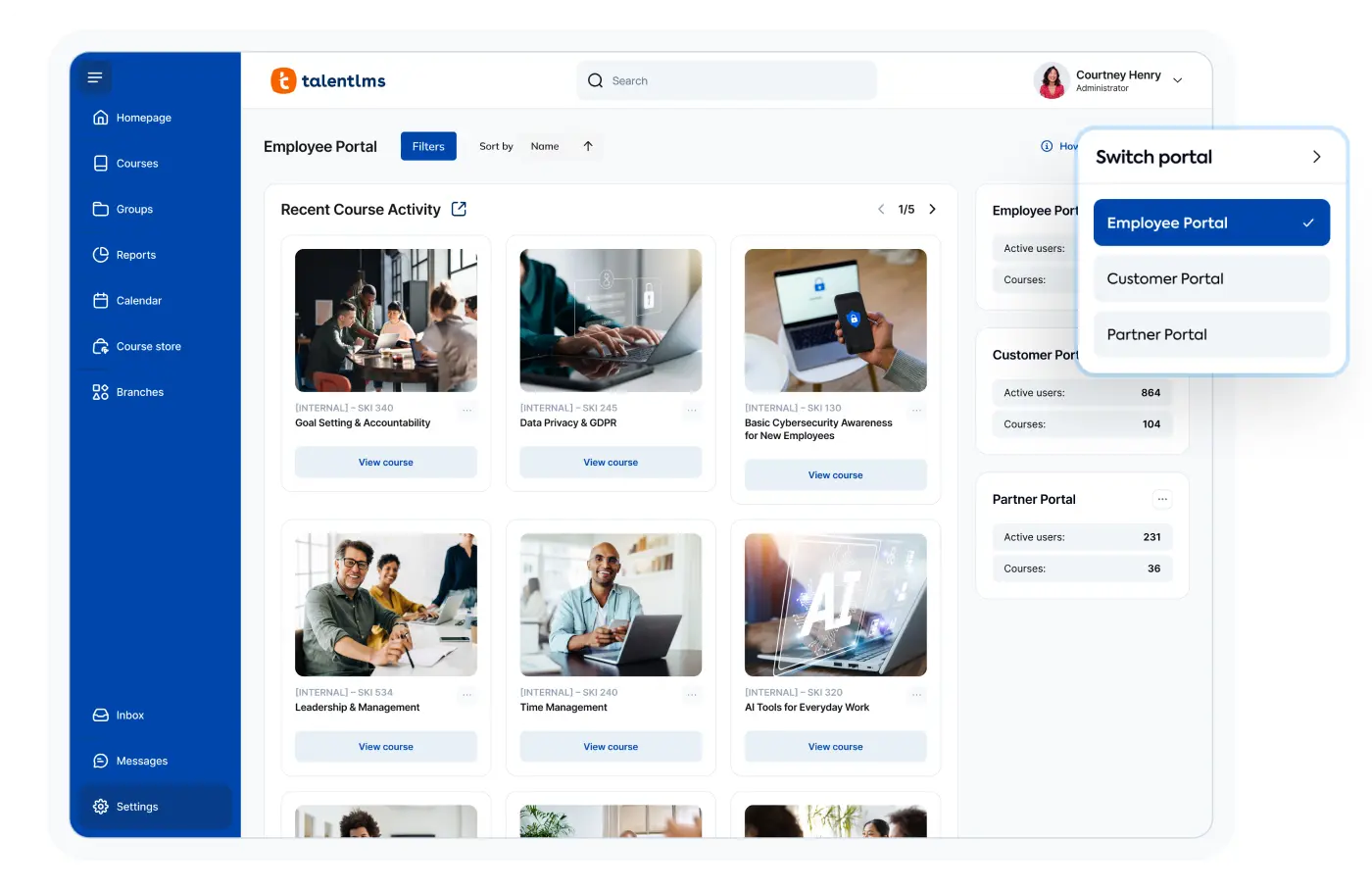
5. TalentLMS: Best for SMB corporate training with AI
Best for: Small and mid-size businesses running internal training programs, onboarding, and compliance
TalentLMS has invested heavily in AI features for corporate training, including an AI Coach that provides real-time personalized support to learners across courses.
Key features:
AI-powered course creation generates content and quizzes quickly. The Skills feature auto-generates skill descriptions, self-assessment questions, and related courses. AI Coach acts as a virtual tutor embedded in the learning experience.
The platform is designed for internal corporate training: employee onboarding, compliance, skills development.
Where it fits vs. Circle:
TalentLMS is a cost-effective corporate LMS with AI capabilities, but lacks rich community features. If your training strategy relies on peer learning, cohort accountability, and social engagement, TalentLMS may feel limited compared to platforms like Disco that combine community with LMS functionality.
Pricing: Free tier available; paid plans start around $69/month.
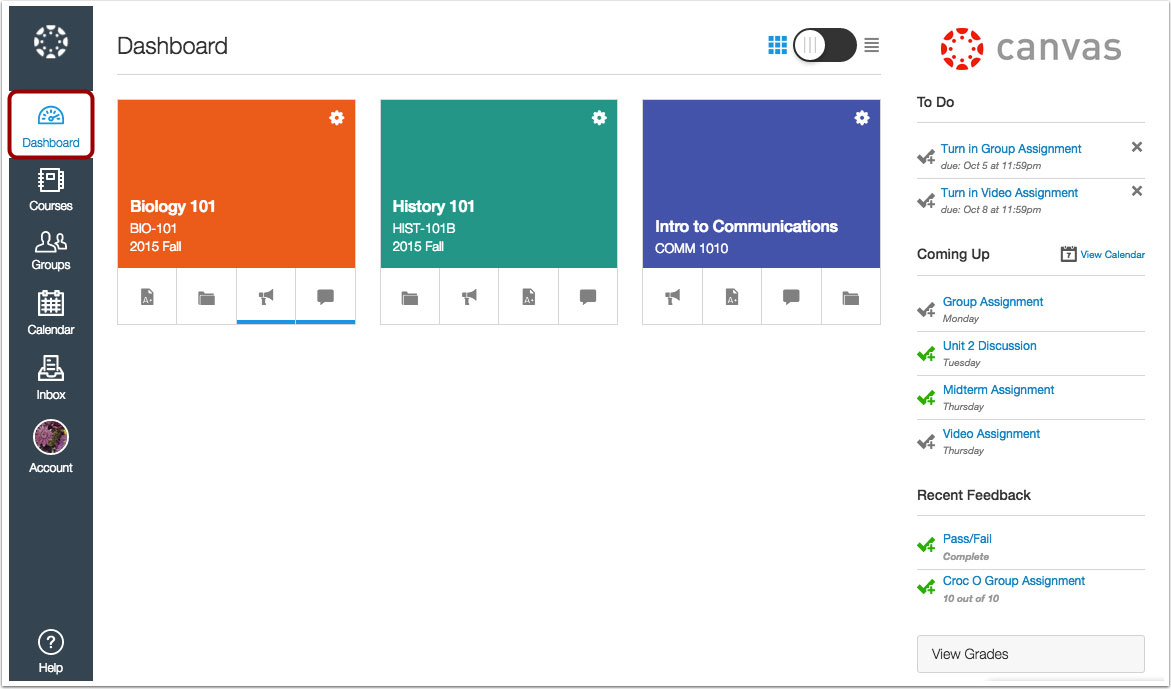
6. Canvas LMS (Instructure): Best for large-scale workforce development
Best for: Government agencies, large enterprises with existing Canvas implementations, and organizations that need deep integration ecosystems
Canvas LMS, primarily known in education, now offers Canvas for Business and Government. The platform brings AI capabilities through IgniteAI and Canvas Career for personalized learning paths aligned to in-demand skills.
Key features:
AI accelerates content creation and personalizes learning paths. Real-time skill and ROI tracking supports workforce development initiatives. The open ecosystem includes extensive integrations with enterprise tools.
Where it fits vs. Circle:
Canvas is clearly LMS-first. Communities exist within the platform but aren't the design focus. For enterprises already invested in the Instructure ecosystem or needing government-grade compliance, Canvas provides scale and maturity. For modern community-driven learning experiences, other options offer more engaging UX.
Pricing: Enterprise pricing; contact for details.
How to choose the right Circle alternative
The best platform depends on your specific corporate training context:
Choose Disco if you want AI that powers the full training lifecycle (curriculum design, learner support, operations), need cohort-based programs with social learning, or are building external training programs alongside internal L&D. Disco combines modern community UX with LMS capabilities and serves both training businesses and corporate teams.
Choose 360Learning if your priority is collaborative content creation where subject matter experts contribute courses, and you're focused primarily on internal L&D without external-facing programs.
Choose Docebo if you have complex compliance requirements, need deep HRIS integrations, and are a large enterprise with dedicated implementation resources.
Choose LearnWorlds if customer education is your primary use case, you want strong interactive video capabilities, and community is secondary to structured content delivery.
Choose TalentLMS if you're an SMB running internal training and want cost-effective AI features without the complexity of enterprise LMS platforms.
Choose Canvas if you're a large enterprise or government agency with existing Instructure relationships or need the scale and compliance features of a mature enterprise platform.
Making the switch
For corporate training teams currently using Circle or evaluating community platforms, the key question is whether learning outcomes or community engagement drives your strategy.
If you need structured curricula, assessments, certifications, and AI that supports learning (not just community operations), a purpose-built training platform like Disco will serve you better.
Disco offers a path that doesn't force you to choose between community engagement and LMS rigor. Training businesses choose Disco because it combines a modern community experience with the learning architecture they need to deliver credible programs to individuals and enterprises.
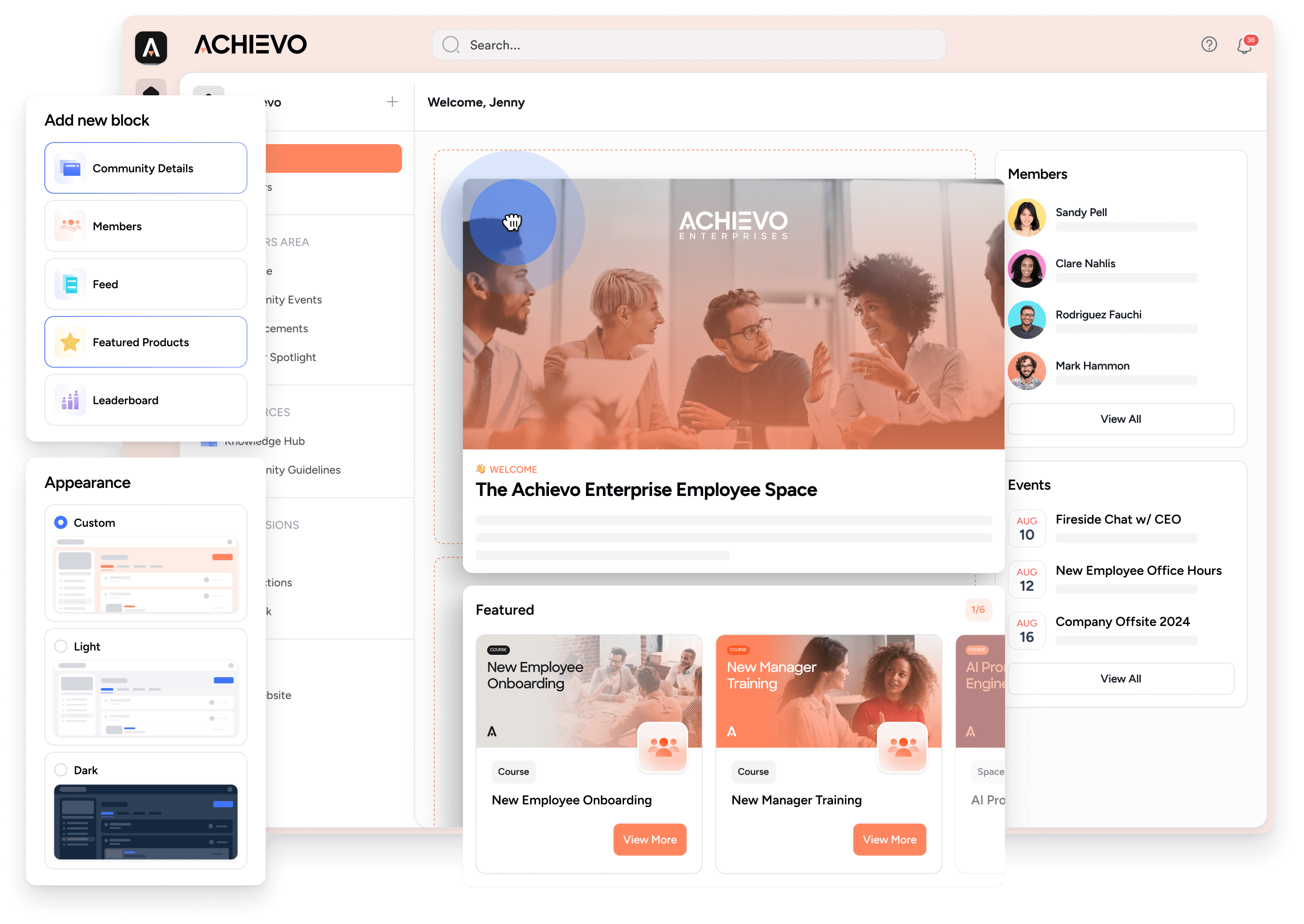
Ready to build transformational learning experiences? Explore Disco's platform features


