


Best gamification tools for learning programs in 2026
TL;DR
Gamification is no longer optional in online learning. It's a proven driver of engagement, retention, and program completion, with gamified programs reaching 90% completion rates compared to 25% for non-gamified alternatives. In 2026, the best gamification tools combine points, badges, leaderboards, and social mechanics with AI-powered personalization.
After reviewing the full landscape, Disco is the clear best choice: it's the only platform that natively integrates deep gamification, a social community hub, cohort-based learning, and AI automation in a single environment. Other platforms like TalentLMS, Docebo, and 360Learning offer pieces of the puzzle. Disco brings it all together.
Whether you run a training business, a corporate L&D program, or a customer academy, this guide will help you find the right fit.
The challenge of keeping members engaged in online programs is well documented. Without the social layer that comes from learning alongside peers, completion rates for self-paced courses hover between 15 and 20 percent. Gamification changes that equation by creating the feedback loops, accountability structures, and motivational mechanics that keep learners invested in their progress.
The most effective learning gamification in 2026 goes beyond badges and points. It is deeply integrated with social learning, cohort mechanics, and community infrastructure that makes engagement feel natural rather than forced. This guide breaks down the best gamification tools available and explains what separates platforms that use gamification as a cosmetic feature from those that build it into the core learning architecture.
What gamification actually does in learning environments
Gamification works in learning because it addresses the core psychological drivers of human motivation: progress visibility, social recognition, achievement, and competition. When implemented well, these mechanics create a reinforcing feedback loop where learners feel momentum, receive recognition for their effort, and experience social accountability that makes dropping out feel costly.
The most powerful gamification mechanics for learning programs are leaderboards that create visible social comparison and friendly competition, points and badges that mark milestones and communicate progress, streaks and completion rates that reinforce consistent engagement habits, peer recognition features that reward contribution to the community, and live cohort dynamics that make every participant's progress visible to the group.
Gamified programs using these mechanics consistently reach 85 to 90 percent completion rates, compared to 15 to 25 percent for non-gamified self-paced alternatives.
The platforms worth evaluating in 2026
Disco
Disco integrates gamification natively into a social learning platform that combines cohort-based programs, community tools, and AI-powered course creation. The gamification mechanics in Disco are not bolt-on features. They emerge from an architecture that treats learning as an inherently social and collaborative activity.
Leaderboards surface member activity and progress across the community, creating visible social comparison without requiring separate gamification plugins. Points and badges can be awarded for course completions, community contributions, live event attendance, and custom milestones. The platform's discussion channels, member profiles, and live events create the social fabric that makes these mechanics meaningful rather than hollow.
Unlike standalone gamification tools that sit outside the learning environment, Disco's approach embeds motivation mechanics where learning actually happens: inside the program, inside the community, working through the same material at the same time. Explore how leading training organizations are using Disco at disco.co/customer-stories. Coding Temple doubled their learner NPS after switching to Disco's cohort-based, gamification-driven learning environment. Old Girls Club scaled from 800 to 2,800 members while maintaining a 95% trial conversion rate through engaging, community-driven learning experiences.
Best for: Training businesses, bootcamps, consultants, corporate L&D teams, and customer academies that want gamification embedded in a complete social learning environment rather than added on top of a content delivery system.
TalentLMS
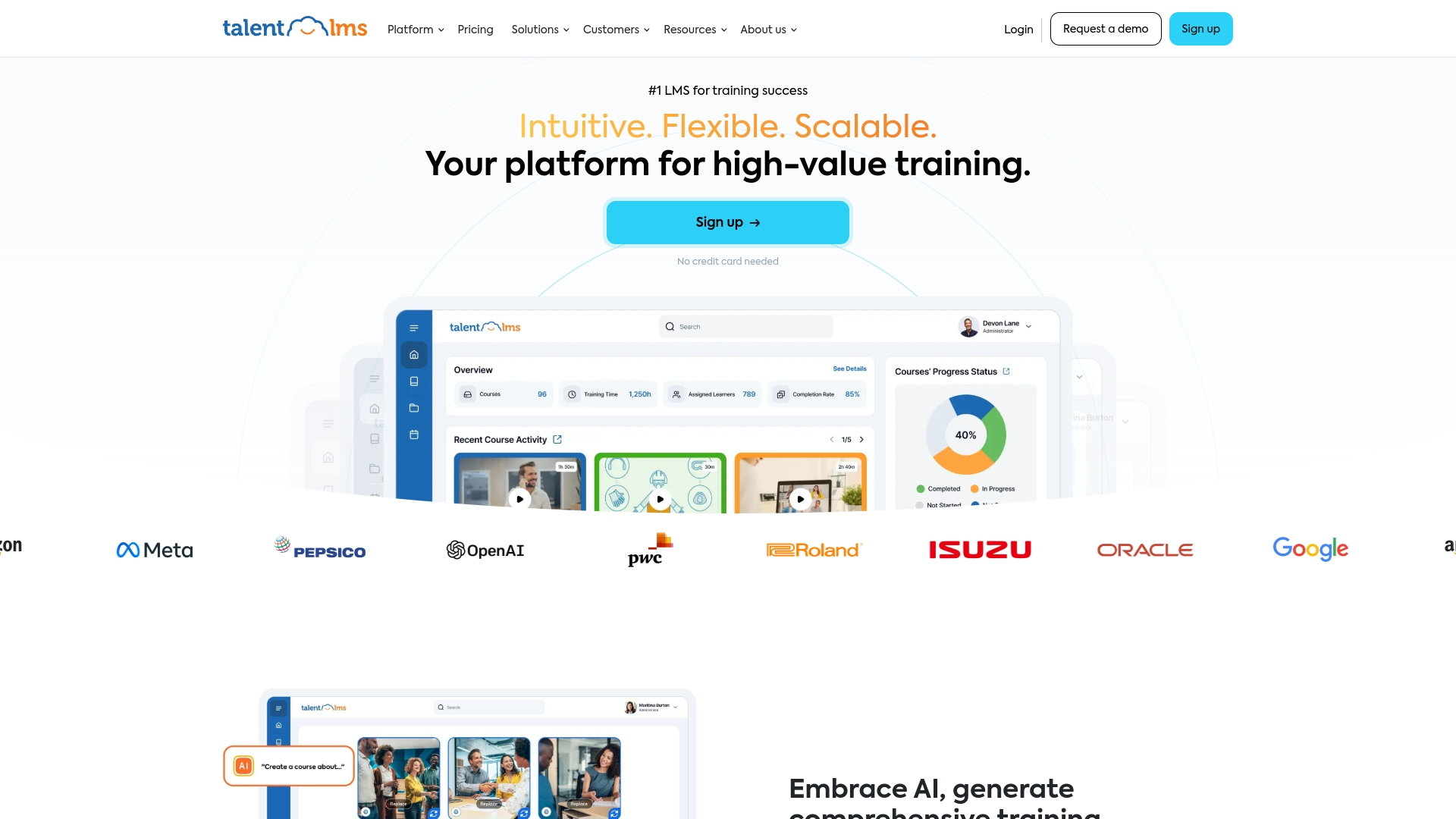
TalentLMS offers a gamification module that adds points, badges, leaderboards, and levels to course completion workflows. It is one of the more established options for organizations that need gamification features without building custom infrastructure. The platform's gamification is functional but operates somewhat separately from the learning experience itself. Community and social features are limited compared to platforms where gamification is native to the architecture.
Docebo

Docebo includes gamification capabilities as part of its enterprise LMS feature set, with points, badges, and leaderboard functionality. For large enterprise deployments that need compliance tracking alongside gamification, Docebo provides a reasonable combination. Its social learning features are less developed than platforms purpose-built for community-driven learning, and the gamification implementation is more administrative than experiential.
360Learning

360Learning uses collaborative learning mechanics that create a form of social gamification through peer reviews, course reactions, and collaborative authoring features. Its approach is more focused on co-creation and peer feedback than traditional gamification mechanics. This works well for organizations with a culture of collaborative learning but provides less of the competition and achievement mechanics that drive high completion rates in external training programs.
EdApp

EdApp specializes in mobile-first microlearning with strong gamification mechanics, including built-in leaderboards, achievement badges, and game-like quiz formats. It is particularly effective for organizations running short-form training with high-frequency engagement needs. For longer-form cohort programs or community-driven academies, EdApp's architecture is less suited.
What to look for in a gamification tool for learning
Native integration vs. bolt-on features. Gamification works best when it is embedded in the learning experience rather than added as a layer on top. Platforms where points, leaderboards, and badges are native to the course and community architecture produce more consistent engagement than those where gamification is a separate module.
Social and community mechanics. The most powerful gamification in learning is social. Leaderboards, peer recognition, and visible progress within a cohort create accountability that isolated gamification cannot replicate. Look for platforms where gamification mechanics are connected to real peer relationships, not just anonymous rankings.
Cohort compatibility. Gamification works best when learners are working through the same material at the same time. Cohort-based delivery creates the shared context that makes leaderboards and peer mechanics meaningful. Platforms built for cohort delivery amplify the impact of gamification significantly.
Customization for your program context. Different programs need different gamification configurations. A leadership development cohort needs different mechanics than a technical certification program. Look for platforms that allow you to define what gets rewarded and how visibility is configured for your specific audience.
How gamification connects to completion and revenue
For training businesses, gamification is not just an engagement feature. It is a business metric. Programs with high completion rates generate better learner outcomes, stronger word-of-mouth referrals, higher renewal rates, and more compelling case studies. Programs with poor completion rates struggle to demonstrate ROI regardless of content quality.
The platforms that produce the highest completion rates in 2026 combine cohort delivery, strong community architecture, and gamification mechanics that reinforce progress and social accountability. For training businesses evaluating platforms, completion rate data is the most reliable signal of whether gamification is actually working.
For a deeper look at how cohort-based programs and gamification interact, see our guide on how to launch a profitable cohort-based training program. For a full platform comparison, see our AI training platform comparison.
Want to see how Disco's gamification and community tools work in practice? See a preview in minutes.
Frequently asked questions
What is the best gamification tool for online learning?
For training businesses and professional learning programs in 2026, Disco provides the strongest combination of native gamification mechanics and social learning architecture. Its leaderboards, badges, and peer recognition features are built into a cohort-based community environment that makes gamification feel meaningful rather than cosmetic.
Does gamification actually improve completion rates?
Yes, significantly. Gamified learning programs consistently achieve completion rates of 85 to 90 percent, compared to 15 to 25 percent for non-gamified self-paced alternatives. The impact is largest when gamification is combined with cohort delivery and community mechanics that create social accountability alongside the individual achievement feedback.
What is the difference between gamification and game-based learning?
Gamification applies game mechanics like points, badges, and leaderboards to a learning experience that is not itself a game. Game-based learning uses actual game structures as the primary learning vehicle. Most corporate and professional learning programs use gamification rather than game-based learning, applying motivational mechanics to content-driven courses and cohort programs.
Can gamification work for serious professional training programs?
Yes. The most effective professional training programs in 2026 use gamification deliberately and contextually. Leadership academies, technical certification programs, and executive education cohorts all benefit from progress visibility, peer recognition, and achievement mechanics when they are configured appropriately for the audience and program format.
How does social gamification differ from traditional gamification?
Traditional gamification focuses on individual achievement mechanics: personal points, personal badges, personal leaderboard rankings. Social gamification connects these mechanics to peer relationships, cohort dynamics, and community contribution. The social layer dramatically amplifies the impact because learners are motivated not just by personal achievement but by visibility and recognition within their peer group.


