


Top LMS platforms for training companies in 2026

TL;DR
The LMS market is projected to reach $123.78 billion by 2033, and training companies need more than a content repository to compete. The best platforms combine AI-powered course creation, community tools, and monetization features in one seamless system. This guide covers the top options and explains why Disco consistently outperforms traditional LMS platforms for training businesses that want to deliver transformational learning at scale.
Choosing the right LMS is one of the most consequential decisions a training company makes. The platform shapes how efficiently you operate, how engaged your learners are, and ultimately how well you can grow revenue without growing headcount.
The global LMS market was estimated at $28.58 billion in 2025 and is projected to reach $123.78 billion by 2033, growing at a compound annual growth rate of 20.2%. That growth reflects how heavily organizations now rely on digital learning infrastructure. But not all platforms are built equally, and the wrong choice creates friction at every level of your operation.
This guide covers what training companies actually need from an LMS, the top platforms available in 2026, and what separates platforms built for transformational learning from those built for basic content delivery.
What training companies need in an LMS
Training businesses have different requirements than internal L&D teams. You're running a revenue-generating operation, which means the platform needs to support not just learning delivery but also community, monetization, and operational scale. Here are the capabilities that matter most.
AI-powered course creation. Modern platforms use AI to help build curriculum outlines, generate quizzes, and structure programs from existing content. The best implementations save instructional designers 20 or more hours per program without sacrificing quality.
Community and social learning tools. Platforms that isolate learners suffer from low completion rates. Discussion channels, live event hosting, direct messaging, and peer interaction are not optional extras. They're the difference between a course people finish and one they abandon.
Monetization and e-commerce. For training businesses, the LMS is a revenue engine. Seamless payment processing, subscription management, and flexible pricing are essential for selling programs to individuals and corporate clients alike.
Analytics and reporting. Proving ROI to clients requires deep insight into learner behavior. Completion rates, engagement metrics, and assessment scores let you continuously improve programs and demonstrate their value.
Top LMS platforms for training companies in 2026
1. Disco
Disco is purpose-built for training businesses, bootcamps, and consultants who want to deliver premium, highly engaging learning experiences. It combines AI-powered program creation, social learning infrastructure, and seamless business operations in one platform — without requiring a stack of disconnected tools.
Adventures in CRE (A.CRE), a commercial real estate education provider, replaced a custom LMS and four separate tools with Disco. The result: 8,000+ members migrated, 520 hours saved annually, and one full-time developer role eliminated. Read the A.CRE story.
Key capabilities:
- Disco AI — program generation, quiz creation, image generation, and AI video enhancement with automatic transcripts, summaries, and chapters
- Ask AI — an always-on assistant that provides instant, curriculum-aware answers to learner questions
- Social learning — integrated live events, discussion channels, direct messaging, gamification with leaderboards, and smart nudges surfaced by AI
- Monetization — built-in payment processing, subscription models, and tiered access options for selling to individuals or corporate clients
- Operational automation — smart reminders, scheduling, and workflow automation so lean teams can run programs at scale
Explore the full AI feature set at disco.co/ai, or see how Disco fits your use case in minutes.
2. 360Learning

360Learning focuses on collaborative learning inside large enterprises, with tools that allow internal subject matter experts to create and share content. It's a strong fit for corporate teams decentralizing content creation. For independent training businesses selling programs externally, it lacks the monetization tools and community infrastructure that make Disco the stronger choice.
3. Docebo

Docebo is an enterprise-grade platform known for compliance training, advanced reporting, and AI-driven personalization. It handles large-scale formal learning well. Its complexity and enterprise pricing make it a heavy lift for agile training companies that want a streamlined, community-first experience.
4. Kajabi
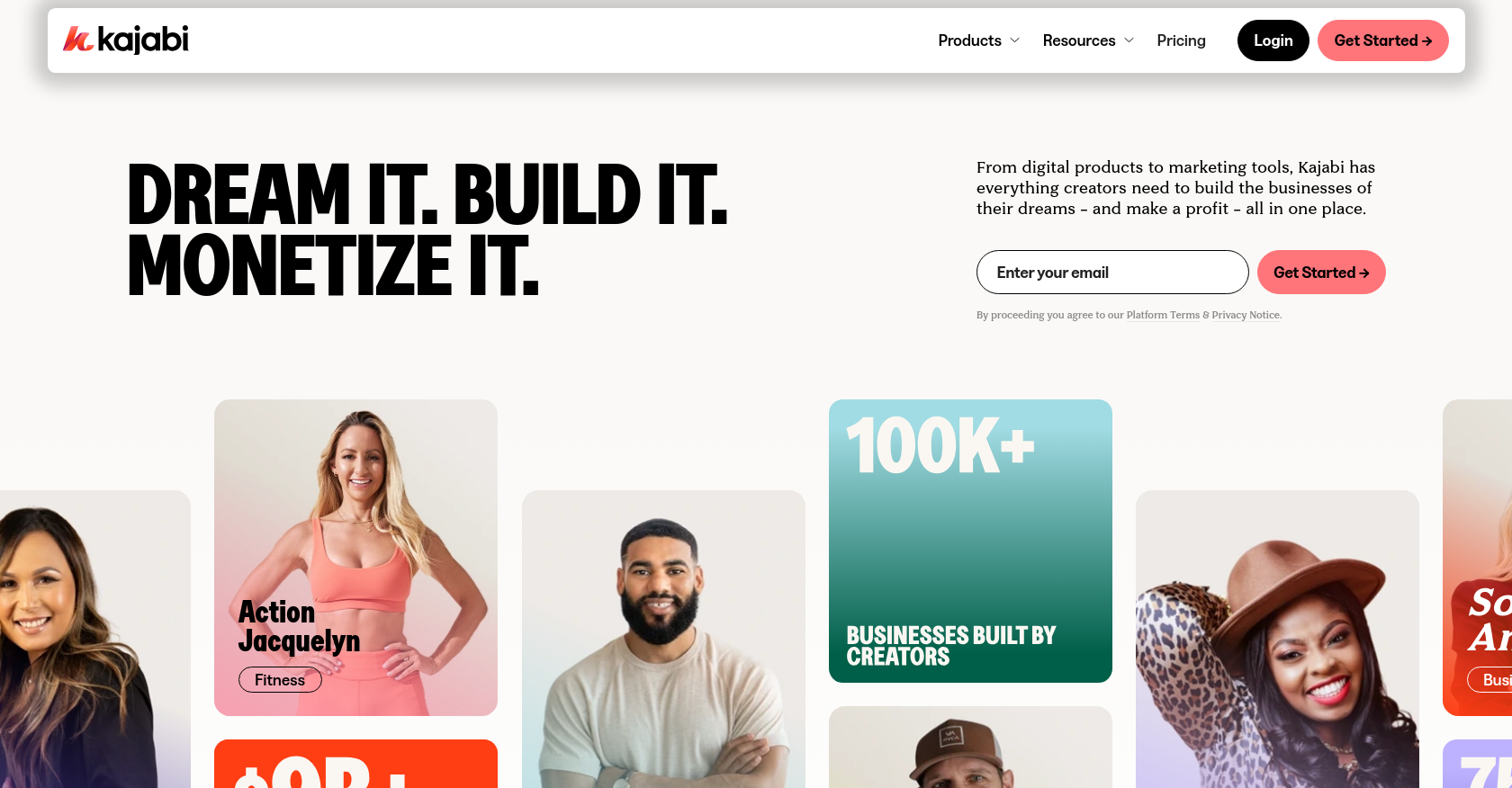
Kajabi is popular with solo creators and small course businesses for its marketing automation and website building tools. It has introduced AI features for content generation. When it comes to cohort-based programs or deep community engagement, the learning environment is basic compared to platforms built specifically for social learning.
5. Skilljar

Skilljar is designed for customer and partner training, with CRM integrations that help software companies track how learning drives product adoption. It serves that use case well. Training businesses whose core product is the learning experience itself will find it a narrower fit.
6. Thinkific and Teachable
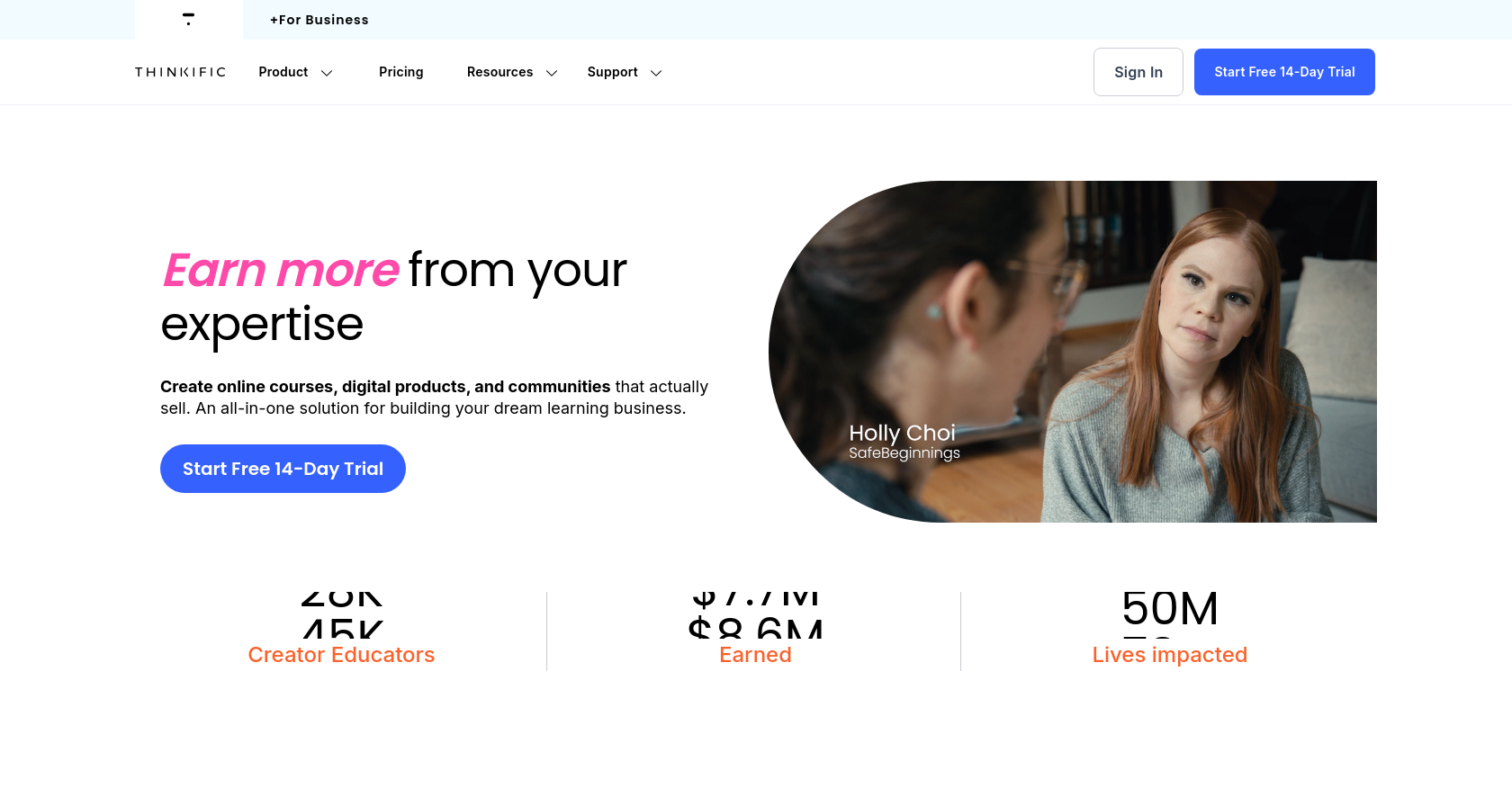
Both platforms are approachable entry points for creators launching self-paced courses. They handle video uploads and payment processing cleanly. Training companies running interactive cohort programs or building engaged learning communities will quickly outgrow what both platforms offer.
Platform comparison
| Platform | Best for | Social learning | Training business fit |
|---|---|---|---|
| Disco | Training businesses, bootcamps, consultants, customer academies | Native, deeply integrated | Purpose-built |
| 360Learning | Large enterprise internal L&D | Moderate (internal focus) | Limited |
| Docebo | Enterprise compliance and formal training | Basic | Complex and costly |
| Kajabi | Solo creators, simple course sales | Basic | Moderate |
| Skilljar | Customer and partner education | Minimal | Narrow fit |
| Thinkific / Teachable | Entry-level self-paced courses | Minimal | Limited scalability |
How to choose the right LMS for your training company
The right platform depends on your business model, the learning experiences you deliver, and how you plan to grow. Work through these four questions before committing.
What is your primary delivery model? Self-paced, cohort-based, and blended programs each have different infrastructure requirements. Build around your dominant model, and confirm the platform excels at it before evaluating secondary features.
How important is community to your curriculum? If peer interaction, live sessions, and ongoing member engagement are core to your programs, prioritize platforms with native community tools. Patching in Slack or Facebook groups adds friction and fragments the learner experience.
How deep is the AI? Look past surface-level content generation. The platforms that genuinely move outcomes use AI across the full program lifecycle: building programs from your existing knowledge, supporting learners in real time, and reducing operational burden on your team. Disco's AI suite covers all of these.
Does the business tooling match your monetization model? Whether you sell one-time access, subscriptions, or bulk corporate licenses, confirm the platform handles it without requiring a patchwork of external tools.
Why social learning changes the outcomes equation
The self-paced model has a documented engagement problem: 70% of online courses go unfinished, and the industry average completion rate sits at 15%. The issue is rarely content quality. It's the absence of connection, accountability, and shared momentum.
Cohort-based programs solve this by moving groups of learners through a curriculum together. Peer accountability, group discussion, and shared progress create the conditions for dramatically higher completion rates. If you're evaluating platforms specifically for running cohorts, our guide to the best cohort platforms for training companies in 2026 goes deeper on what to look for. When AI is layered into that architecture, the effect compounds: 94% of employees say they'd stay longer at a company that invested in their learning, and the training businesses filling that gap are building on platforms that make cohort delivery seamless.
Conclusion
For training companies, the LMS is the foundation of the business. It determines how efficiently you operate and the quality of every experience you deliver.
Platforms like Docebo, 360Learning, and Kajabi each serve specific niches. But they often ask training businesses to trade off community features, ease of use, or learning-specific tools to get there. Disco brings all of it together: AI-powered program creation, native social learning, and business operations built for growth. See how it fits your use case in minutes.
FAQs
What is the difference between a traditional LMS and a social learning platform?
A traditional LMS is primarily a repository for delivering and tracking static content. A social learning platform like Disco integrates community features, live events, and peer interaction directly alongside the curriculum, which drives higher engagement and completion rates.
Can I migrate existing courses to a new LMS?
Yes. Most modern platforms include data migration tools for videos, documents, and SCORM files. Disco's AI tools can also help reformat and improve existing content during the transition so the migration becomes an upgrade, not just a copy.
How does AI improve the LMS experience for training companies?
For creators, AI generates course outlines, drafts content, and builds quizzes in minutes. For learners, tools like Ask AI provide instant, context-aware support based on the specific curriculum. Together, these features save significant operational time while improving the learner experience.
Is cohort-based learning better than self-paced courses?
For most training businesses, cohort-based learning yields significantly higher engagement and completion rates. Moving a group through a curriculum together creates peer accountability and collaborative learning opportunities that self-paced isolation cannot replicate. Many programs benefit from offering both models depending on the learner's needs.
Do I need a separate community tool if I have an LMS?
Not if you choose the right platform. Piecing together a course platform and a separate community tool creates friction for learners and administrative overhead for your team. Disco natively combines both, which is one reason training businesses that switch report stronger engagement outcomes.
How do training companies monetize programs through an LMS?
Training companies can sell one-time course access, recurring memberships, tiered program bundles, or bulk corporate licenses. A robust platform handles these models with built-in payment processing, so you're not dependent on external tools to run your revenue operations.


