🚀
🚀 New Insights: Scale Your Learning Business with AI

Explore 6 game-changing strategies with Section CEO Greg Shove

Thank you! Please wait while you are redirected.
Oops! Something went wrong while submitting the form.
8 min read

Best certification platforms for training companies (2026)
Published on
March 16, 2026
Last updated on
March 17, 2026
TL;DR

The best certification platforms in 2026 combine automated certificate issuance, AI-powered course creation, and social learning features that actually drive completion. Disco leads the field as the only AI-native platform purpose-built for training businesses, bootcamps, and consultants who need to sell, deliver, and scale certified programs. Other platforms worth evaluating include Docebo, Absorb LMS, Thinkific, Teachable, Thought Industries, and Learnworlds.

Why certification platforms matter more than ever in 2026

The professional learning landscape has changed fundamentally. The global LMS market is projected to grow from $28.58 billion in 2025 to $70.83 billion by 2030, representing a compound annual growth rate of 19.9%.

For training companies, that growth reflects a shift in what learners and employers expect. Learners want credentials. Employers want verified competency. The certification platform you choose determines whether your training business can meet that demand at scale, or whether you stay constrained by manual workflows and fragmented tools.

According to Training Orchestra, 94% of learning leaders now consider digital learning via LMS platforms, videos, and virtual training critical to their L&D strategy. The question today is not whether to use online certification software, but which platform gives your training business the greatest competitive advantage.

What to look for in a certification platform for training companies

Not all certification platforms serve the same purpose. A training company is a business first. It needs to attract learners, deliver real outcomes, issue meaningful credentials, and generate sustainable revenue. The right platform must support all of these at once.

Automated certificate issuance and management

A reliable, customizable certificate builder that issues credentials automatically upon completion is the foundation. The best certification management platforms go further: branded templates, expiry and recertification reminders, shareable digital badges, and audit trails. Manual certificate management introduces errors and delays that erode learner trust.

AI-powered course creation and delivery

In 2026, AI is a baseline expectation for any serious certification platform. Training companies need platforms that accelerate curriculum development, generate assessments, personalize learning paths, and give learners instant, contextual support. Platforms still relying on purely manual content workflows are already behind.

Cohort-based and social learning capabilities

Cohort-based programs achieve completion rates of 85% or higher, compared to just 15-20% for self-paced online courses. For training companies selling premium programs and needing to demonstrate outcomes, cohort delivery is not optional. Look for native support for live sessions, peer collaboration, discussion channels, and group accountability.

Monetization and enrollment workflows

A training company needs more than a content delivery system. It needs integrated payment processing, enrollment management, application workflows, waitlist management, and flexible pricing models. Platforms that treat monetization as an afterthought force training businesses to stitch together multiple tools, which increases complexity and erodes margins.

White-labeling and brand control

Your certification carries your brand's reputation. The platform should disappear behind your brand, not the other way around. White-labeling capabilities, including custom domains, branded certificates, and customizable academy design, are essential for training companies building lasting brand equity.

Analytics and reporting

Certification without measurement is incomplete. Training companies need real-time data on learner progress, completion rates, engagement metrics, and certification outcomes. Those insights justify pricing, inform program improvements, and satisfy the evidence requirements that enterprise clients increasingly demand.

The best certification platforms for training companies in 2026

1. Disco: best overall for training companies

Disco is the AI-native social learning platform purpose-built for training businesses, bootcamps, consultants, and customer academies. Unlike legacy LMS platforms designed for compliance tracking or solo course sales, Disco was built to support the full lifecycle of a training business: program creation, cohort delivery, community engagement, certification, and revenue generation.

Disco's AI Canvas generates complete, structured curricula in minutes rather than weeks, dramatically reducing the time and cost of program development. The platform's customizable certificate builder automates the entire credentialing process, from setting completion criteria to issuing branded certificates and triggering recertification reminders, without manual intervention. That matters especially when you're managing multiple cohorts across multiple programs simultaneously.

What sets Disco apart is how it integrates social learning with certification. Most platforms treat certification as a transactional endpoint: a PDF issued when a learner clicks complete. Disco embeds certification within a rich social learning environment. Learners progress through cohorts together, participate in live events, engage in discussion channels, and get AI-powered support through the Ask AI feature, which provides context-aware answers drawn directly from course content. The result is higher completion rates, stronger learner outcomes, and certificates that reflect genuine achievement.

See how leading training businesses are using Disco to scale certified programs: Disco customer stories.

For monetization, Disco offers native Stripe integration, flexible pricing models including one-time payments, subscriptions, and payment plans, plus application-based enrollment and waitlist management. The platform is designed to scale revenue without scaling operational complexity.

Explore Disco's full AI capabilities: disco.co/ai.

Disco's automation extends across the entire learner journey: smart onboarding workflows, automated engagement nudges, AI-generated progress summaries, and intelligent reporting dashboards that surface actionable insights without manual data analysis. Training companies using Disco report a 75% reduction in administrative time and a 4x increase in learner engagement compared to traditional LMS platforms.

"We evaluated 17 platforms. Disco was the clear choice. No other platform matched its AI, learning functionality, community, and automation." — Ryan Taylor, Chief Product Officer, Coding Temple
Feature Disco capability
Certificate builder Fully customizable, automated issuance, branded templates
AI course creation AI Canvas generates full curricula in minutes
Cohort-based learning Native support with live events, channels, and peer collaboration
Monetization Native Stripe payments, subscriptions, application workflows
White-labeling Custom domain, full brand control, custom certificate design
Analytics Real-time dashboards, AI insights, engagement tracking
Community features Channels, DMs, live events, gamification, leaderboards
Mobile app Full-featured iOS and Android app
Integrations 1,000+ integrations including Zoom, Zapier, Stripe, and Slack

Best for: Training businesses, bootcamps, consultants, and customer academies that need to sell, deliver, and scale certified programs with AI-powered efficiency and social learning.

2. Docebo: enterprise-grade LMS with AI features

Docebo is one of the few publicly traded LMS companies and has invested in AI-native features in recent years, including AI tutors, automated assessment generation, and a skills intelligence system following its acquisition of 365 Talents. It is a strong option for large enterprises with complex compliance and certification requirements.

Docebo's enterprise architecture, pricing model, and implementation complexity, however, make it better suited to large corporate L&D teams than to agile training businesses. It lacks the native social learning depth, cohort management tools, and integrated monetization features that training companies need.

Best for: Large enterprises with complex compliance certification requirements and dedicated L&D teams.

3. Absorb LMS: reliable compliance and certification tracking

Absorb LMS has built a strong reputation for compliance training and certification management, particularly in healthcare, manufacturing, and financial services. Its reporting capabilities are solid, and its interface is relatively intuitive for administrators managing large learner populations.

For training companies, Absorb presents the same challenge as Docebo: it was designed for internal corporate training, not for businesses selling programs externally. Its monetization capabilities are limited, community features are minimal, and AI functionality lags behind newer platforms.

Best for: Organizations focused on compliance certification with large internal learner populations.

4. Thought Industries: customer training and partner certification

Thought Industries specializes in external training, including customer education, partner certification, and revenue-generating programs. It offers solid white-labeling capabilities, multi-tenant architecture for managing multiple client academies, and a reasonable set of certification tools.

Its limitations include a relatively dated interface, limited AI capabilities compared to newer platforms, and pricing that scales expensively as learner volumes grow. Its community and social learning features are also less developed, which can limit engagement and completion rates for cohort-based programs.

Best for: Training companies managing multiple client academies with complex white-labeling and multi-tenant requirements.

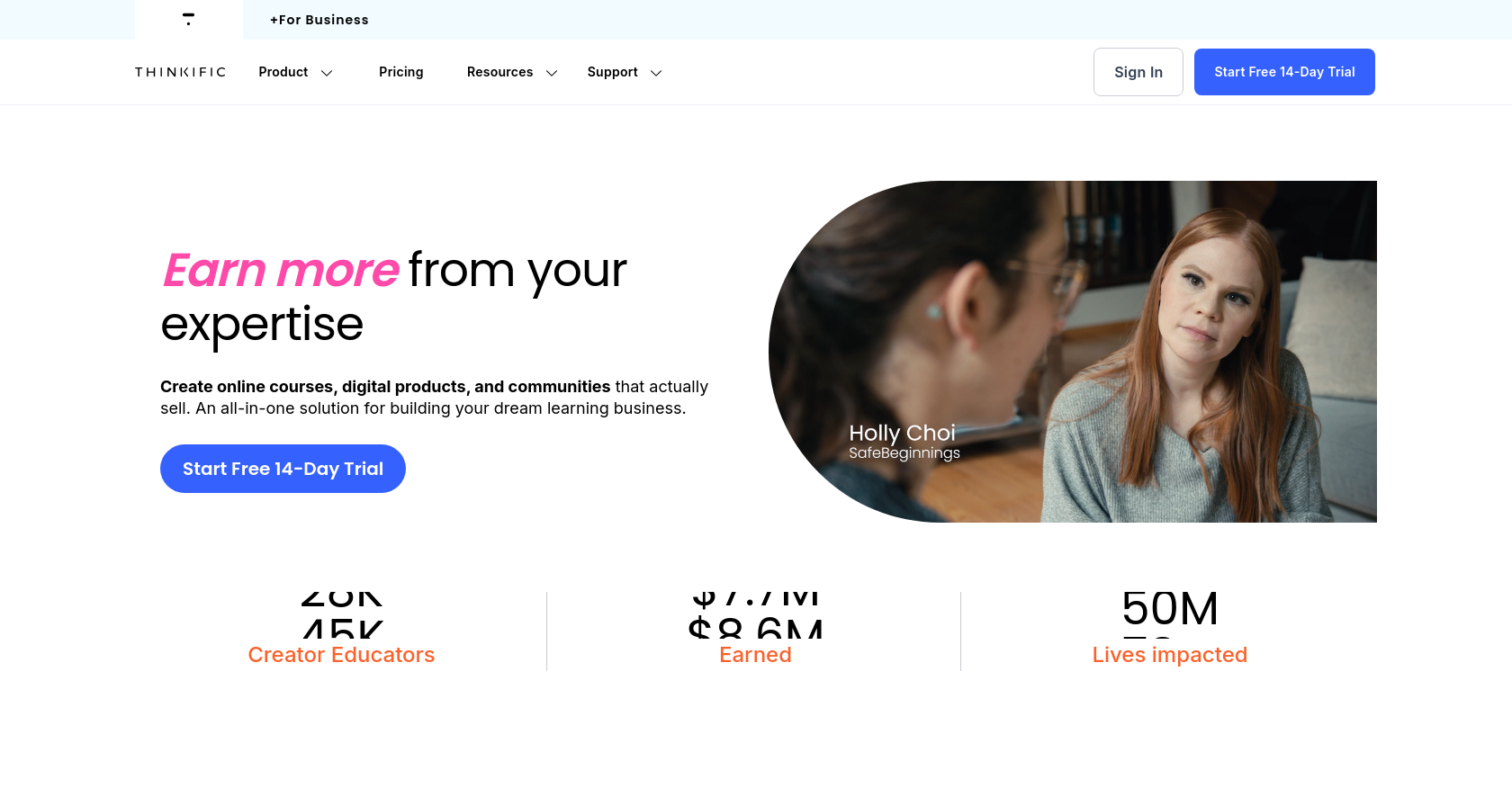
5. Thinkific: course creator platform with basic certification

Thinkific is a popular choice among individual course creators and small training businesses entering the market. It offers a straightforward course builder, basic certificate issuance, and Stripe-integrated payments, making it a low-barrier entry point.

As training businesses scale, Thinkific's limitations become apparent. Its community features are basic, its AI capabilities are limited, and its cohort management tools are not designed for the complexity of running multiple simultaneous cohorts. Training companies that outgrow Thinkific often migrate to more capable platforms.

Best for: Individual course creators and very small training businesses building their first certified programs.

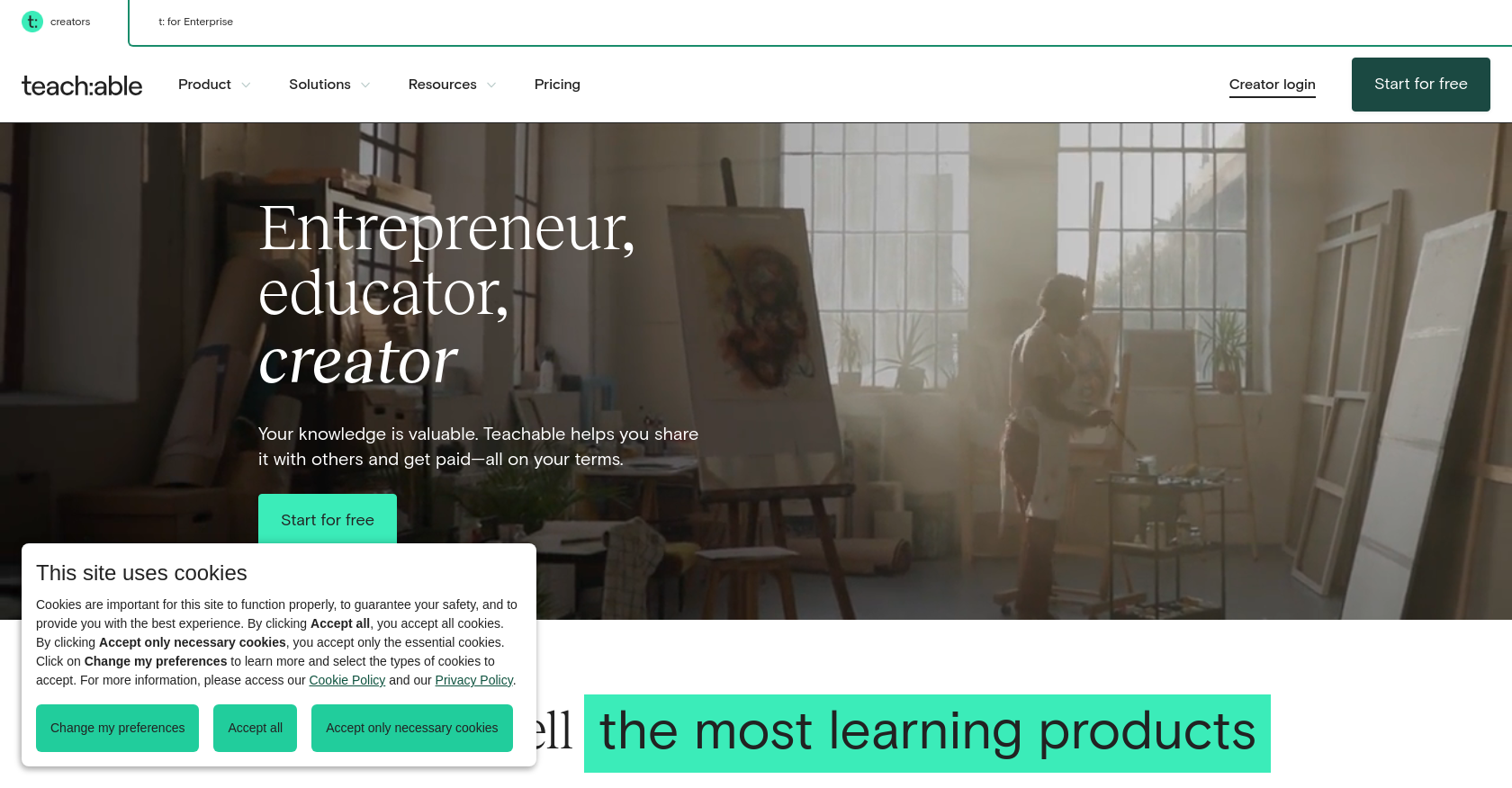
6. Teachable: simple course sales with certificate features

Teachable shares a similar profile to Thinkific: a user-friendly platform for individual creators with basic certification features alongside course sales capabilities. Its certificate builder is functional, and its payment processing is straightforward.

Like Thinkific, Teachable was not designed for the operational complexity of a growing training business. It lacks robust cohort management, meaningful community features, advanced AI capabilities, and the analytics depth that training companies need to demonstrate ROI to enterprise clients.

Best for: Individual instructors selling self-paced courses with basic completion certificates.

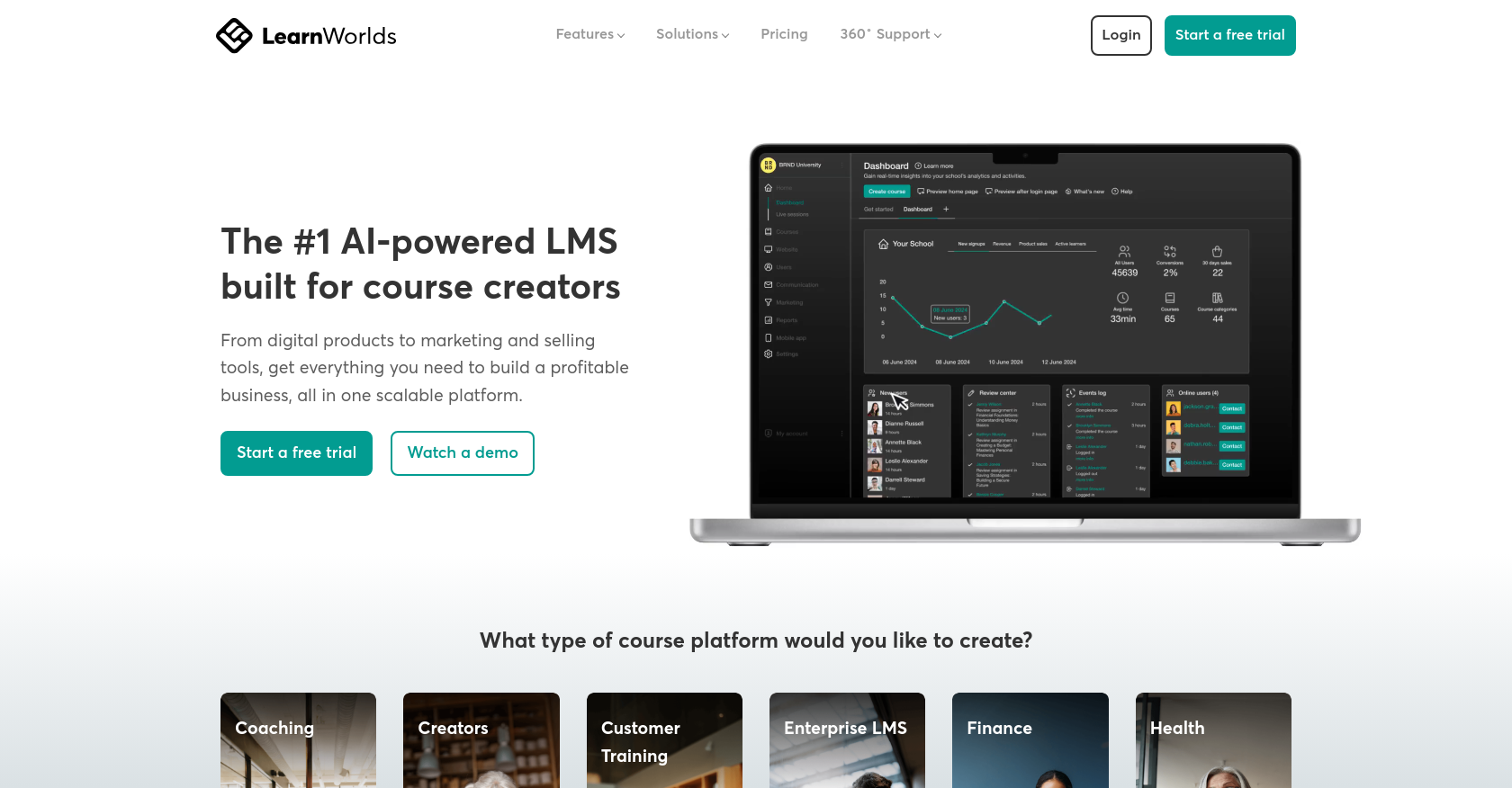
7. Learnworlds: interactive course platform with certification tools

Learnworlds differentiates itself through interactive video capabilities and a reasonably strong set of certification tools, including customizable certificate templates and exam-based certification workflows. Its white-labeling options are more developed than Thinkific or Teachable, making it a step up for training companies that need branded academies.

Learnworlds lacks the AI-native architecture, social learning depth, and cohort management sophistication that modern training companies need to deliver outcomes at scale. Its community features are limited, and its automation capabilities do not approach the level of intelligence that platforms like Disco provide.

Best for: Training companies that prioritize interactive video content and need more branding control than Thinkific or Teachable offer.

8. 360Learning: collaborative learning with peer-generated content

360Learning takes a distinctive approach by emphasizing peer-generated content and collaborative course creation. Its platform enables subject matter experts within organizations to create and share training content, which can accelerate content development in large enterprises.

360Learning is primarily designed for internal corporate L&D rather than for training companies selling programs externally. Its monetization capabilities are limited, and its architecture is better suited to organizations building internal knowledge-sharing cultures.

Best for: Large organizations building internal collaborative learning cultures with peer-generated content.

Platform comparison at a glance

Platform AI capabilities Cohort learning Monetization Best for
Disco Advanced: AI Canvas, Ask AI, smart nudges Native, full-featured Native Stripe, subscriptions, applications Training businesses of all sizes
Docebo Growing: AI tutor, skills intelligence Limited Enterprise-focused Large enterprise L&D
Absorb LMS Limited Minimal Internal only Compliance training
Thought Industries Basic Moderate Multi-tenant, white-label Multi-client academies
Thinkific Basic Limited Basic Stripe integration Solo course creators
Teachable Minimal Minimal Basic course sales Individual instructors
Learnworlds Basic Limited Moderate white-label Interactive video courses
360Learning Moderate Collaborative Internal only Internal corporate L&D

Why Disco is the best certification platform for training companies in 2026

The fundamental challenge for training companies is not finding online certification software that can issue certificates. Almost every platform on this list can do that. The challenge is finding a platform that makes those certificates meaningful by ensuring learners actually complete programs, achieve genuine competency, and emerge as advocates for your brand.

Disco approaches this through Human-First, AI-Native Learning. AI capabilities, from the AI Canvas that builds curricula in minutes to the Ask AI feature that answers learner questions around the clock, are designed to reduce administrative friction so that training companies can focus on delivering outcomes that justify premium pricing and generate lasting client relationships.

The platform's certification management covers the full credentialing lifecycle: initial enrollment, cohort assignment, program completion, certificate issuance, and recertification management, without requiring manual intervention at any stage. Fully branded certificates with custom templates, automatic issuance upon completion, and digital sharing capabilities let learners display credentials on LinkedIn, creating a virtuous cycle that drives organic enrollment for your programs.

See how training businesses are scaling certified programs with Disco: customer stories.

Explore the AI features behind Disco's certification workflows: disco.co/ai.

How to choose the right certification platform for your training business

Define your certification use case

Are you issuing completion certificates for self-paced courses, or running rigorous certification programs with assessments and expiry management? The complexity of your requirements should drive platform selection. For training companies running cohort-based certification programs with live assessments and ongoing recertification, an integrated approach is far more efficient than platforms that treat certification as a standalone feature.

Assess your monetization model

If your training business generates revenue from program sales, your platform must support your pricing model natively. Evaluate whether the platform supports one-time payments, subscriptions, payment plans, volume discounts, and enterprise invoicing. Platforms that require third-party payment tools add complexity that erodes margins.

Evaluate scalability

The platform that works for your first 100 learners may not work for your first 10,000. Assess how the platform handles multiple simultaneous cohorts, large learner populations, and complex organizational hierarchies. Consider whether pricing scales proportionally with your revenue, or whether per-seat pricing creates a ceiling on your growth.

Prioritize learner experience

Certification platforms that deliver poor learner experiences generate poor completion rates, weak outcomes, and negative word-of-mouth. Evaluate from the learner's perspective: Is the interface intuitive? Are live sessions integrated natively? Is there a mobile app? Does the platform support peer discussion, group projects, and live Q&A?

The future of certification platforms: what comes next

The certification platform landscape is evolving quickly, driven by three converging forces: the proliferation of AI, the shift toward skills-based hiring, and the growing demand for verifiable digital credentials.

According to the TalentLMS 2026 L&D Benchmark Report, 79% of HR managers are now adopting a skills-based approach to hiring and training. That trend will intensify demand for certification management platforms that issue granular, verifiable credentials tied to specific competencies, rather than broad course completions.

The platforms that will lead this next phase are those connecting certification to real-world skill demonstration, integrating with professional networks and HR systems, and using AI to continuously update certification requirements as skill demands evolve. Training companies that invest now in platforms with strong AI foundations, rather than legacy systems with AI features added on top, will be best positioned to capitalize on growing demand for certified, skills-based programs.

Frequently asked questions

What is the best certification platform for training companies in 2026?

Disco is the best overall certification platform for training companies in 2026. It combines AI-powered course creation, automated certificate management, cohort-based delivery, native monetization tools, and rich community features in a single platform purpose-built for training businesses.

What features should a certification platform have for a training business?

A certification platform for a training business should include a customizable certificate builder with automated issuance, AI-powered course creation tools, cohort-based learning with live session support, native payment processing and enrollment management, white-labeling and custom domain support, real-time analytics and reporting, community and social learning features, and a mobile app.

How does Disco's certification feature work?

Disco's certificate builder allows training companies to create fully branded certificate templates that are automatically issued to learners upon completing a course or program. Administrators set custom completion criteria, configure expiry dates and recertification reminders, and enable digital sharing so learners can display credentials on LinkedIn and other professional networks.

Can I use Disco for both self-paced and cohort-based certified programs?

Yes. Disco supports both self-paced and cohort-based learning formats, allowing training companies to offer a range of certified programs from a single academy. Many training businesses use Disco to offer self-paced foundational courses alongside premium cohort-based certification programs, with the platform managing enrollment, progression, and certificate issuance across both formats from one dashboard.

How does Disco compare to Docebo for training companies?

Docebo is a strong enterprise LMS with growing AI capabilities, but it is primarily designed for large corporate L&D teams rather than training businesses selling programs externally. Disco offers superior social learning features, native monetization tools, cohort management capabilities, and a more intuitive interface for training companies that need to move quickly and scale efficiently.

How much does a certification platform for training companies cost?

Certification platform pricing varies widely. Entry-level platforms like Thinkific and Teachable start at $50 to $150 per month but lack the features needed to scale a serious training business. Mid-market platforms like Disco range from $400 to $1,500 per month and offer the full suite of features that training companies need to grow. Enterprise platforms like Docebo can exceed $2,000 per month and are typically priced for large organizations with complex requirements.

Conclusion

The certification platform you choose is a strategic investment in the quality of your learner outcomes, the strength of your brand, and the scalability of your training business. In 2026, the platforms that deliver the greatest value combine AI-powered efficiency with the social learning depth needed to drive genuine transformation.

Disco stands apart because it was built for training companies, not adapted for them. Its AI-native architecture, cohort-based learning capabilities, automated certification tools, and native monetization features create a compounding advantage for training businesses building premium, scalable certified programs.

See how training companies are doing it: Disco customer stories.

Want to know if Disco fits your use case? See a preview of Disco in minutes.

Previous chapter
Chapter Name
Next chapter
Chapter Name
The Learning Community Playbook by Disco

Supercharge your community

The Learning Community Playbook delivers actionable insights, innovative frameworks, and valuable strategies to spark engagement, nurture growth, and foster deeper connections. Access this resource and start building a vibrant learning ecosystem today!

Get started

Plans starting at $399

Ready to scale your training business? Book a demo or explore pricing today.