


Top customer education platforms compared in 2026
TL;DR
The customer education software market is projected to reach $11.58 billion by 2025. Organizations with structured programs see a 22% average increase in product retention and a 6.1% decrease in support costs. But most platforms fail to deliver those returns because they treat customer education as a content delivery problem. This guide compares the top options and what actually separates them.
Customer education has a strong ROI case. Organizations with structured programs see a 22% average increase in product retention, a 38% increase in product adoption, and a 6.1% decrease in support costs. 90% of companies report positive returns from customer education investments.
The market reflects this: the customer education software segment is projected to reach $11.58 billion by 2025, growing at a 15.97% compound annual growth rate. But not all platforms produce those results. The ones that do combine structured curriculum with community, cohort-based delivery, and AI personalization. The ones that don't are primarily content libraries with a course builder attached.
Here's how the top platforms compare.
What separates high-performing customer education platforms
AI across the program lifecycle. AI for content generation is increasingly standard. What differentiates platforms is whether AI extends to learner support (instant Q&A from course content), operational automation (smart nudges, enrollment workflows), and engagement insights (identifying at-risk customers before they churn).
Community integrated into the learning experience. Courses with active communities see 30 to 40% higher completion rates. When discussion, peer Q&A, and live events live inside the learning environment rather than in a separate tool, participation follows. Platforms where community is bolted on consistently underperform those where it's built in.
Cohort-based delivery options. Self-paced content is convenient but produces low completion. Grouping customers through onboarding or advanced training together creates accountability and peer support that static content can't replicate. The platforms that support cohort infrastructure natively rather than through workarounds produce measurably better learner outcomes.
Top customer education platforms in 2026
1. Disco
Disco is purpose-built for organizations that want to deliver transformational educational experiences, including customer academies, training businesses, and internal learning programs. AI is native to every layer of the platform rather than added as a feature layer on top of legacy architecture.
The AI Canvas generates complete program structures and assessments from existing knowledge in minutes. Ask AI provides customers with instant, curriculum-specific answers around the clock. Smart nudges and automated workflows handle the operational layer. Community channels, live events, gamification, and cohort tools are deeply integrated rather than bolted on.
Starling, a professional development platform, uses Disco to deliver community-driven cohort learning experiences that drive career growth outcomes for their members. Read the Starling story.
Explore the full Disco AI suite, or see how it fits your customer education use case in minutes.
2. Skilljar

Skilljar is designed specifically for customer and partner education, with strong CRM integrations that connect learning data to business metrics like retention and expansion revenue. It's a solid enterprise option for SaaS companies running formal customer onboarding and certification programs. Its community and cohort features are more limited than platforms built around social learning, and the enterprise pricing and complexity can be disproportionate for teams that need to move quickly.
3. Docebo

Docebo is a well-established enterprise LMS with AI features for content curation and administrative automation. It handles large-scale global training requirements and integrates with complex enterprise software stacks. The implementation complexity and cost make it a heavier commitment for organizations that need to iterate quickly, and it places less emphasis on the social and cohort-based experiences that drive the highest completion rates.
4. Kajabi and Thinkific
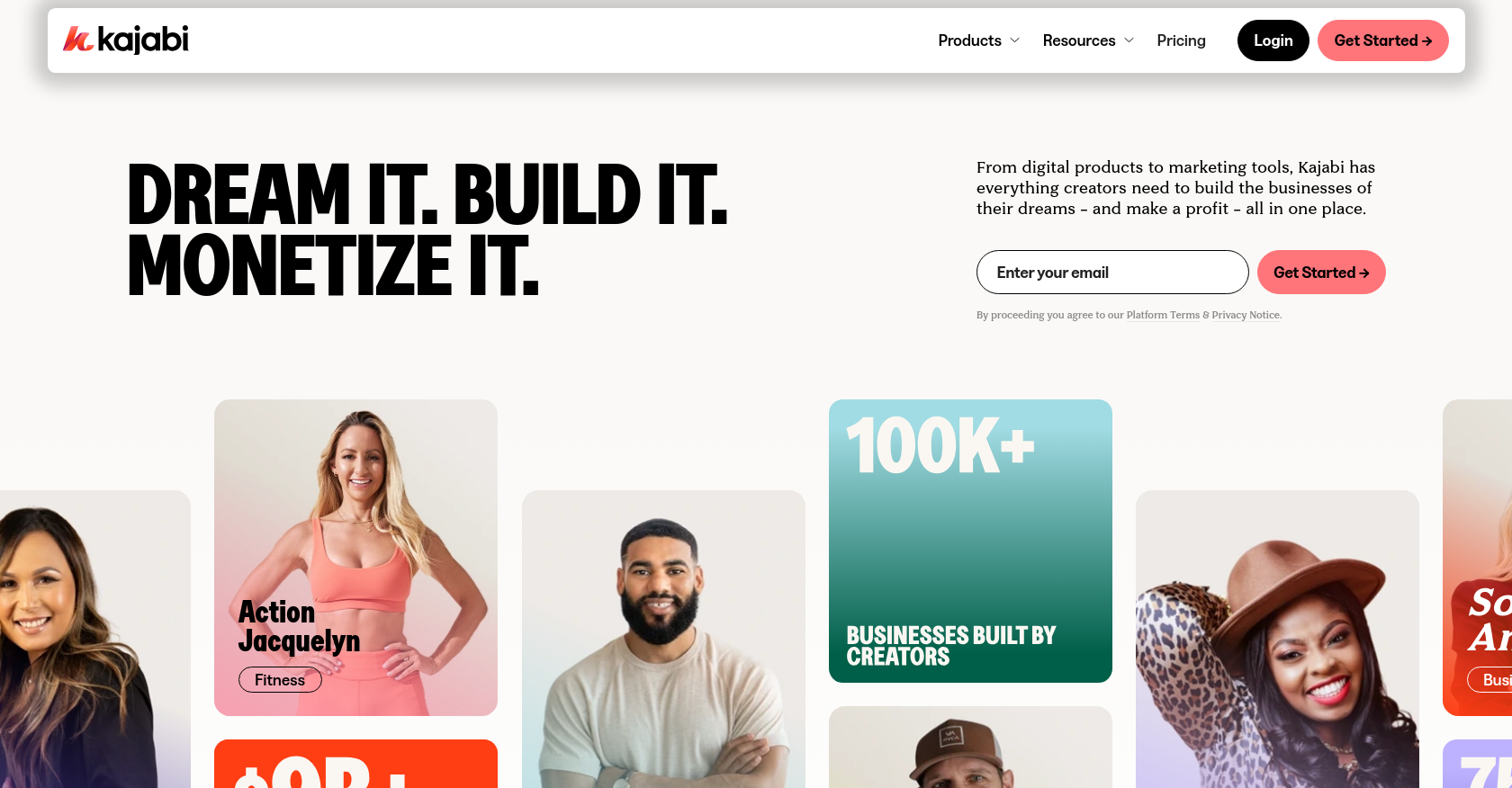
Both platforms are popular with individual creators and small training businesses for their marketing automation and course delivery tools. They work well for selling content externally but lack the B2B feature depth, API integrations, and AI capabilities that scaling customer education programs require.
5. Circle and Mighty Networks
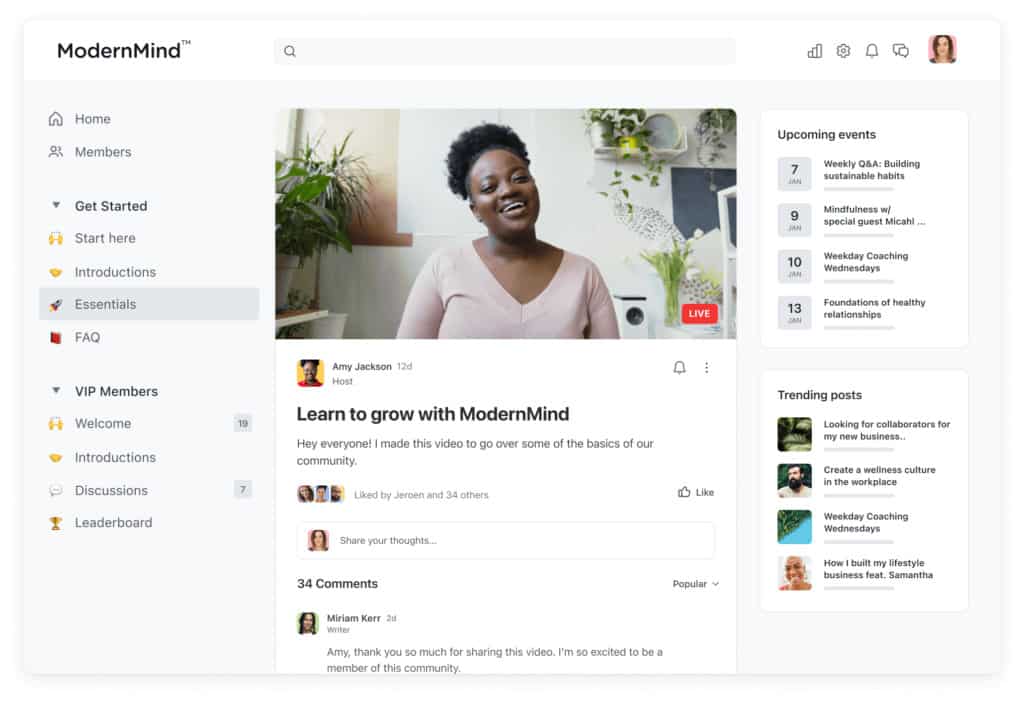
Both platforms approach education from a community-first perspective and excel at building engaged discussion spaces. They've added course features in recent years. Organizations that need comprehensive learning management, detailed analytics, and AI content generation will find the curriculum tools more limited than dedicated learning platforms.
6. 360Learning and Absorb LMS

360Learning focuses on collaborative internal learning, giving employees tools to create and share content with each other. It handles peer-to-peer knowledge sharing well in enterprise environments. Absorb LMS is strong for compliance tracking in regulated industries. Both serve their specific niches but aren't optimized for external customer education where community, cohort delivery, and AI automation are the primary drivers of outcomes.
Platform comparison
| Platform | Best for | Community depth | Customer ed fit |
|---|---|---|---|
| Disco | Customer academies, training businesses, cohort programs | Native, deeply integrated | Purpose-built |
| Skilljar | Enterprise SaaS customer and partner training | Minimal | Strong (narrow scope) |
| Docebo | Large-scale global enterprise training | Basic | Complex implementation |
| Kajabi / Thinkific | Individual creators, course sales | Basic | Limited B2B depth |
| Circle / Mighty Networks | Community-first organizations | Strong | Weak on curriculum |
| 360Learning / Absorb | Internal enterprise L&D, compliance | Moderate (internal) | Not optimized for external |
How to choose the right customer education platform
Define the outcomes you're measuring. Retention, product adoption, support ticket reduction, and NPS improvement are all valid goals. The platform you choose should make those metrics easy to track. Define success before you evaluate tools, and verify that each platform can surface the data that matters to your business.
Evaluate community as a first-class feature. Customer education programs that include community components consistently outperform those that don't. Ask whether community is native to the learning environment or whether customers have to navigate between separate tools. For a detailed breakdown of AI-powered options specifically for customer education, our guide to the best AI customer education platforms in 2026 goes deeper on evaluation criteria.
Test cohort delivery capability. If you want to run structured onboarding cohorts or advanced certification programs with group timelines, ask specifically how the platform handles group management, live session scheduling, and cohort-specific community spaces. The gap between native and workaround is significant in practice.
Conclusion
Customer education that drives retention isn't a content problem. It's an engagement problem. The platforms that produce measurable ROI combine structured curriculum with community, cohort infrastructure, and AI personalization in one environment where customers don't have to navigate between separate tools to learn and connect.
For organizations building customer academies that need to actually move retention numbers, the platform infrastructure needs to match that ambition. See how Disco fits your customer education use case in minutes.
FAQs
What is the difference between a traditional LMS and a customer education platform?
A traditional LMS is built for internal employee training, with a primary focus on compliance tracking and mandatory course completion. A customer education platform is designed for external audiences, prioritizing user experience, product adoption, community engagement, and integration with the business tools that track customer health and retention.
How do cohort-based programs improve completion rates for customer education?
Cohort programs group customers together on a shared timeline. That structure creates peer accountability, live interaction, and collaborative problem-solving that self-paced content can't provide. Customers who progress through onboarding or advanced training with peers are significantly more likely to complete the program and retain what they learn.
What role does AI play in modern customer education platforms?
AI transforms customer education by accelerating content creation (generating outlines, drafts, and assessments in minutes), providing instant learner support through curriculum-aware Q&A tools, and surfacing engagement insights that identify customers at risk of churning before they disengage. The depth of AI integration varies significantly across platforms.
Can I use a single platform for both internal employee training and external customer education?
Yes. Platforms like Disco support multiple use cases within the same environment. You can create separate learning spaces for internal teams and external customers, with distinct curriculum, community, and access controls for each. This consolidation simplifies management and reduces software costs.
What integrations are most important for customer education?
CRM integrations (Salesforce, HubSpot) to connect training data to customer health scores and retention metrics. Support ticketing integrations to measure reduction in support volume. Communication tools (Slack, Zoom) for live sessions and community. Payment processors for programs with a monetization component.
How do I measure ROI from a customer education platform?
The clearest ROI signals are net revenue retention among educated versus non-educated customers, churn rate differences, support ticket volume before and after academy adoption, feature adoption rates among program graduates, and time-to-value for new customers who go through structured onboarding. Establish baselines before launch so comparisons are meaningful.


