


Best cohort-based learning platforms in 2026
TL;DR
Self-paced courses average 3% to 15% completion. Cohort-based programs consistently reach 90%. The difference is structural: shared timelines, peer accountability, and live interaction create conditions that passive content delivery can't replicate. This guide covers the top cohort-based learning platforms, what separates them, and how to choose the right one for your programs.
The completion rate problem in online learning is well-documented. Self-paced courses average 3% to 15% completion. Cohort-based programs, where groups of learners move through a curriculum together, consistently achieve completion rates of 90% or higher. The global cohort-based courses market reached $3.8 billion in 2024 and continues to grow as more organizations recognize the model's superior outcomes.
The difference isn't content quality. It's architecture. Shared timelines, peer accountability, live interaction, and community belonging create conditions for completion that passive content delivery simply can't replicate. Social and emotional learning research confirms this: students in social learning programs demonstrate higher academic achievement, improved attendance, and stronger engagement.
The platform you choose to deliver cohort programs shapes whether those conditions exist or have to be patched together from external tools. Here's how the top options compare.
What cohort-based platforms actually need to support
Group management and cohort infrastructure. Native tools for organizing learner groups, setting shared timelines, scheduling live sessions, and tracking collective progress. This is the structural backbone of cohort delivery and can't be an afterthought.
Community and social learning tools. Discussion channels, direct messaging, peer accountability features, and activity feeds that live inside the learning environment rather than in a separate tool. When community is bolted on, participation drops.
Live session integration. Seamless connection with video conferencing for real-time workshops, Q&A, and breakout sessions, without requiring learners to navigate external apps mid-program.
AI and automation. AI that generates course content, provides 24/7 learner support, and automates operational workflows is what makes it practical for lean teams to run cohort programs at scale without sacrificing the quality of the experience.
Top cohort-based learning platforms in 2026
1. Disco
Disco is purpose-built for cohort-based and social learning. It combines curriculum management, community tools, live event support, and AI automation in one platform, without requiring external tools to fill gaps.
The AI Canvas generates complete program structures in minutes. Ask AI provides learners with instant, curriculum-specific answers. Smart nudges and automated workflows handle the operational layer. Community channels, gamification, and live events keep cohorts engaged through to completion.
Coding Temple evaluated 17 different platforms before choosing Disco to power their cohort-based tech bootcamp programs. After launching, they doubled their learner NPS, a direct result of the engagement and community infrastructure Disco provides. Read the Coding Temple story.
Explore the full Disco AI suite, or see how it fits your cohort programs in minutes.
2. 360Learning

360Learning focuses on collaborative learning for corporate teams, giving internal subject matter experts tools to create and share content. It handles peer-to-peer knowledge sharing well in enterprise environments. For training businesses running externally facing cohort programs, or organizations that need deep community infrastructure, its capabilities are more limited.
3. Kajabi
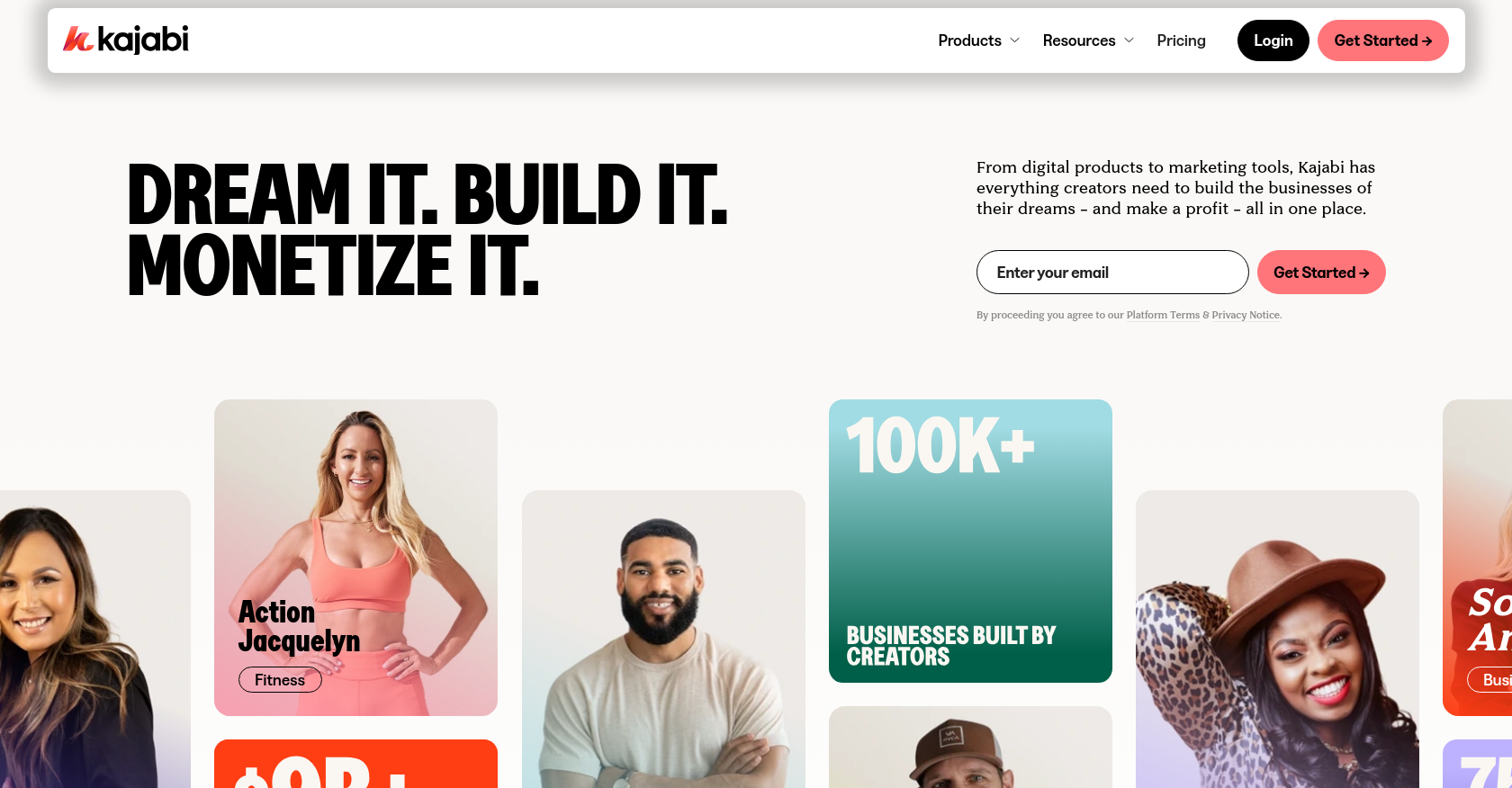
Kajabi is a popular all-in-one platform for knowledge entrepreneurs, with strong marketing and course sales tools. Its community features have improved over time but are still designed as additions to a self-paced-first architecture. Running a genuinely cohort-based program on Kajabi typically requires stitching in external tools for community and live session management.
4. Circle
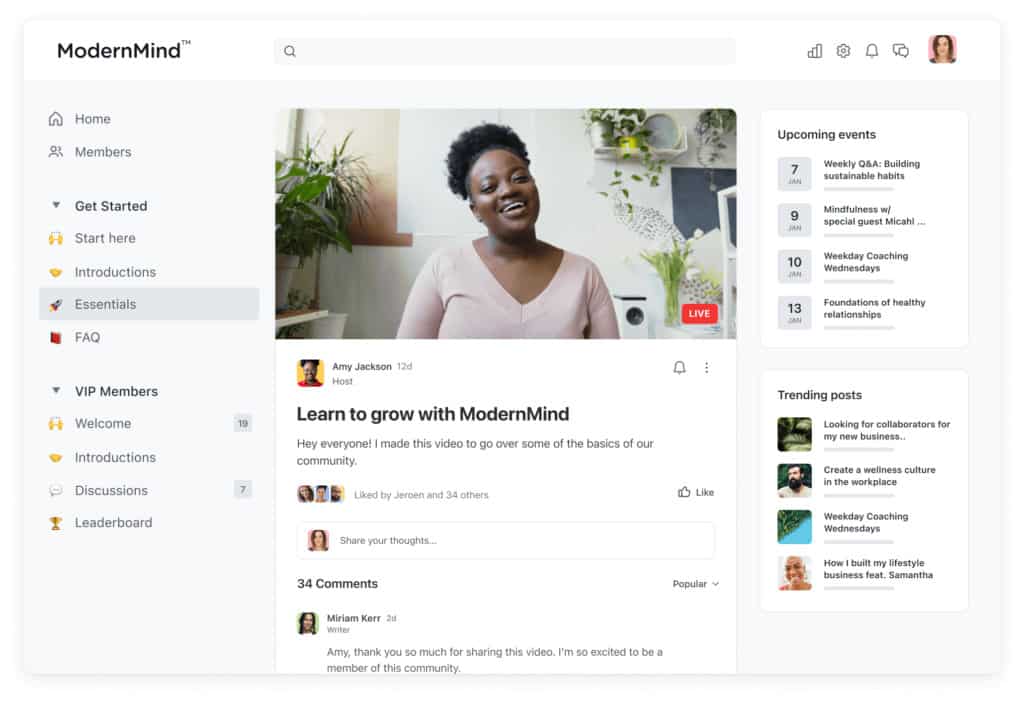
Circle started as a community platform and has added course features. It excels at organizing discussion and building member engagement. Because its foundation is community rather than structured learning, it lacks the curriculum management, assessment tools, and AI automation that purpose-built cohort platforms provide.
5. Thinkific
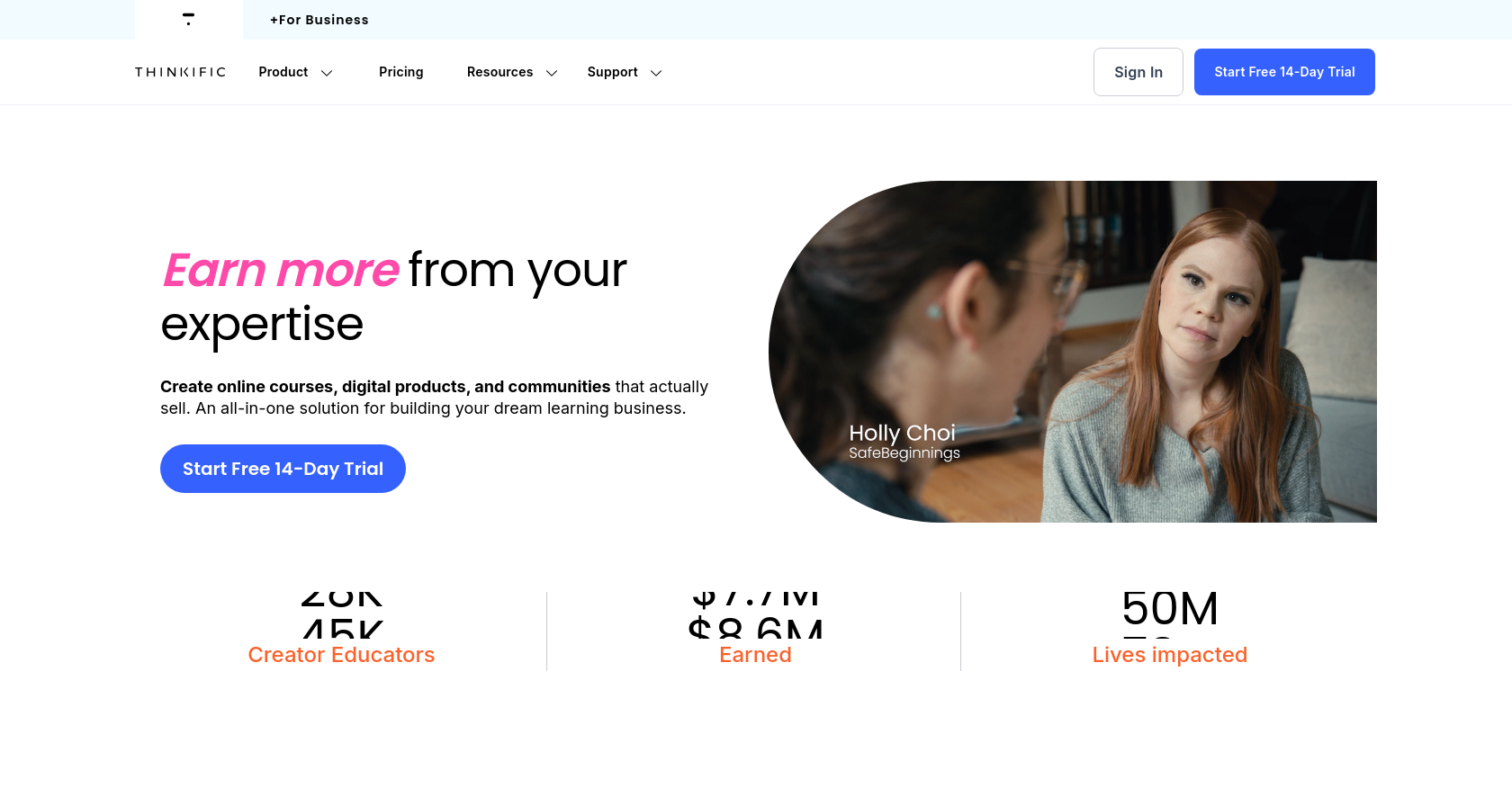
Thinkific offers a user-friendly course builder with good customization options and a growing set of community features. Its roots are in self-paced video delivery. To run a cohort program effectively, you typically need external tools for live sessions and deeper community interaction, which fragments the learner experience.
6. Docebo, Skilljar, and enterprise LMS platforms

Enterprise platforms like Docebo and Skilljar offer powerful compliance tracking, detailed reporting, and broad integrations. They're built for large-scale formal training rather than the dynamic, community-driven cohort experience. For training businesses and bootcamps, their complexity and pricing are often disproportionate to what the use case requires.
Platform comparison
How to choose the right platform
Start with your learning model. If cohort-based delivery is central to your programs, the platform infrastructure needs to support it natively. Workarounds for community, live sessions, or group management add friction that compounds over time and shows up in completion data.
Evaluate community as a first-class feature. The platforms where community is deeply integrated into the learning experience consistently outperform those where it's a separate tab or an external integration. Ask where discussion happens relative to the curriculum, and whether learners have to leave the platform to engage with peers.
Check AI depth beyond content generation. Basic AI for writing course outlines is table stakes. The tools that move outcomes use AI across the full program lifecycle: generating assessments, providing real-time learner support, surfacing at-risk members, and automating operational workflows.
For a more detailed breakdown of how specific platforms compare across use cases, our guide to the best cohort course platforms for training leaders in 2026 covers the evaluation criteria in more depth.
Conclusion
Cohort-based learning works because it creates the social conditions humans actually learn in. The platform is what makes those conditions possible at scale without requiring a team of administrators to hold them together manually.
For training businesses, bootcamps, and customer academies that want cohort delivery, community, and AI automation in one platform, Disco is built for exactly that use case. See how it fits your programs in minutes.
FAQs
What is the difference between cohort-based and self-paced learning?
Self-paced learning lets individuals move through content independently on their own timeline. Cohort-based learning moves a group through a structured curriculum together on fixed dates, with live sessions, peer interaction, and shared accountability built in. Cohort programs consistently achieve 90%+ completion versus 3 to 15% for self-paced alternatives.
Why do cohort-based programs have higher completion rates?
Shared timelines create accountability. Live sessions create commitment. Peer relationships create motivation to show up. These social dynamics make it much harder to quietly disengage than in a self-paced course with no fixed schedule and no peers to disappoint.
Can I run a cohort program with a small audience?
Yes. Starting with a small beta cohort is actually best practice. It lets you test curriculum flow, facilitation approach, and platform setup with a forgiving group before scaling. A cohort of 10 to 15 learners is enough to generate the social dynamics that make the model work.
How does AI improve cohort-based learning?
AI accelerates program creation, provides instant learner support through tools like Ask AI, identifies at-risk members before they churn, and automates the operational workflows that would otherwise require manual intervention at scale. The best implementations reduce administrative burden while improving the learner experience simultaneously.
What makes Disco better suited for cohort programs than traditional LMS platforms?
Traditional LMS platforms are built for compliance and one-way content delivery. Disco is built around social learning: cohort infrastructure, community tools, live events, and AI automation are native features rather than add-ons. That design difference shows up in completion rates and learner satisfaction.
How do I transition from self-paced courses to a cohort model?
Use your existing content as asynchronous pre-work before live sessions. Add a structured timeline, design group activities, and create community spaces for peer interaction. The content stays largely the same; the architecture changes. Most programs can be restructured in a few weeks with the right platform infrastructure in place.


