


Best online course platforms for training businesses in 2026

TL;DR
The best online course platforms in 2026 go well beyond hosting video content. They combine AI-native course creation, deep community features, and the operational tools training businesses need to scale. This guide compares the top options and explains why Disco's human-first, AI-powered approach is the most comprehensive solution for training companies looking to build, sell, and deliver programs that actually transform learners.
Why platform choice matters for training businesses
The online course platform you choose determines more than your tech stack. It determines your completion rates, your learner engagement, your ability to scale, and ultimately your revenue. For training businesses in 2026, the difference between a platform built for solo course creators and one built for professional training operations is significant.
This guide compares the top platforms honestly, explains what separates them, and helps you identify the right fit for where your training business is headed.
What training businesses actually need from a platform
Training businesses have different requirements than individual creators selling self-paced content. The key capabilities to evaluate are cohort management, community features, AI-powered course creation, certification and credentialing, and enterprise integrations. Platforms that excel at one-off video course sales often struggle with the operational complexity of running multiple cohorts, managing live events, and delivering certified programs at scale.
Completion rate is also a critical metric for training businesses. A platform that drives high engagement and course completion is a platform that generates referrals, renewals, and expansion revenue. Platforms that deliver passive, isolated learning experiences consistently underperform on this metric.
The platforms worth evaluating in 2026
Disco
Disco is purpose-built for training businesses, bootcamps, consultants, and academies that need to deliver transformational learning at scale. It combines AI-powered course creation, cohort-based delivery, integrated community tools, and advanced analytics in a single platform designed for engagement rather than passive content consumption.
Disco's AI Canvas generates full course outlines, quizzes, and learning paths in minutes. The Ask AI feature gives learners instant, context-aware answers drawn from course content, reducing repetitive Q&A. Integrated live events, discussion channels, and leaderboards create the social layer that drives completion rates well above industry averages. White-labeling lets training businesses present a polished, branded academy rather than a generic platform interface.
Disco is not just a content platform. It is an operating system for a learning business. See how training businesses are scaling with Disco: disco.co/customer-stories. A.CRE, a commercial real estate education provider, replaced a custom LMS and four separate tools with Disco, scaling to 8,000+ learners while saving 520 hours annually. Coding Temple evaluated 17 platforms before choosing Disco and doubled their learner NPS after switching.
Explore Disco's full AI capabilities: disco.co/ai.
Kajabi
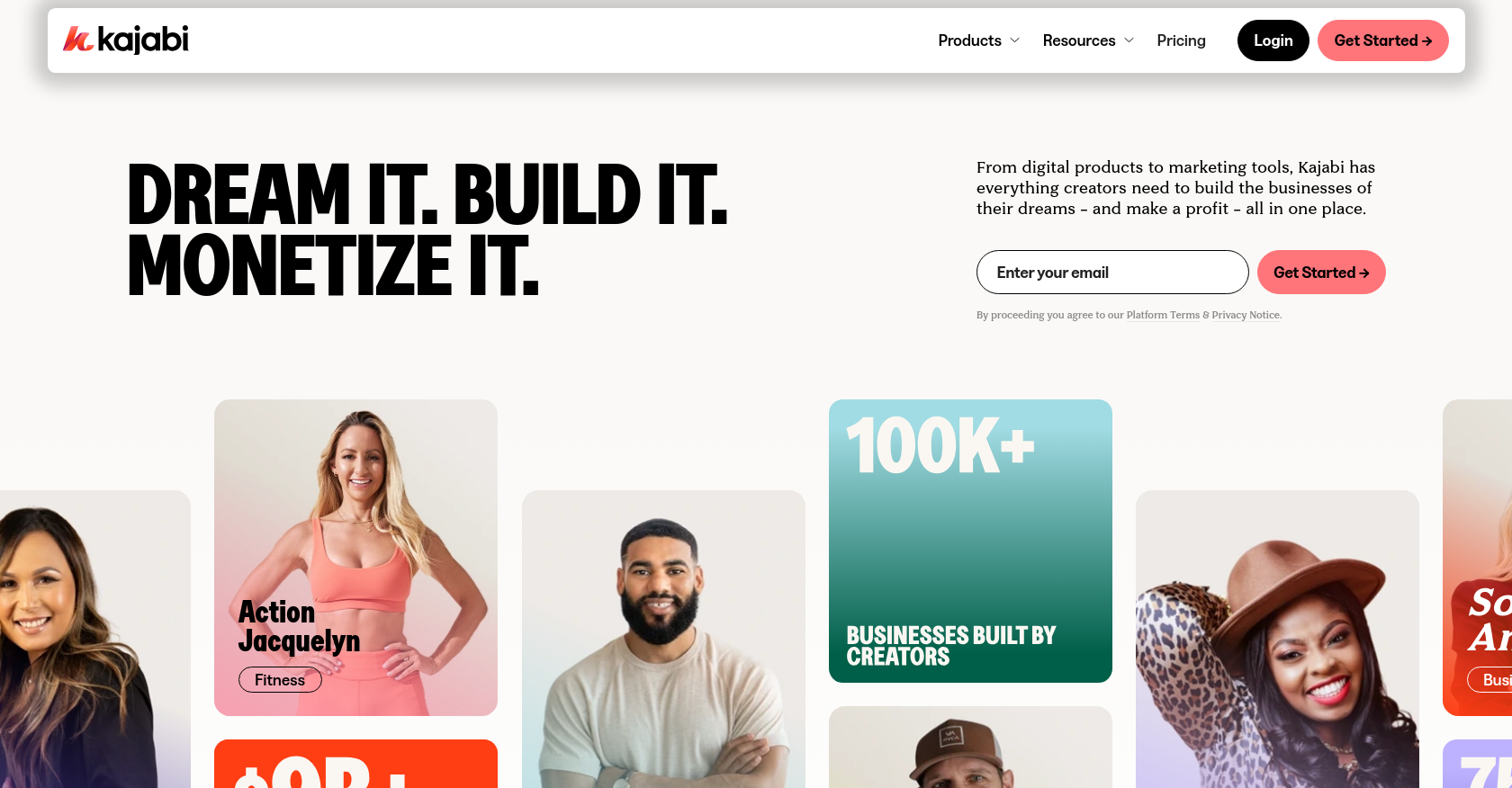
Kajabi is designed for individual creators and course entrepreneurs. It handles payments, basic course delivery, email marketing, and landing pages in one place. For a solo operator selling self-paced video content, Kajabi provides a capable all-in-one environment. For a training business running cohort programs, managing enterprise clients, or requiring meaningful community features, Kajabi falls short. Its community tools are basic, cohort management is manual and limited, and there is no AI-native course creation comparable to Disco's AI Canvas.
Teachable
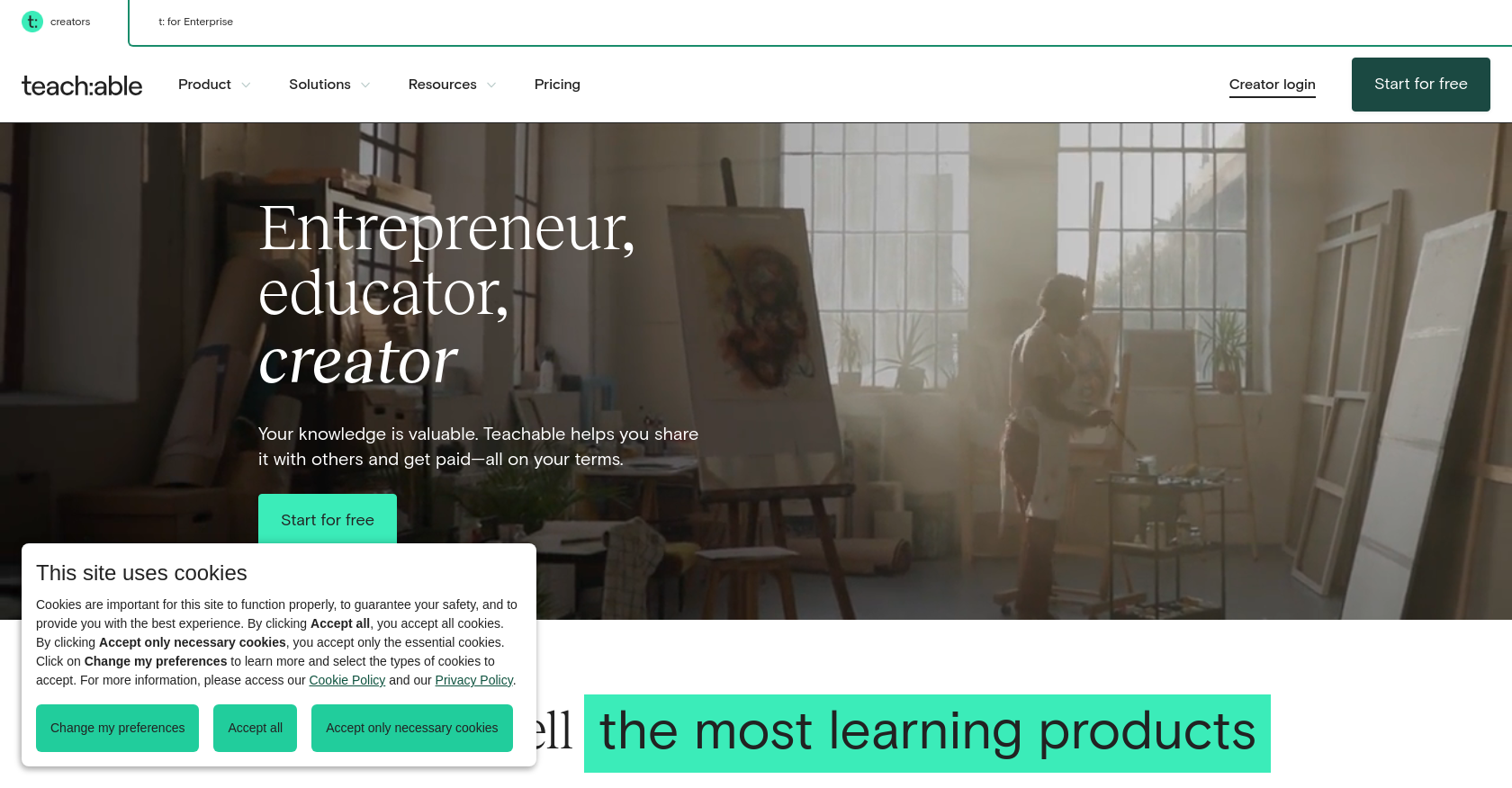
Teachable is a straightforward course creation and selling platform. It is easy to set up and works well for simple, self-paced course delivery. Like Kajabi, it was built for individual creators rather than professional training operations. It lacks cohort management, native live event tools, and meaningful AI program creation capabilities.
Thinkific
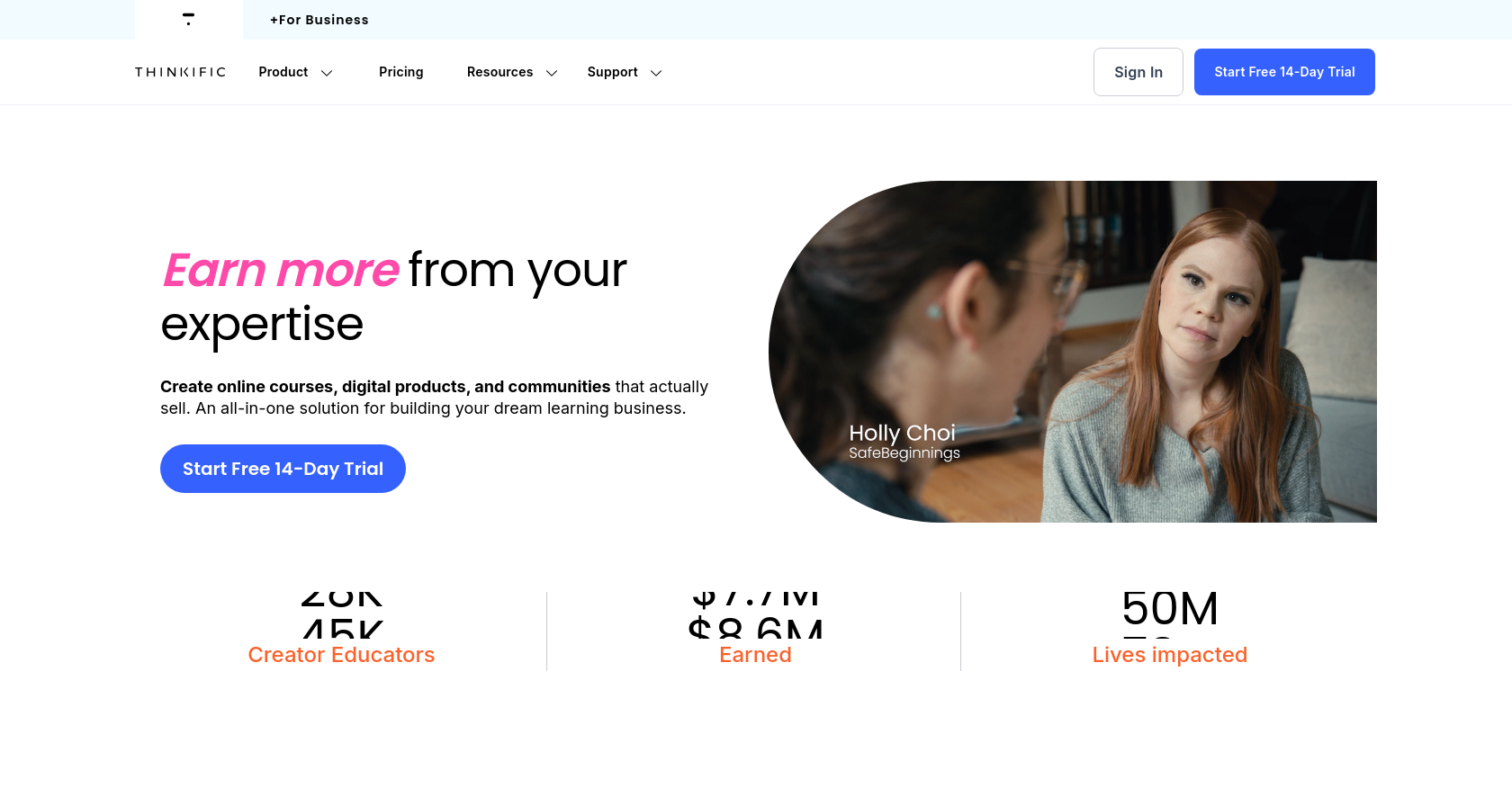
Thinkific offers solid course hosting with e-commerce features and some community add-ons. It is a reasonable choice for training businesses that primarily sell self-paced courses without live components. For businesses that want to run cohort-based programs with strong peer interaction and community, Thinkific's architecture limits what is achievable. Its AI features are less developed compared to AI-native platforms.
360Learning

360Learning is built for internal corporate training with a focus on collaborative course creation. Its strengths are peer review workflows and collaborative authoring. For external training businesses selling certified programs to enterprise clients, 360Learning's positioning and feature set are oriented toward a different use case. Its community architecture is less suited for customer-facing academies.
Learnworlds
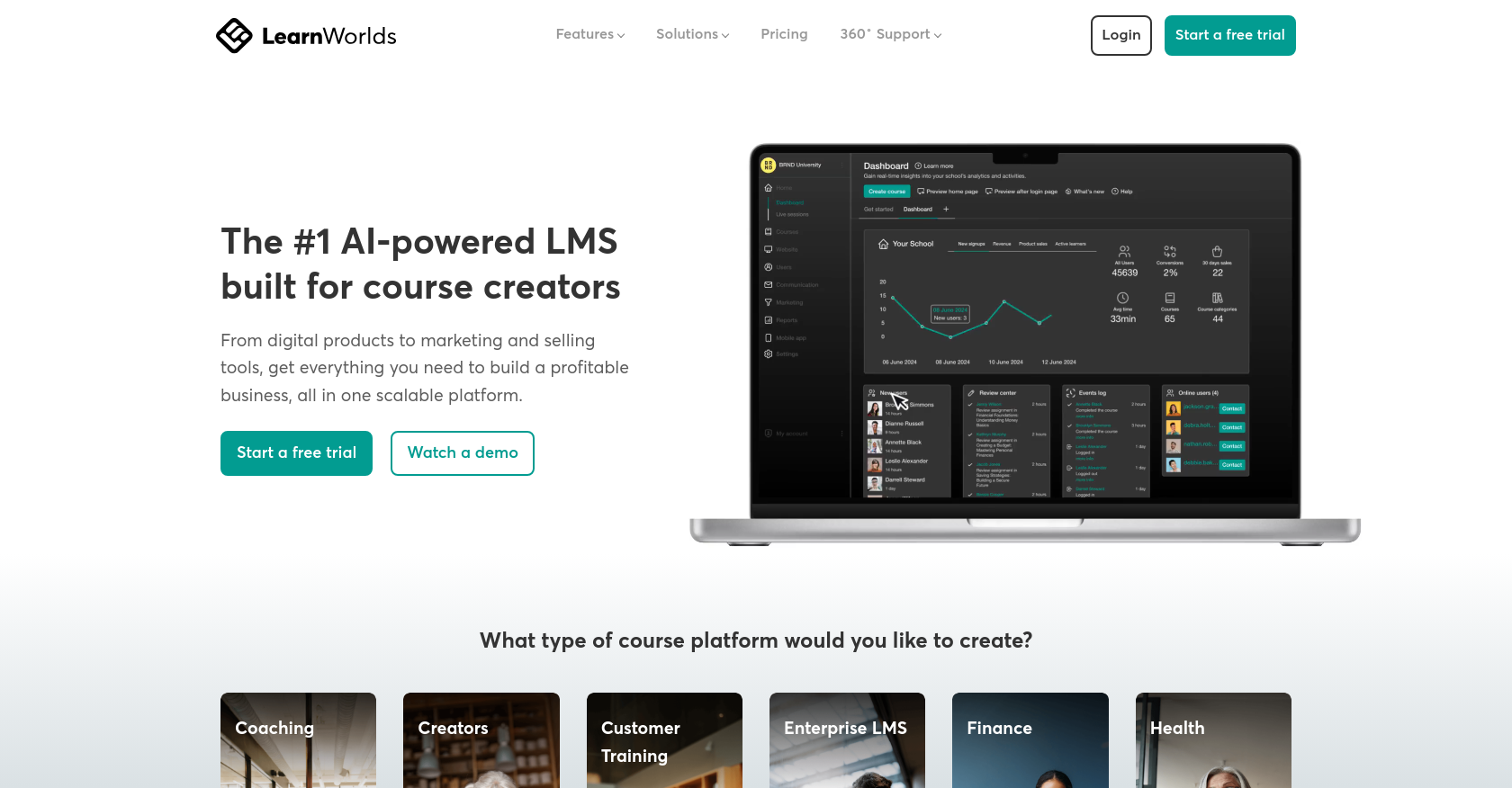
Learnworlds offers a polished interface with interactive video tools and solid white-labeling. It is a reasonable middle-ground for training businesses that want a more professional look than Teachable or Thinkific without the full complexity of an enterprise LMS. Its community and cohort management features are more limited than Disco's, and its AI capabilities are less comprehensive.
How to choose the right platform for your training business
The most important question to answer before evaluating platforms is: what type of learning experience do you need to deliver? If your training business runs cohort programs with live sessions and peer interaction, you need a platform built for cohort delivery. If you primarily sell self-paced reference content, a simpler creator platform may suffice.
For training businesses building certified programs at scale, the combination of AI-powered content creation, cohort management, community integration, and analytics is the key differentiator. Platforms that require manual workarounds for cohort management, or that treat community as an afterthought, will limit your operational capacity as you grow.
Want to see how Disco fits your training business? See a preview in minutes.
Frequently asked questions
What is the best online course platform for training businesses?
For training businesses running cohort programs, certified courses, or customer-facing academies, Disco is the strongest option in 2026. It combines AI-powered course creation, cohort management, community tools, and enterprise integrations in a single platform built specifically for professional training operations rather than solo content creators.
How do completion rates compare between platforms?
Self-paced courses on most platforms see completion rates of 15 to 20 percent. Cohort-based programs delivered on platforms like Disco, where learners progress together with live events and peer interaction, consistently achieve completion rates of 85 percent or higher. The platform architecture directly influences this outcome.
Can I white-label my learning platform?
Disco offers full white-labeling, allowing training businesses to present a completely branded academy. Kajabi, Teachable, and Thinkific offer varying degrees of branding customization, but Disco's white-labeling is more complete and suited for enterprise and B2B training contexts.


