


Top 10 Squarespace alternatives for course creators in 2025
TL;DR
Squarespace works well for simple websites, but course creators and learning businesses need purpose-built platforms. The best alternatives include Disco (AI-powered cohort-based learning), Kajabi (all-in-one marketing), Teachable (straightforward course hosting), and Mighty Networks (community-first). Your choice depends on whether you prioritize learning outcomes, marketing automation, or community engagement.
Find the right platform to scale your learning business beyond basic website functionality, with options built for cohort-based courses, community engagement, and AI-powered automation.
Why course creators outgrow Squarespace
Squarespace excels at beautiful websites. It does not excel at delivering transformational learning experiences that drive completion and engagement.
The numbers tell the story: self-paced online courses average just 3-5% completion rates, according to research from MIT and Harvard on MOOC performance. Squarespace's course features, while functional, lack the community infrastructure and engagement tools that drive learners to actually finish what they start.
Course creators and training businesses hit predictable walls with Squarespace. Limited learning analytics make it difficult to understand where learners struggle. No native community features mean learners study in isolation. Manual operations consume hours that could go toward curriculum development.
The alternatives below solve these problems in different ways. Some focus on marketing automation. Others prioritize community. The best combine social learning, intelligent automation, and cohort-based delivery to achieve the 90%+ completion rates that professional learning businesses require.
1. Disco: Best for all-in-one AI-powered community learning
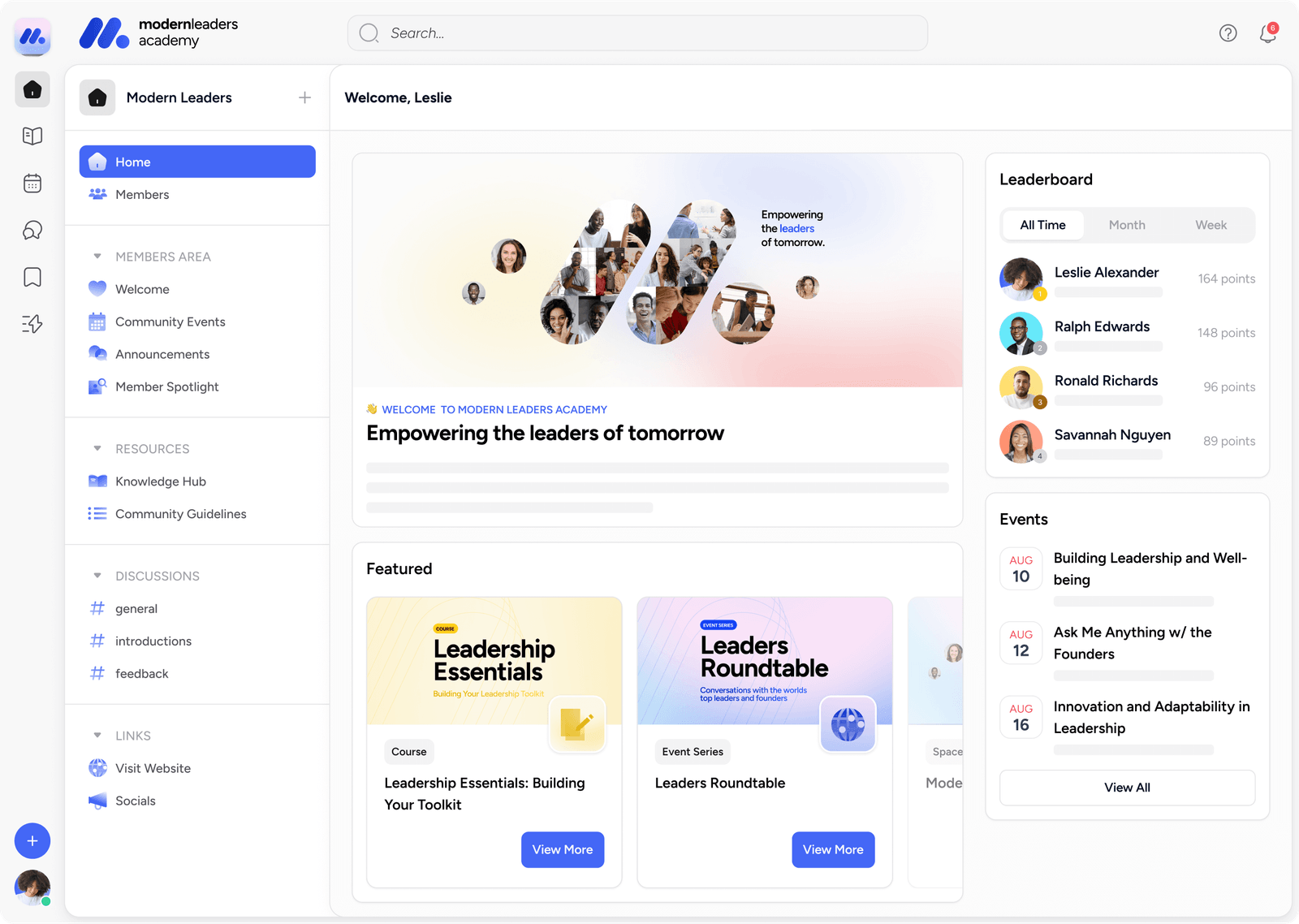
Best for: Training businesses, customer academies, and professional educators who want to scale high-touch learning experiences without scaling headcount.
Disco approaches online learning differently than traditional course platforms. Rather than treating courses as content libraries, Disco operates as a complete learning operating system that combines cohort-based delivery, community connection, and AI-powered automation.
The platform's AI agents handle operational tasks that typically consume 15-20 hours per week for learning operators: onboarding sequences, engagement prompts, progress tracking, and community moderation. This automation allows small teams to deliver personalized experiences to hundreds of learners simultaneously.
Standout features:
- AI-powered curriculum design that transforms existing content into structured learning paths
- Native cohort management with automated scheduling, reminders, and progress tracking
- Built-in community spaces where learners connect with peers and mentors
- White-label branding for customer academies and professional training programs
- Real-time engagement analytics showing exactly where learners need support
Pricing: Custom pricing based on organization size and requirements. Plans start with Disco Organization and scale to Disco Enterprise for larger deployments.
Why it ranks first: Disco customers report 76% average engagement rates and 84 NPS scores. The platform's cohort-based model addresses the fundamental completion rate problem that plagues self-paced alternatives. For learning businesses serious about outcomes rather than just content delivery, Disco provides infrastructure that traditional LMS platforms and website builders cannot match.
Organizations like Kaplan, Toronto Board of Trade, and CourseHero use Disco to power learning experiences that combine the scalability of technology with the effectiveness of human connection.
2. Kajabi: Best for marketing-focused course creators
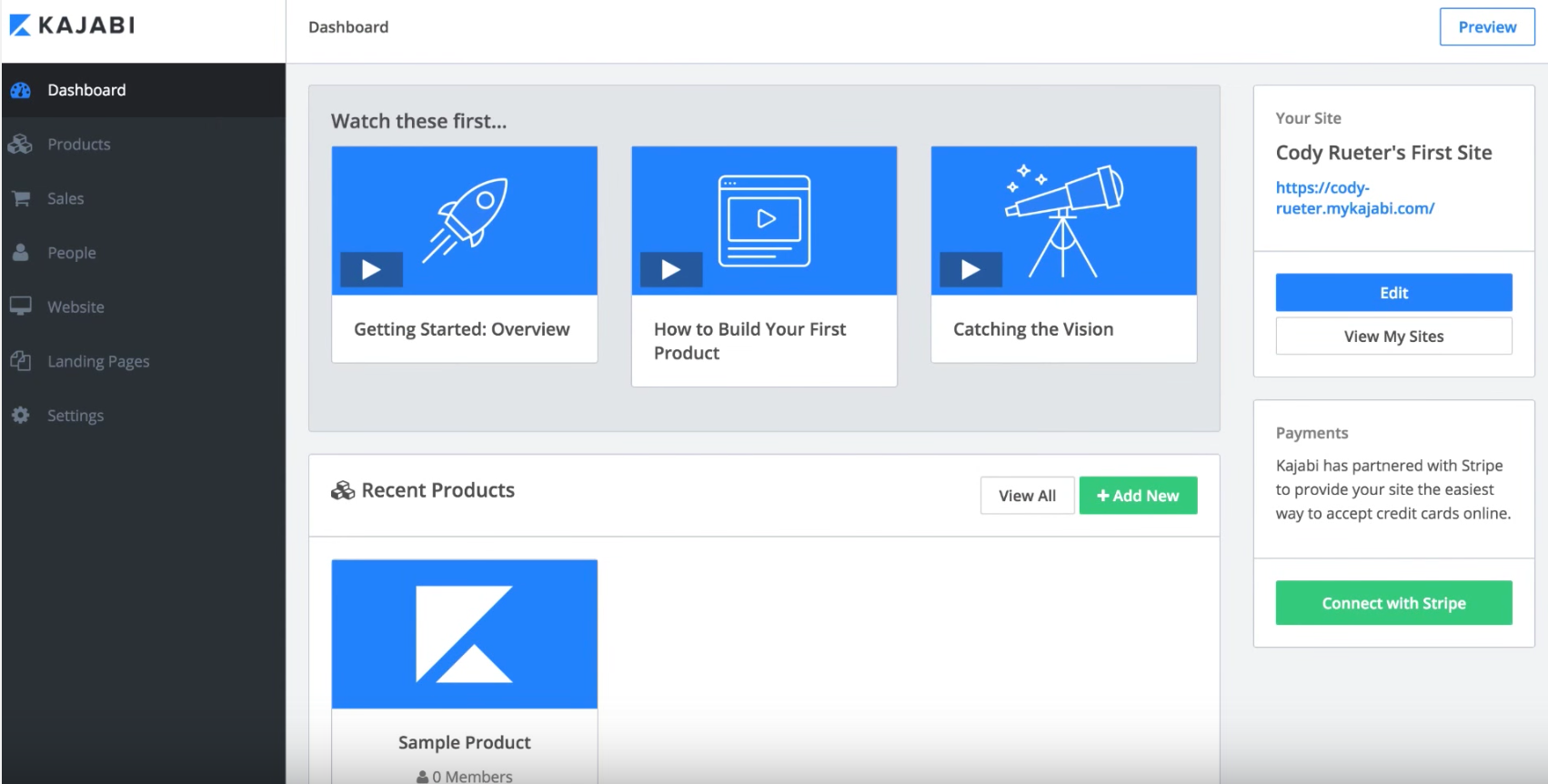
Best for: Solo creators and small teams who prioritize sales funnels and marketing automation alongside course delivery.
Kajabi positions itself as an "operating system for human expertise," combining course hosting with email marketing, landing pages, and sales pipeline management. The platform excels when your primary challenge is selling courses rather than optimizing learning outcomes.
The all-in-one approach eliminates the need to connect multiple tools. Course content, email sequences, checkout pages, and customer management live in a single dashboard. This consolidation appeals to creators who find the typical Zapier-connected tech stack overwhelming.
Standout features:
- Integrated email marketing with automation sequences
- Sales pipeline and funnel building tools
- Podcast hosting alongside course content
- AI content generation for marketing copy
- Membership site functionality
Pricing: Starts at $149/month for the Basic plan. Growth and Pro plans at higher tiers add more products, contacts, and team members.
Where it falls short: Kajabi's learning features remain basic compared to purpose-built LMS platforms. Community features exist but feel secondary to the marketing focus. The platform works well for selling courses but provides limited tools for actually improving learning outcomes.
3. Teachable: Best for straightforward course hosting
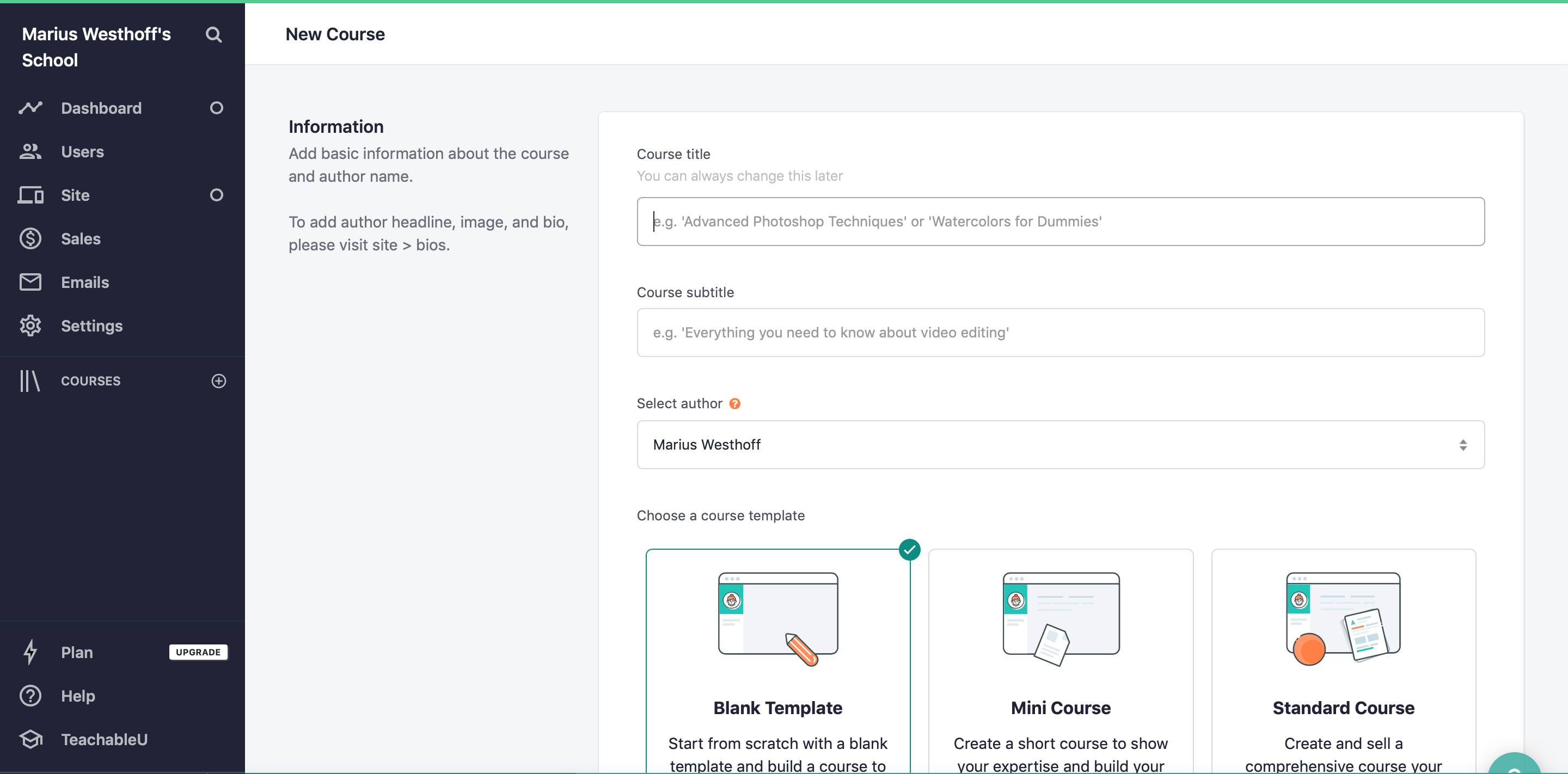
Best for: Educators who want simple course creation without complex features or steep learning curves.
Teachable built its reputation on simplicity. The platform makes uploading video content and creating course structures genuinely easy, even for first-time course creators. Over 100,000 creators use Teachable to host courses, generating more than $1 billion in course sales according to company data.
The focus on simplicity means Teachable avoids feature bloat. Course creation follows a logical flow. Student management stays straightforward. Payment processing works reliably across multiple currencies.
Standout features:
- Intuitive course builder with drag-and-drop functionality
- Built-in payment processing with multiple currency support
- Basic quizzes and completion certificates
- Affiliate marketing program management
- Student progress tracking
Pricing: Free plan available with transaction fees. Paid plans start at $59/month for Basic, with Professional and Business tiers for growing operations.
Where it falls short: Teachable's simplicity becomes a limitation as learning businesses grow. Community features require workarounds. Engagement tools remain basic. The self-paced model delivers typical MOOC completion rates unless creators manually build cohort structures around the platform.
4. Thinkific: Best for scalable course businesses
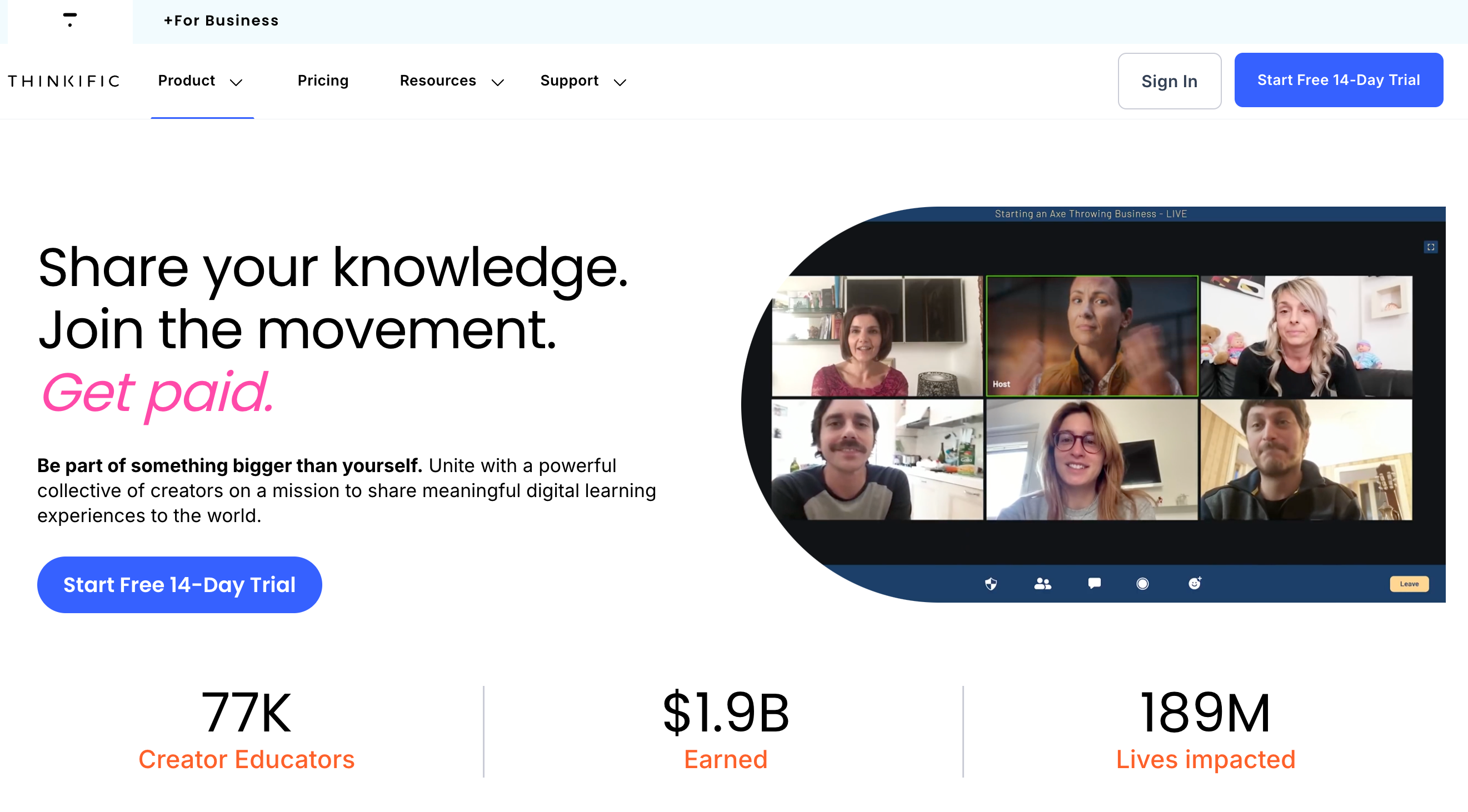
Best for: Course businesses ready to scale beyond solo creator operations into team-based content production.
Thinkific occupies the middle ground between simple course hosting and enterprise learning management. The platform supports complex course catalogs, multiple instructors, and sophisticated pricing models while maintaining reasonable ease of use.
Recent product development has pushed Thinkific toward B2B and enterprise use cases. The Thinkific Plus tier targets organizations building customer education programs and professional training academies.
Standout features:
- Advanced course builder with multimedia support
- Thinkific Communities for student interaction
- Detailed analytics and reporting
- White-label options for branded academies
- App store with third-party integrations
Pricing: Free tier available. Basic starts at $49/month. Pro at $99/month adds priority support and advanced features. Thinkific Plus offers custom enterprise pricing.
Where it falls short: Community features arrived late and feel bolted on rather than native to the learning experience. The platform prioritizes content delivery over social learning, which research consistently shows drives completion and retention.
5. Mighty Networks: Best for community-first learning
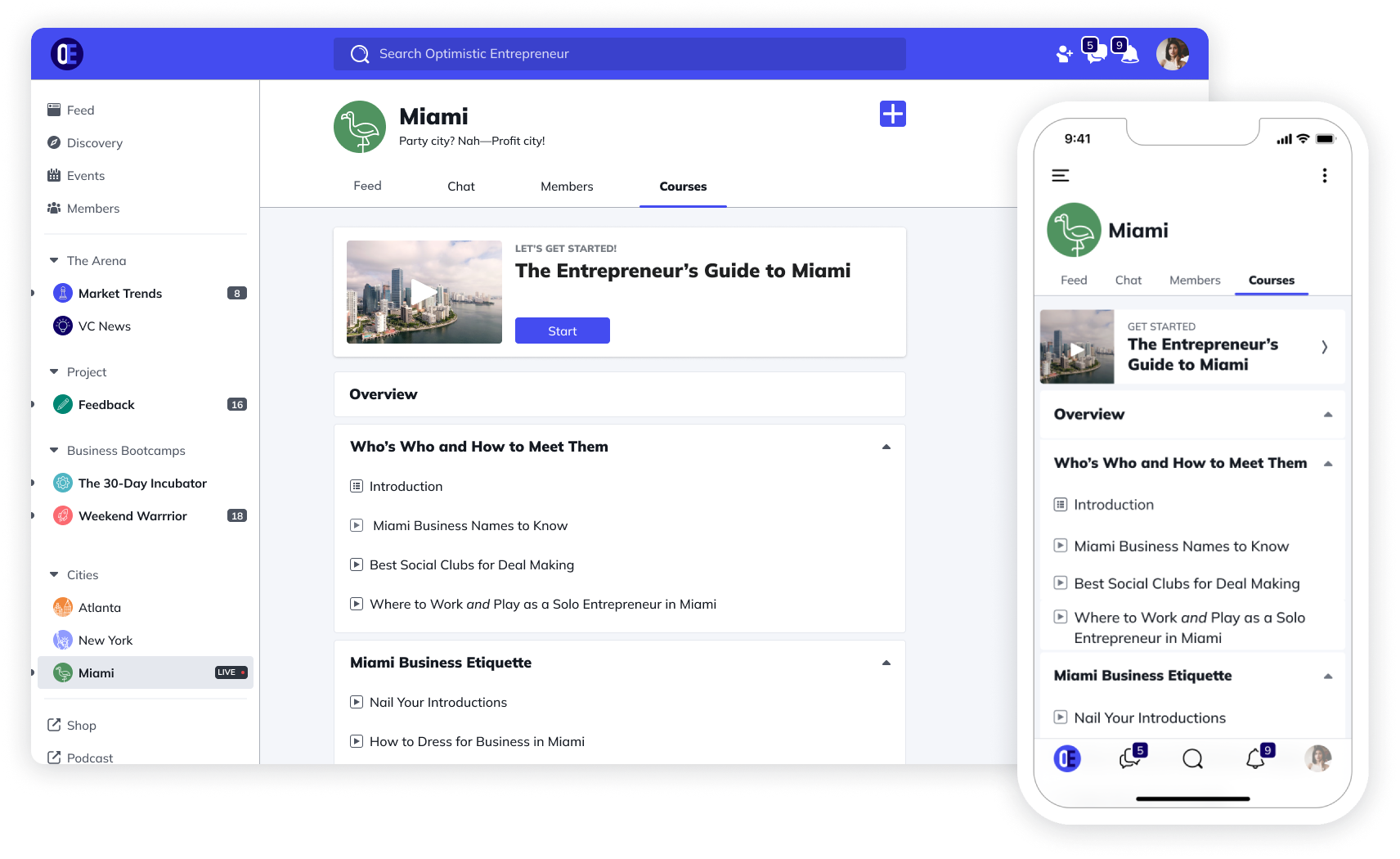
Best for: Creators and organizations where community engagement matters as much as, or more than, structured curriculum.
Mighty Networks built its platform around community from the start. Courses exist within a broader community context rather than as standalone products. This architecture works well when ongoing discussion and peer connection drive the value proposition.
The platform supports what it calls "Community Design," a methodology for building engaged communities around shared interests and goals. This approach appeals to membership businesses, coaching programs, and learning communities where the network itself creates value.
Standout features:
- Native community features with activity feeds and member profiles
- Event hosting for live sessions and workshops
- Branded mobile apps (on higher tiers)
- Spaces for organizing sub-communities
- Challenges and gamification elements
Pricing: Community plan at $41/month for basic features. Business plan at $119/month adds courses. Path to Pro and Mighty Pro tiers offer advanced customization.
Where it falls short: Course features feel secondary to community tools. Organizations prioritizing structured learning outcomes may find the platform's community-first architecture limiting. Enterprise features and integrations lag behind more LMS-focused alternatives.
6. Circle: Best for creator communities with light learning needs
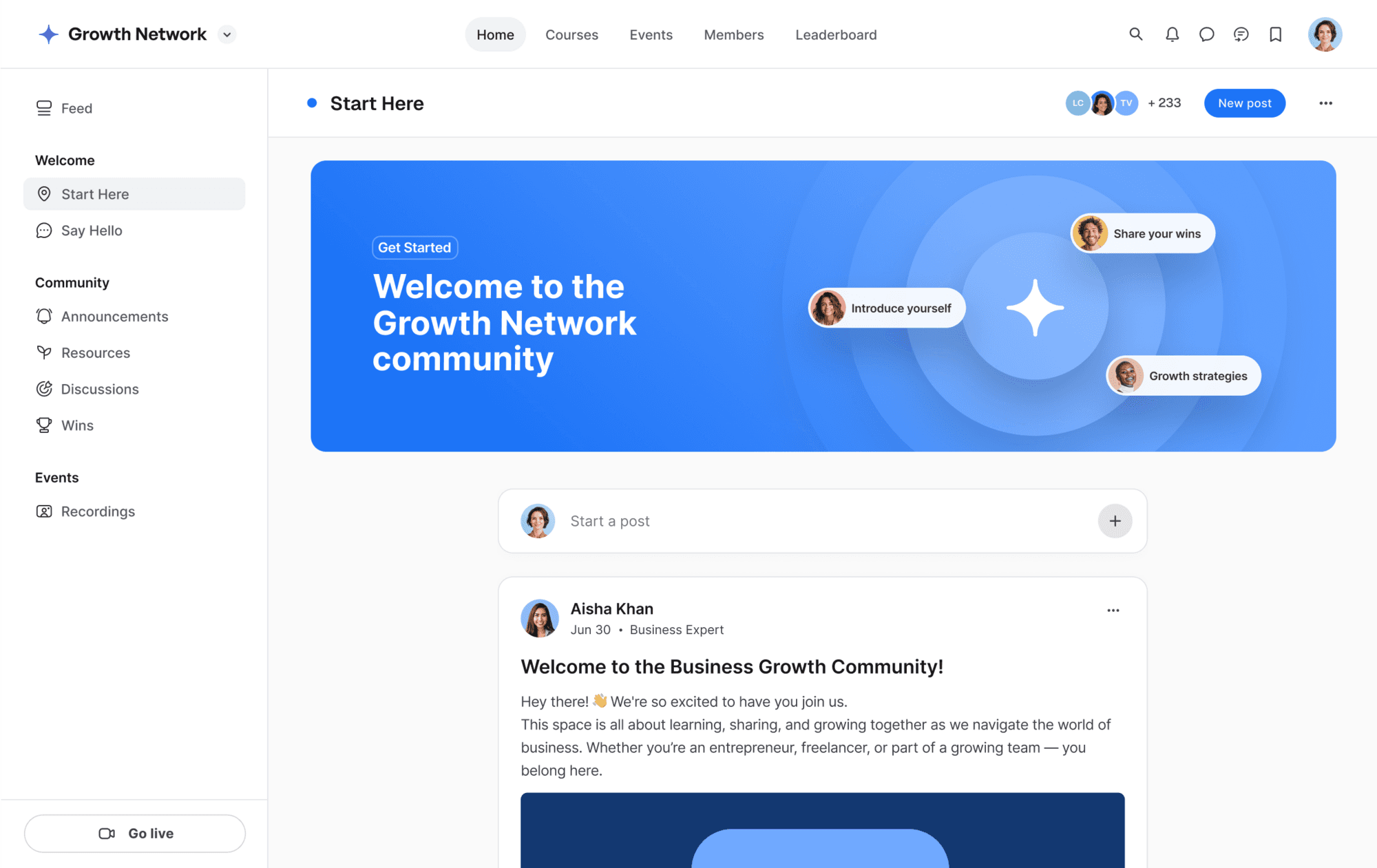
Best for: Creators building community-driven businesses where courses supplement rather than define the member experience.
Circle emerged as a modern alternative to Facebook Groups and Slack for paid communities. The platform added course functionality in response to customer demand, creating a lightweight learning layer on top of robust community infrastructure.
The product excels at discussion, engagement, and member connection. Course features work for delivering content but lack the depth of purpose-built learning platforms.
Standout features:
- Threaded discussions and member engagement tools
- Spaces for organizing topics and access levels
- Live streaming and event management
- Clean, modern interface
- Strong API for custom integrations
Pricing: Basic at $89/month for smaller communities. Professional at $199/month. Business and Enterprise tiers for larger organizations.
Where it falls short: Learning features remain basic. No native cohort management. Limited analytics on learning outcomes. The platform suits communities that happen to offer courses rather than learning businesses that want community features.
7. Podia: Best for digital product sellers
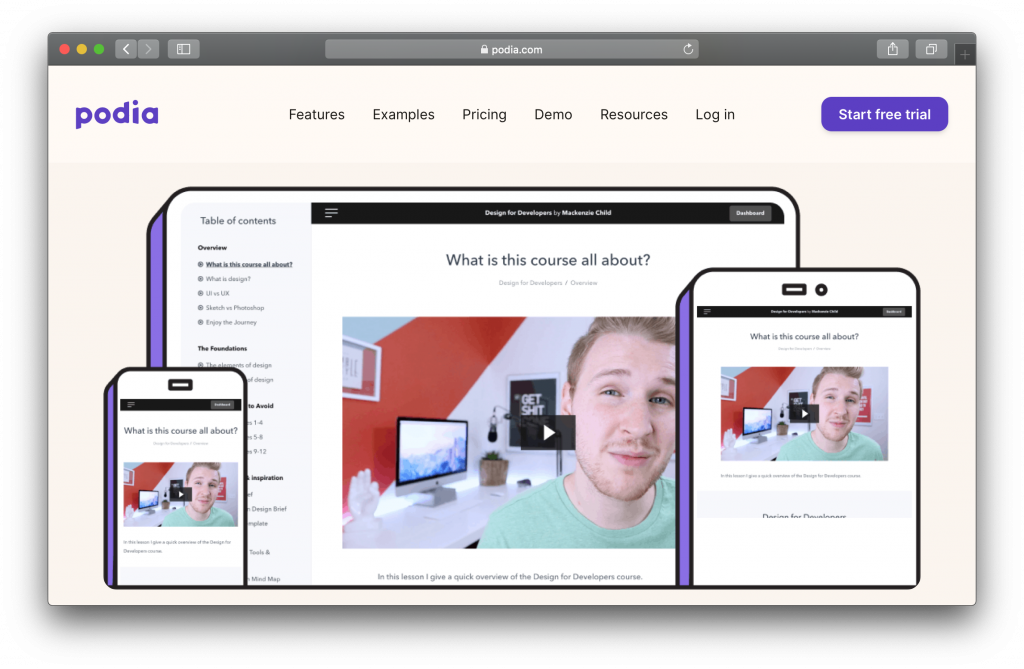
Best for: Creators selling a mix of courses, downloads, webinars, and coaching who want consolidated commerce.
Podia combines course hosting with digital downloads, webinars, and coaching products in a single storefront. The platform targets creators who offer multiple product types rather than course-focused businesses.
Simplicity defines the Podia experience. Setup takes minutes rather than hours. The interface avoids complexity. Customer support consistently receives praise in user reviews.
Standout features:
- Courses, downloads, and webinars in one platform
- Built-in email marketing
- Affiliate program management
- Live chat for customer support
- Zero transaction fees on all plans
Pricing: Mover plan at $39/month includes most features. Shaker at $89/month adds advanced features and affiliate marketing.
Where it falls short: Learning features lack depth. No community functionality. Limited customization options. Works best for creators prioritizing simplicity over sophisticated learning delivery.
8. LearnWorlds: Best for interactive course experiences
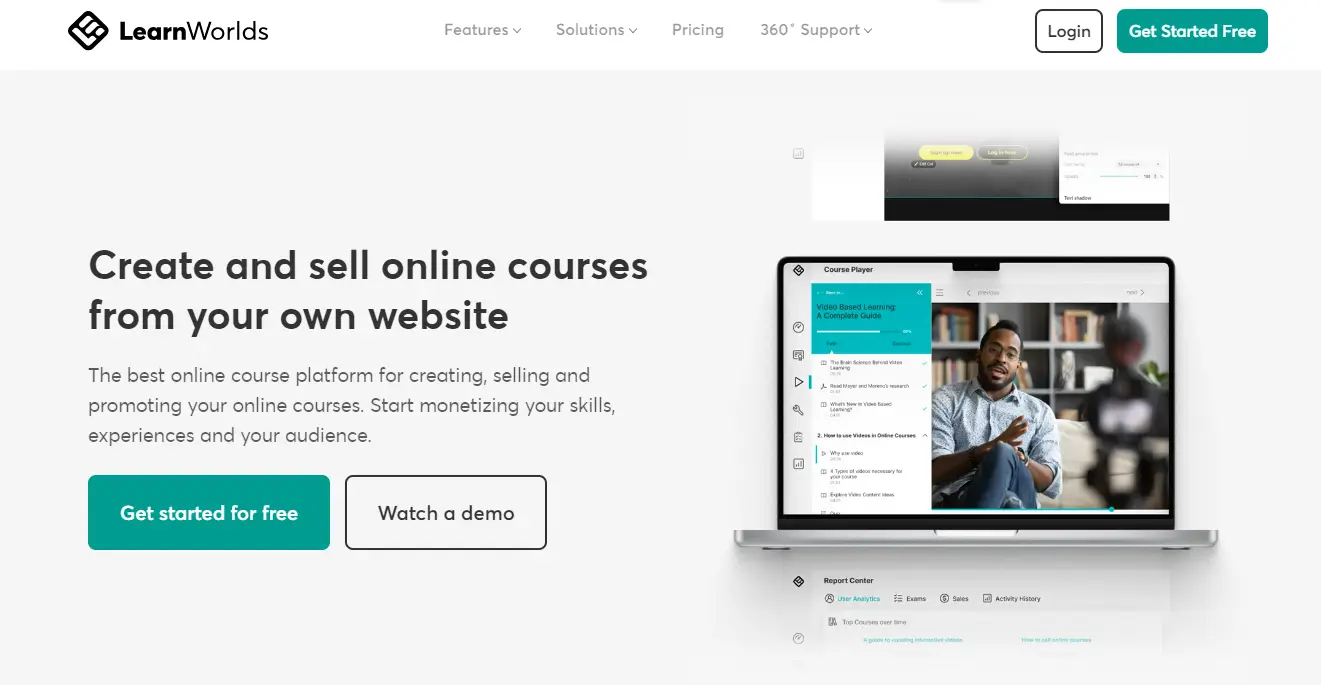
Best for: Educators who want to create highly interactive courses with assessments, certificates, and structured learning paths.
LearnWorlds differentiates through interactive features: in-video questions, assessments, SCORM compliance, and detailed certificates. The platform targets professional training and certification programs requiring rigorous learning experiences.
The course builder allows for sophisticated interactions that go beyond basic video hosting. Learners engage with content rather than passively consuming it.
Standout features:
- Interactive video with embedded questions
- Assessment engine with multiple question types
- Customizable certificates and credentials
- SCORM/xAPI compliance for enterprise
- Built-in website builder
Pricing: Starter at $24/month with $5 per course sale fee. Pro Trainer at $79/month removes fees. Learning Center and higher tiers for growing businesses.
Where it falls short: Community features remain limited. The platform focuses on content interaction rather than learner connection. Setup requires more effort than simpler alternatives.
9. Skool: Best for gamified community learning
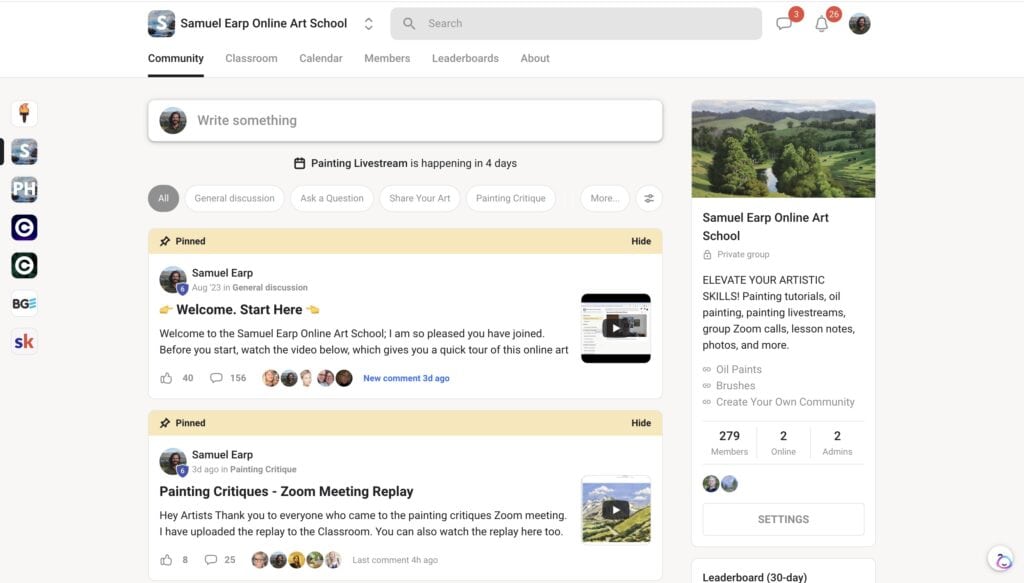
Best for: Creators who want to gamify the community experience with leaderboards and engagement mechanics.
Skool takes a distinctive approach: simplified features combined with gamification. The platform limits customization intentionally, believing constraints drive better outcomes. Leaderboards and points systems encourage member engagement.
The monthly pricing model ($99/month flat fee) appeals to creators tired of percentage-based transaction fees that scale with success.
Standout features:
- Gamified community with leaderboards
- Simple course hosting
- Calendar for events and calls
- Clean, consistent interface
- Flat monthly pricing
Pricing: $99/month flat fee regardless of community size or revenue.
Where it falls short: Extremely limited customization. No white-label options. Basic course features. The opinionated approach works for some creators but frustrates those wanting more control.
10. WordPress with LearnDash: Best for maximum customization
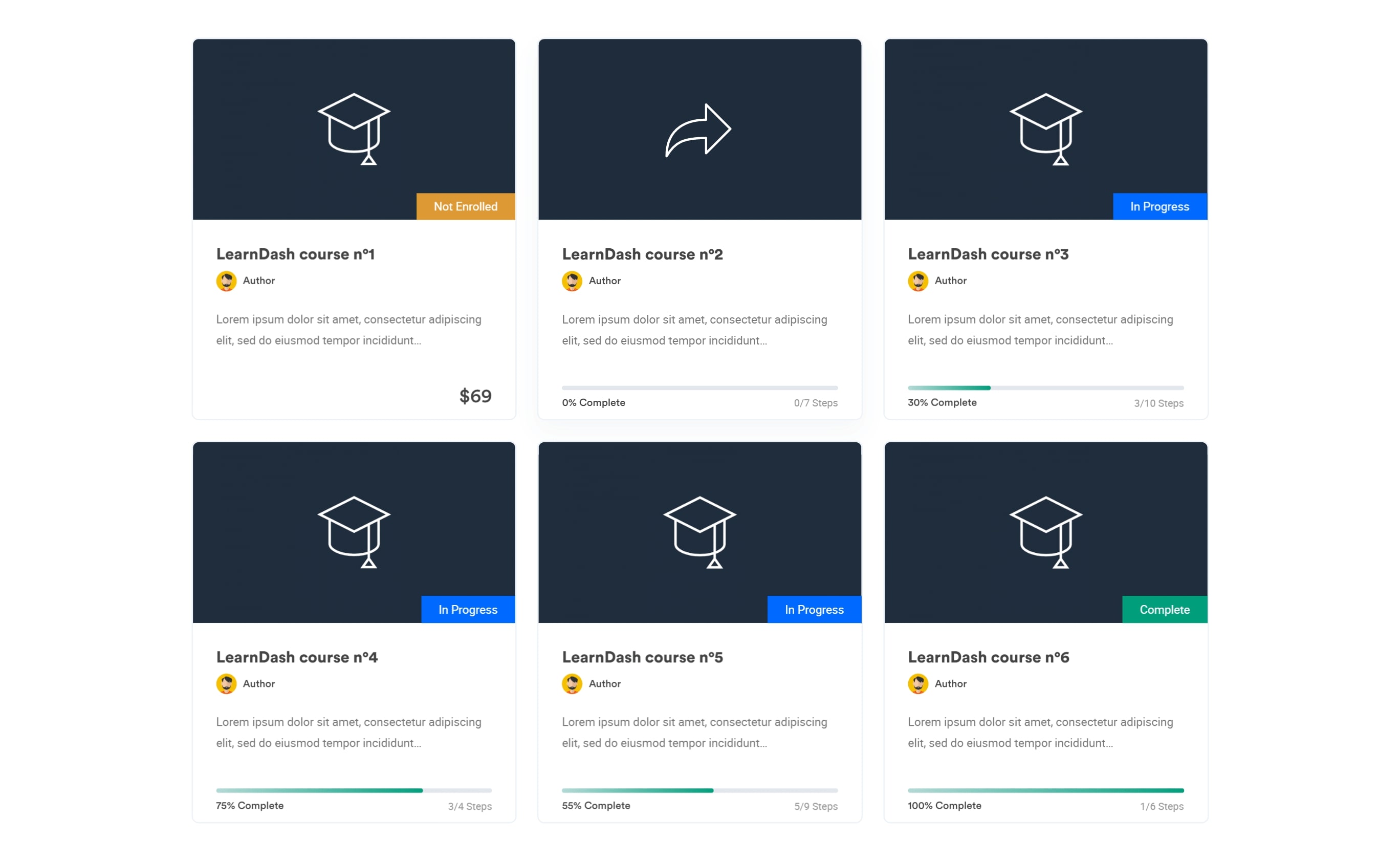
Best for: Technical teams comfortable with WordPress who want complete control over their learning platform.
WordPress powers over 40% of websites globally, and LearnDash extends it into a full-featured LMS. This combination offers nearly unlimited customization for organizations with technical resources to maintain a WordPress installation.
The plugin ecosystem allows for precisely tailored functionality. BuddyPress adds community. WooCommerce handles commerce. Thousands of plugins address specific needs.
Standout features:
- Complete design and functionality control
- Extensive plugin ecosystem
- One-time license fee model
- SCORM/xAPI compatibility
- Self-hosted data ownership
Pricing: LearnDash licenses start at $199/year. WordPress hosting, themes, and additional plugins add to total cost.
Where it falls short: Requires technical expertise or development resources. Security and maintenance become ongoing responsibilities. The flexibility that attracts some organizations overwhelms others.
How to choose the right Squarespace alternative
The best platform depends on your specific priorities and business model.
Choose Disco if: You deliver cohort-based programs, run a customer academy, or need AI-powered automation to scale personalized learning experiences. The platform excels when learning outcomes and engagement matter more than marketing features.
Choose Kajabi if: Marketing and sales automation drive your business. The all-in-one approach works well for solo creators focused on revenue optimization through funnels and email sequences.
Choose Teachable or Thinkific if: You want straightforward course hosting without complex features. Both platforms make getting started easy, though they may limit growth as learning businesses mature.
Choose Mighty Networks or Circle if: Community engagement defines your value proposition. These platforms prioritize connection and discussion over structured curriculum delivery.
Choose LearnWorlds if: Interactive content and assessments matter for your training programs. The platform supports certification and compliance use cases that simpler alternatives cannot address.
Making the switch from Squarespace
Moving from Squarespace to a purpose-built learning platform requires planning but pays dividends in engagement and completion rates.
Start by auditing your current content. Identify which courses perform well and which struggle. Look for patterns in completion rates and student feedback. This analysis informs which features matter most in your new platform.
Most alternatives offer migration support or content import tools. Video content typically transfers easily. Course structures may require rebuilding to take advantage of new platform capabilities.
Consider running both platforms temporarily during transition. Squarespace can handle your main website while your learning platform delivers courses. This separation often improves both experiences.
The cohort-based learning model that platforms like Disco enable represents a fundamental shift from Squarespace's self-paced approach. Research from industry analysts shows cohort completion rates exceeding 90% compared to 3-5% for typical self-paced courses. This improvement alone often justifies the switch for serious learning businesses.
Conclusion
Squarespace serves its purpose as a website builder. Learning businesses deserve platforms built specifically for learning outcomes.
The alternatives above range from simple course hosting to comprehensive learning operating systems. Disco leads for organizations prioritizing cohort-based delivery, community connection, and AI-powered operations. Kajabi excels at marketing automation. Teachable and Thinkific offer accessible starting points. Mighty Networks and Circle put community first.
Your choice shapes not just how you deliver content but how effectively your learners actually learn. The completion rate gap between self-paced and cohort-based approaches, documented across numerous studies at 85+ percentage points, makes this decision consequential.
Evaluate based on where your learners succeed, not just where your content lives.
Ready to see how AI-powered cohort-based learning transforms engagement?
Start your free trial with Disco


