


Top AI-powered LMS platforms compared in 2026
TL;DR
72% of enterprises plan to use AI-driven LMS platforms by 2026. The platforms that actually move outcomes go beyond AI content generation to combine personalization, community, and cohort-based infrastructure in one environment. This guide compares the top options and what separates platforms built for transformation from those built for compliance tracking.
Learning management systems are no longer primarily content repositories. The organizations seeing the strongest learning outcomes in 2026 are using platforms that combine AI-powered content creation with social learning, cohort infrastructure, and intelligent automation. 72% of enterprises plan to use AI-driven LMS platforms by 2026, and AI-powered personalized learning has been shown to increase engagement by up to 60% and improve learning efficiency by 57%.
But not all AI implementations are equal. Platforms that use AI primarily for content tagging and basic recommendations are categorically different from those where AI is native to the entire program lifecycle. This comparison covers the top platforms and what actually distinguishes them.
What to look for in an AI-powered LMS
AI across the full program lifecycle. The most impactful implementations use AI for content generation, learner support, operational automation, and engagement insights, not just content tagging or quiz suggestions. The difference between AI as a feature and AI as infrastructure shows up in how much time teams actually save and how much better learner outcomes get.
Community and social learning integration. 70% of L&D teams plan to leverage social learning platforms to boost engagement and retention. The platforms where community features are native to the learning environment outperform those where discussion is a separate tab or a third-party integration. When learners engage with peers in the same space where they're consuming content, completion rates follow.
Cohort-based infrastructure. Cohort programs achieve completion rates up to 88% compared to 3% for isolated self-paced courses. Platforms that support shared timelines, group management, live events, and peer accountability natively rather than through workarounds produce meaningfully better outcomes.
Automated operations. As programs scale, administrative tasks multiply. Platforms with native workflow automation for onboarding, reminders, progress tracking, and learner support keep teams from becoming bottlenecks in their own programs.
Top AI-powered LMS platforms in 2026
1. Disco
Disco is an AI-native social learning platform built for organizations that want to deliver transformational learning, whether for training businesses, bootcamps, customer academies, or internal teams. AI is native to every layer of the platform rather than added as a feature set on top of a legacy architecture.
The AI Canvas generates complete program structures, modules, and assessments from existing knowledge in minutes. Ask AI provides learners with instant, curriculum-specific answers around the clock. Smart nudges, workflow automation, and AI insights reduce administrative overhead while keeping learners engaged. Community channels, live events, gamification, and cohort tools are deeply integrated rather than bolted on.
Newton Venture Program, a global learning community for venture capital and startup education, runs their AI-powered social learning programs on Disco, serving a global member base with structured curriculum and community that scales. Read the Newton Venture Program story.
Explore the full Disco AI suite, or see how it fits your use case in minutes.
2. 360Learning

360Learning focuses on collaborative learning within corporate environments, giving employees tools to create and share content internally. It handles peer-to-peer knowledge sharing well in large organizations. Its primary orientation is toward internal L&D rather than external training businesses, customer academies, or programs where community and monetization are key requirements.
3. Docebo

Docebo is a well-established enterprise LMS with AI features for content discovery, personalized recommendations, and administrative automation. It offers extensive reporting capabilities and handles large-scale compliance requirements. The implementation complexity and enterprise pricing make it a heavier commitment for organizations that want to move quickly or don't have dedicated LMS administrators.
4. Kajabi
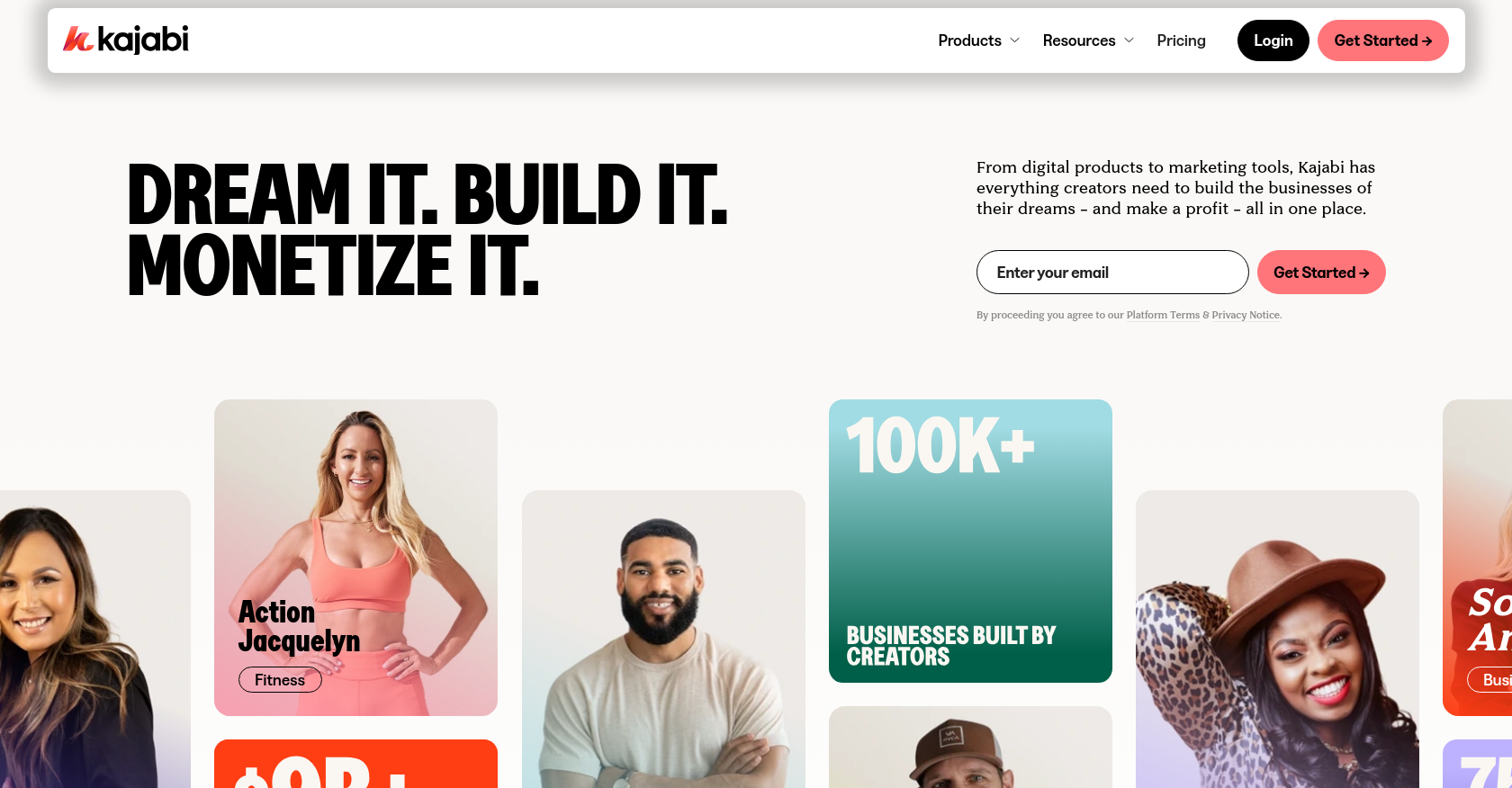
Kajabi is popular with creators and small businesses for its marketing automation, course delivery, and website building tools in one package. It has introduced AI features for content generation. Its learning environment is less interactive than social learning platforms, and its community and cohort tools are more limited compared to platforms purpose-built for group learning experiences.
5. Skilljar

Skilljar is designed for customer and partner education, with strong CRM integrations that connect learning data to retention metrics. It's a strong fit for SaaS companies running formal customer onboarding and certification programs. For training businesses, bootcamps, or organizations that need flexible community and cohort infrastructure, its scope is narrower.
6. Thinkific
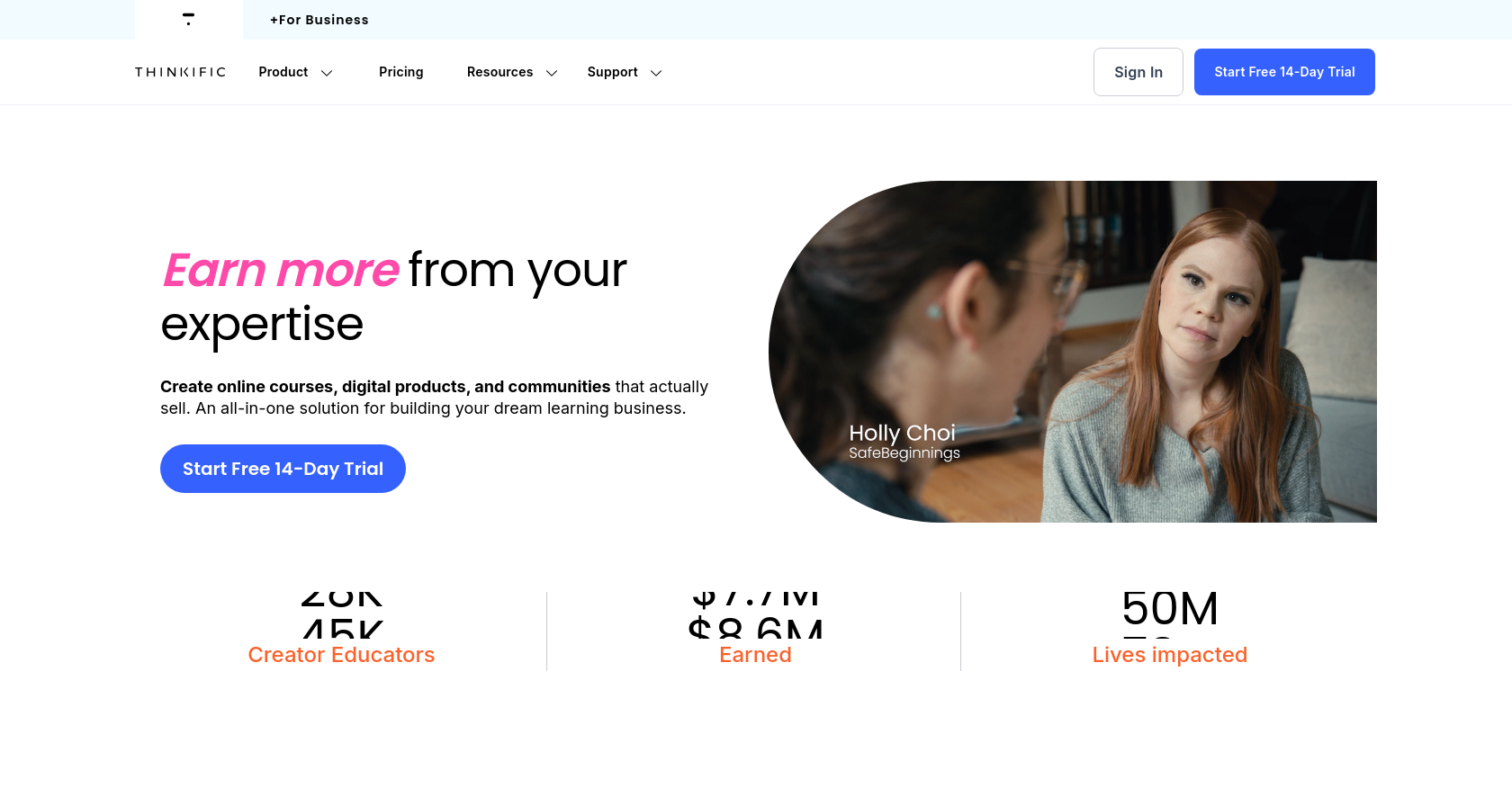
Thinkific offers a user-friendly course builder and reliable delivery for self-paced content. Community features have improved and it's a solid starting point for course creators. Organizations scaling to AI-driven cohort programs with deep community integration typically find they need a platform with more native infrastructure for those models.
Platform comparison
| Platform | Best for | AI depth | Community depth |
|---|---|---|---|
| Disco | Training businesses, cohort programs, customer academies | Comprehensive — program generation, Ask AI, nudges, insights | Native, deeply integrated |
| 360Learning | Internal enterprise L&D | Content authoring assistance | Moderate (internal focus) |
| Docebo | Large enterprise compliance training | Content discovery, recommendations | Basic |
| Kajabi | Solo creators, course sales and marketing | Content generation | Basic |
| Skilljar | Customer and partner education | Analytics-focused | Minimal |
| Thinkific | Entry-level self-paced course delivery | Basic | Moderate |
How to evaluate which platform fits your use case
Define where AI needs to add value for you. If content creation speed is the priority, most platforms now offer some level of AI assistance. If learner support at scale is the priority, you need a platform with a native Ask AI feature trained on your curriculum. If operational automation is the bottleneck, look for workflow tools built into the platform rather than dependent on Zapier workarounds.
Assess community as a first-class feature. The gap between platforms that have community and platforms where community is central to how learning happens is significant. For a deeper look at how LMS platforms handle community features specifically, our guide to the best LMS platforms with community features covers the evaluation criteria in detail.
Test the cohort infrastructure. Ask specifically how the platform handles group timelines, live session scheduling, and cohort-specific community spaces. Platforms that require external tools to fill these gaps will create friction that shows up in learner completion data.
Conclusion
The LMS landscape has moved past the question of whether to use AI. The question now is whether AI is infrastructure or a feature. Platforms where AI is native to the program lifecycle consistently outperform those where it's been added to a legacy architecture as a layer of functionality.
For organizations that want cohort-based learning, community, and AI automation in one platform rather than assembled from parts, Disco is built for exactly that. See how it fits your use case in minutes.
FAQs
What is an AI-powered LMS?
An AI-powered LMS uses artificial intelligence to enhance the learning experience across multiple dimensions: automating administrative tasks, generating course content, personalizing learning paths, and providing real-time learner support. The depth of AI integration varies significantly across platforms, from basic content tagging to native AI that operates across the full program lifecycle.
Why is cohort-based learning more effective than self-paced courses?
Cohort programs move groups of learners through a curriculum together on a shared timeline. That structure creates peer accountability, live interaction, and a social texture that self-paced courses can't replicate. The outcome is dramatically higher completion rates, with cohort programs achieving up to 88% versus 3% for isolated self-paced alternatives.
Can I use Disco for both employee training and customer education?
Yes. Disco supports training businesses, bootcamps, customer academies, and internal employee learning programs. The cohort infrastructure and community tools work equally well across use cases, and the platform's group and subgroup features let you manage different learner populations within the same environment.
How does AI help with course creation?
AI tools like the Disco AI Canvas can generate course outlines, draft lesson content, create assessments, and produce imagery from existing knowledge in minutes. This reduces the time from concept to launch and makes it practical to keep content current as roles and industries evolve without scheduling full re-records.
How do I migrate existing content to a new LMS?
Most modern platforms support migration of videos, documents, and user data. Disco provides onboarding support to ensure a smooth transition. AI tools can also help reformat and improve existing content during migration, so the move becomes a quality upgrade rather than a straight content copy.
Do I need technical skills to set up an academy on Disco?
No. Disco's interface is designed for non-technical users. You can build a branded learning environment, create courses, configure community channels, and set up automated workflows without writing code. The AI Canvas further reduces setup time by generating program structures from existing knowledge.


