All Features
Stick with familiar apps and tools, or discover something new to increase productivity.
Learning
Disco works seamlessly with some of the best and most-used tools to enhance operator efficiency as you grow and scale your social learning program.

Bookmarks
Allow learners to save and organize important content for later reference

Personal bookmarking system that enables learners to save lessons, discussions, and resources for easy access. Create personal learning libraries and study guides.

Learning Pathways
Auto-enroll learners by prerequisite completion with certificates
Create sophisticated learning journeys with automatic enrollment based on prerequisite completion of other courses. Award auto-generated certificates upon program completion and track learner progress through multi-stage learning paths.

Collections
Organize content with intelligent folder structures and collections
Advanced content organization system with nested folders and content tagging. Enable efficient content discovery and reuse across multiple learning programs.

Surveys
Gather real-time feedback with native surveys
Collect insights that improve your programs with surveys embedded directly into the learning experience. From check-ins to post-program evaluations, easily track sentiment, surface trends, and adapt your approach based on what learners actually need.

Prerequisites
Guide learners with structured progression using lesson prerequisites
Ensure learners follow the right path by requiring lessons to be completed in sequence. Build intentional learning journeys where each step builds on the last, keeping members focused, engaged, and progressing with purpose. Perfect for multi-lesson modules, certifications, and skill-based advancement.

Quizzes
Build multi-question quiz assessments
Create quiz assessments with grading to save time while detailed analytics help track learner understanding and identify knowledge gaps.

Assignments
Drive deeper learning with structured assignments
Reinforce learning through reflections and project-based assignments. Customize submission types, review learner responses, and provide detailed feedback.Perfect for applying knowledge in context and tracking real-world skill development.

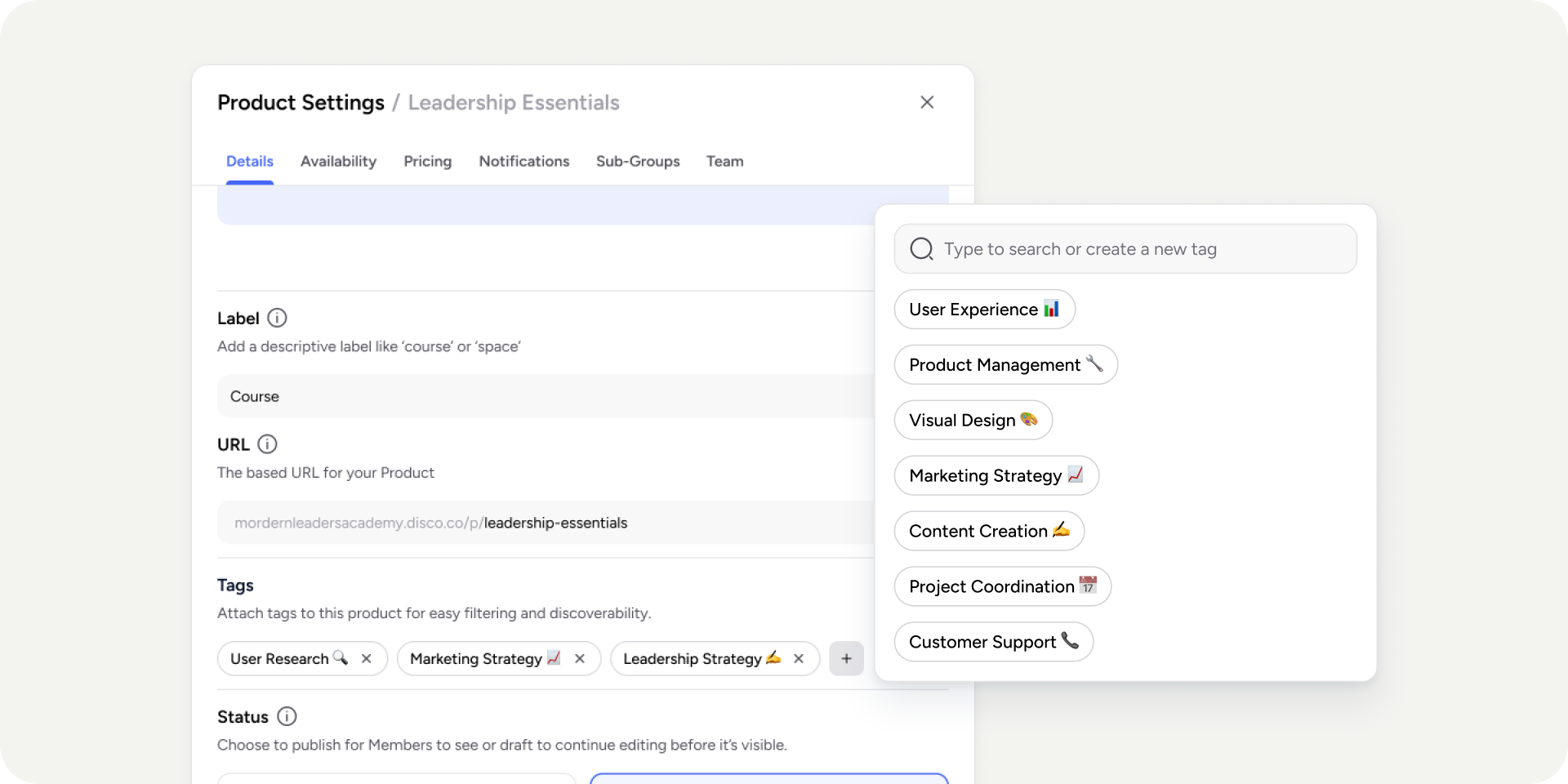
Product Tags
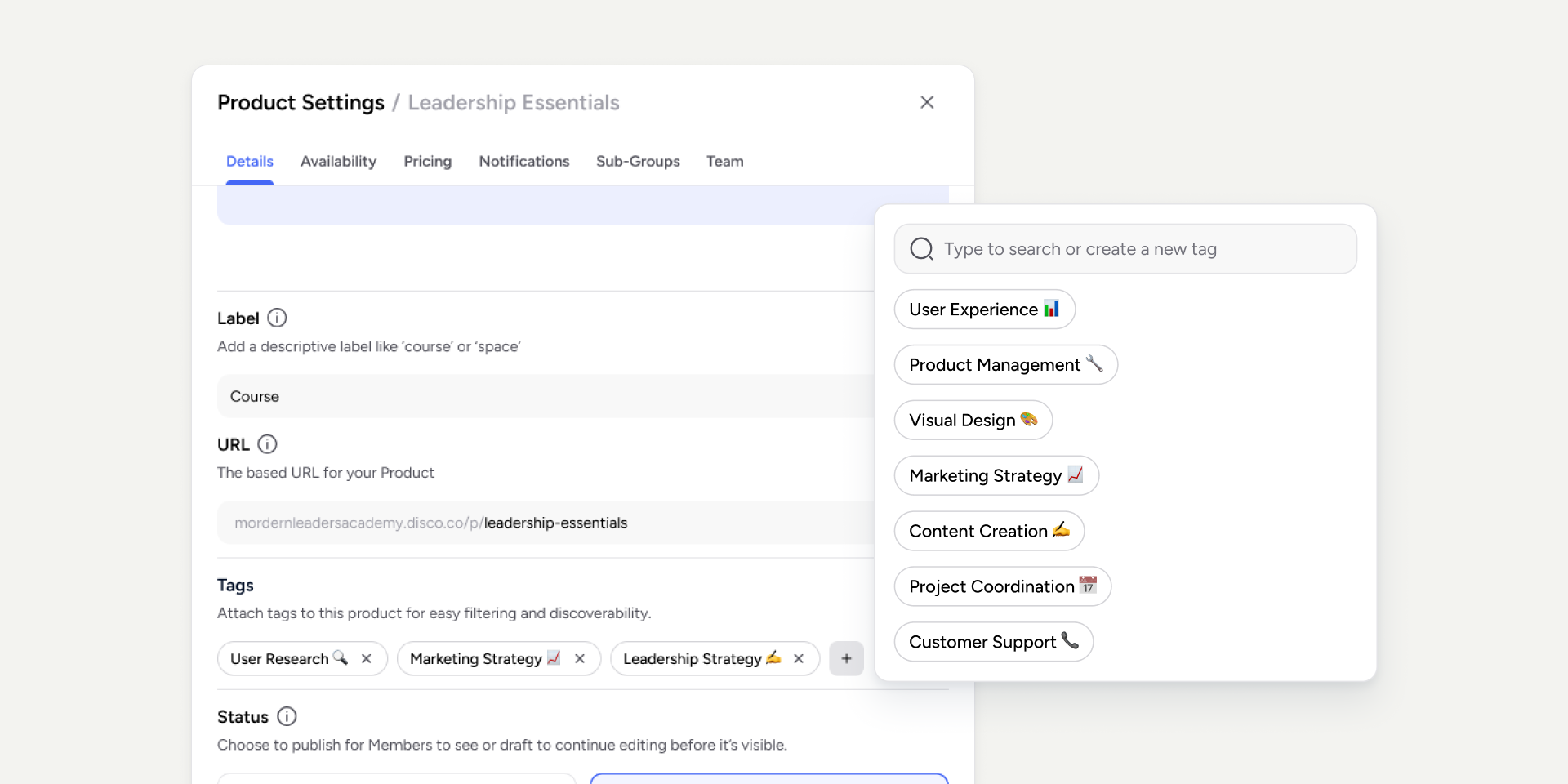
Organize and filter learning products with customizable tags.
Categorize products with custom tags to improve organization and enable member filtering on the Explore page. Admins can create and manage tags in the admin area or inline during product creation for streamlined content organization.
Pass/Fail for Assignments
Require learners to pass assignments before progressing to next modules
Ensure knowledge validation with pass/fail requirements that gate progression. Instructors can review submissions and provide feedback before allowing learners to continue, preventing knowledge gaps and maintaining program quality.

Time to Complete Estimation
AI-powered time estimates help learners plan their learning journey
Automatically generate or manually set estimated completion times for all content, modules, and curriculums. AI analyzes content length and complexity to provide accurate time predictions, helping learners plan their schedules and improving completion rates.

AI Curriculum Generator
Turn any brief, video, or PDF into a full course outline in seconds
Transform your existing content into structured learning programs with AI-generated lessons, assessments, and learning objectives. Simply upload documents or provide a brief description, and our AI creates comprehensive curricula with multimedia support, quizzes, and assignments tailored to your goals.

SCORM Support
Effortlessly import SCORM-compliant content
Maintain compatibility with your existing training materials by embedding SCORM files directly into Disco. Preserve interactive elements and tracking capabilities while integrating legacy content into modern learning experiences.

Learner Progress Reports
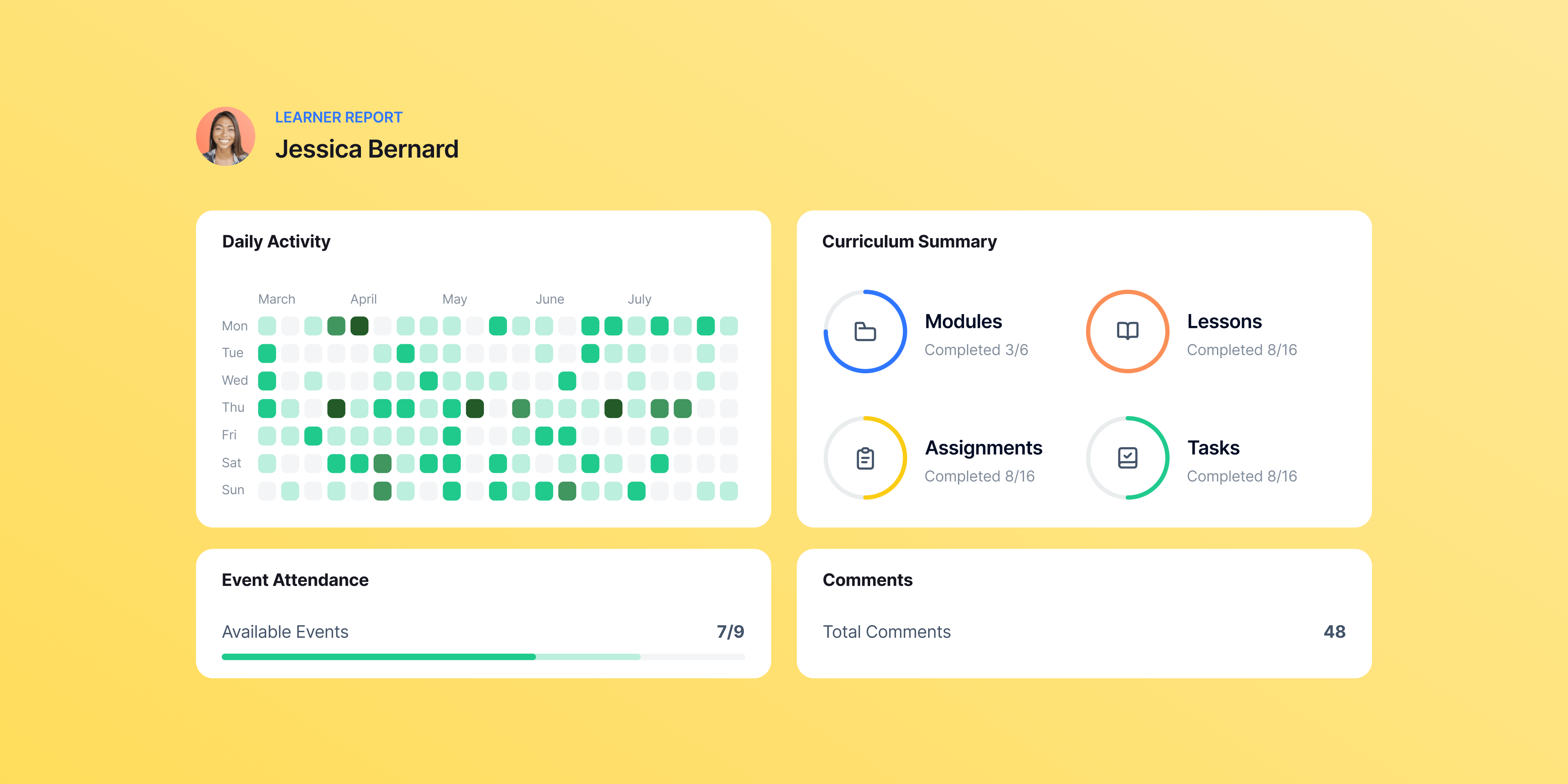
Monitor learner progress with detailed reports that track every milestone
Comprehensive progress tracking with individual learner analytics, completion rates, time spent, and performance metrics. Export detailed reports and identify learners who need additional support or engagement.

Curriculum Builder
Design compelling learning paths with a versatile curriculum builder
Build engaging courses with our intuitive visual curriculum builder. Drag and drop multimedia content, embed videos, create interactive elements, and design custom learning paths. Supports modular content reuse and course duplication for efficient curriculum development.

Custom Onboarding
Design tailored onboarding that engages members and informs program design
Design comprehensive onboarding experiences with video introductions, interactive questionnaires, Slack connections, and automated content routing based on responses. Create personalized first impressions that drive long-term engagement.

Content Library
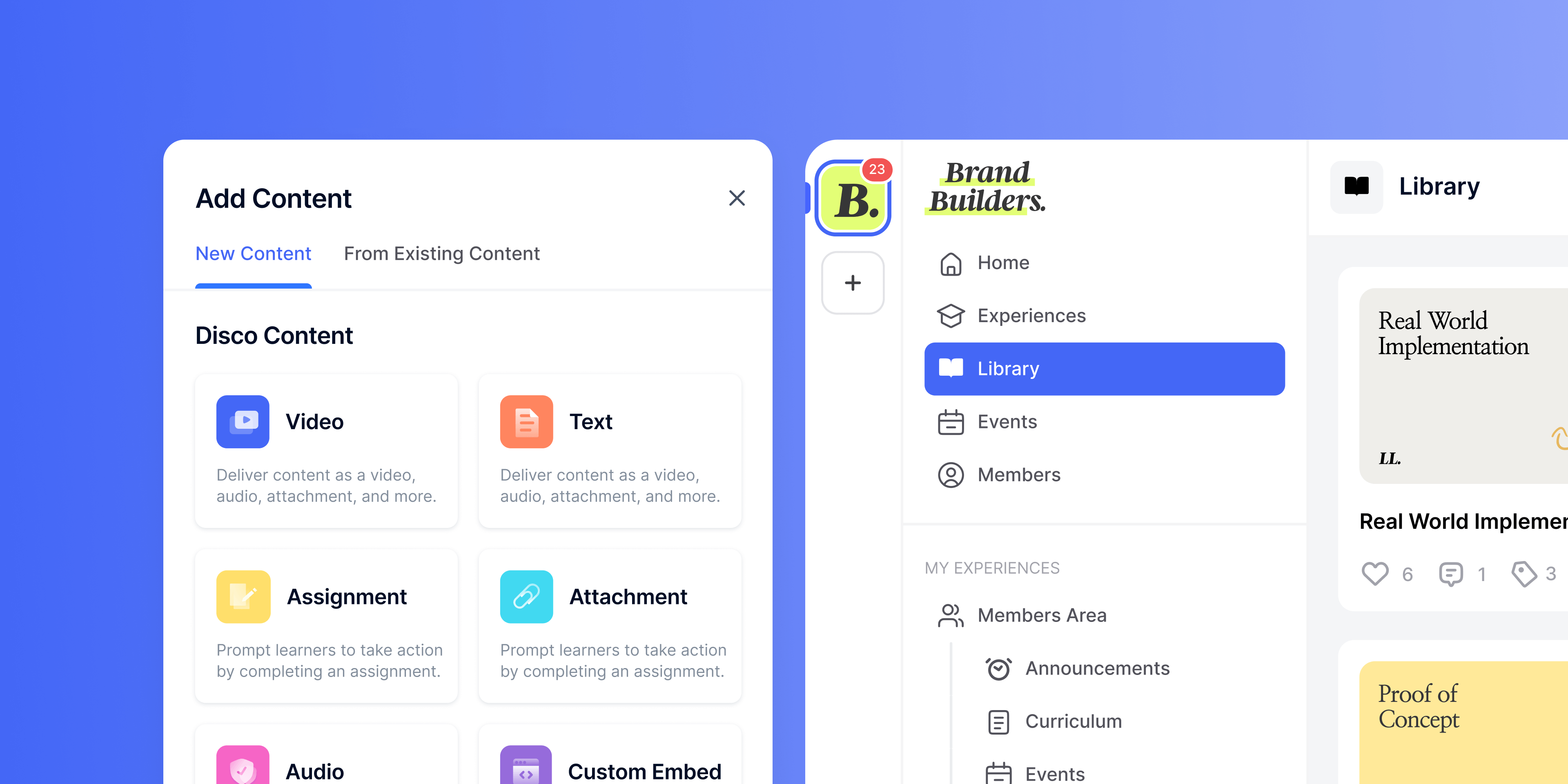
Create and organize a rich repository of content to support learners at every stage
Centralized content management system with intelligent organization tools. Create reusable content blocks, manage multimedia assets, and organize materials with folders and collections for efficient content discovery and reuse.

Program Templates
Simplify course creation with templates that cater to different learning styles.
Accelerate your course development with professionally designed templates optimized for different learning formats including cohort-based courses, self-paced programs, masterminds, and workshops. Each template includes pre-structured modules, assessment frameworks, and engagement strategies.
Engagement
Social features and community building.

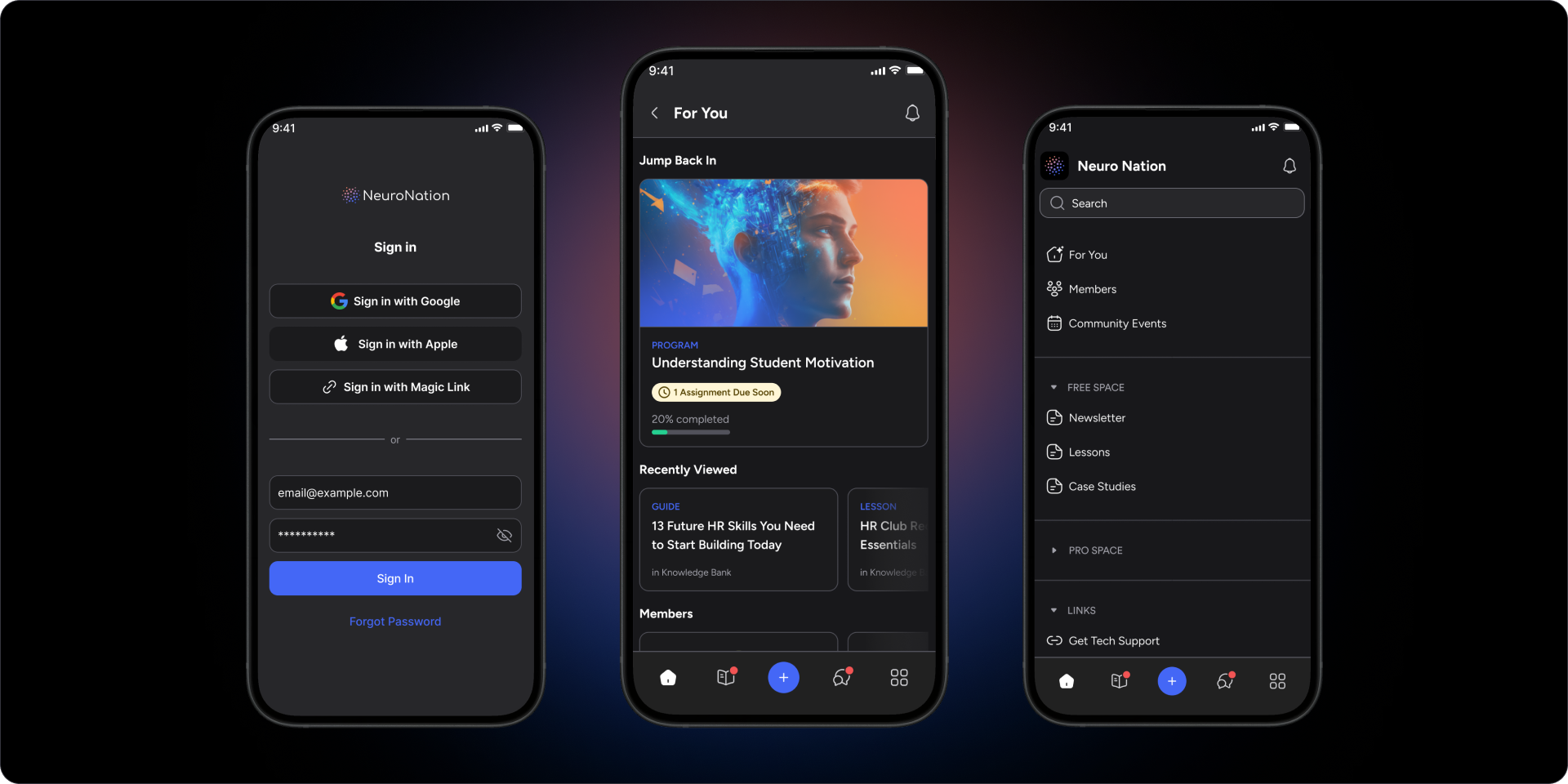
iOS & Android Mobile Apps
Full mobile experience with push notifications and offline capabilities
Native mobile applications providing complete feature parity including course access, community discussions, event participation, and AI-powered features. Push notifications keep learners engaged between sessions with offline content access.

Push Notifications
Keep learners engaged with intelligent mobile notifications
Smart notification system that delivers relevant updates about course progress, community discussions, upcoming events, and personalized learning recommendations directly to mobile devices.

Event Recordings & Archives
Automatically record and archive events for future reference
Capture learning events with automatic recording, AI-generated transcripts, and searchable archives. Transform live events into lasting learning resources with intelligent summarization and chapter generation.

Reactions
Express engagement with emoji reactions, comments, and social interactions
Rich social interaction tools including emoji reactions create vibrant community discussions with moderation tools and engagement tracking.

Leaderboards & Gamification
Drive motivation with points, achievements, and competitive elements
Boost engagement through gamified experiences including member points from a customized engagement score and leaderboards. Track and see member progress and celebrate accomplishments to maintain motivation throughout learning journeys.

Group Directory
Help members discover and join groups aligned with their interests
Searchable directory of community groups with detailed profiles showing descriptions, member lists, and group activities. Enable member self-service for finding relevant groups and communities within your learning platform.

Custom Profiles
Personalize the community experience with customizable member profiles
Enable rich member profiles with custom fields, skill listings, and professional information. Help community members discover shared interests and expertise while maintaining professional networking capabilities.

Feeds
Create immersive experiences with discussion feeds
Dynamic feeds that encourage knowledge sharing and peer interaction. AI generates suggested posts for discussion tailored, while reaction systems and commenting keep conversations engaging.

Events
Host and manage events that catalyze meaningful interactions
Comprehensive event management for virtual and in-person learning experiences. Integrate with Zoom for seamless hosting, automatically generate transcripts and summaries, and track attendance with detailed analytics.

Notification Center
Never miss a thing with a central hub for your learning community notifications.
Unified notification management system that aggregates all platform communications, updates, and alerts in one accessible location. Configure notification preferences and manage communication overload.

Member Directory
Showcase specific groups like mentors, staff, or cohorts in customizable directories.
Create multiple member directories to highlight different community segments. Configure access permissions and customize display options to help members discover and connect with relevant peers, mentors, or instructors.

Moderation
Maintain healthy community discussions with moderation.
Ability to flag posts to ensure positive learning environments for admin approvals.

Channels & DM's
Facilitate dynamic conversations with integrated DMs and channels.
Foster vibrant learning communities with discussion channels, direct messaging, and group conversations. Slack-like interface with rich text formatting, file sharing, and emoji reactions creates engaging communication that extends learning beyond formal content.
Operations
Admin tools, automation, and efficiency.

Roles & Permissions
Granular access control with customizable roles and permissions
Comprehensive roles manage who gets access and editing privileges inside your community and all of its associated Products to ensure appropriate access levels for admins, instructors, and members.

Bulk Actions
Efficiently manage large member bases with CSV imports and bulk operations
Streamline administrative tasks with bulk member actions, CSV import capabilities, automated grouping based on onboarding responses, and group-specific content visibility controls.

Apps
Control which groups can access specific apps
Granular permission system allowing admins to restrict app visibility to specific groups or individuals within learning products. Maintains consistency across community and product areas while enabling targeted experiences. Apps available as curriculum, collections, content, events, channels, feeds and links.

For You Page
Personalized homepage for each member
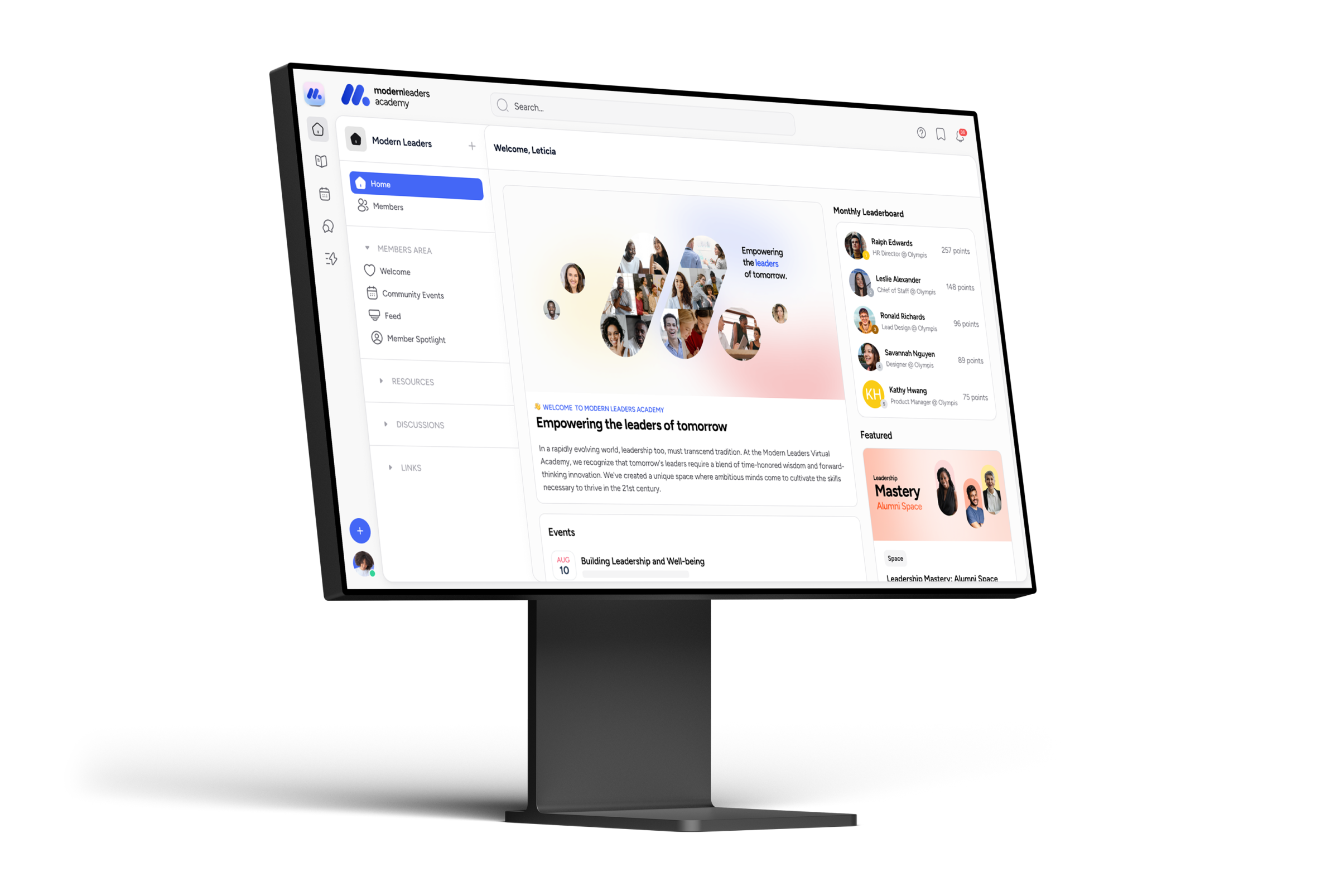
Dynamic homepage that adapts to each member's activity and access. Customize your members For You Page with modular blocks to showcase their programs, events, and recently viewed content to help members jump into what matters most.

Custom Pages
Create branded welcome pages and community hubs with dashboard blocks
Design custom pages using flexible dashboard blocks for welcome experiences, community hubs, and specialized landing pages. Choose between 1-column or 2-column layouts and control access permissions for targeted experiences. Each page has ability to be customized with modular blocks to showcase leaderboards, events, recently viewed content, featured programs and more.

Integrations
Seamlessly connect the tools you use and love, enhancing your platform's capabilities
Extensive integration ecosystem including native connections to essential business tools and embedded applications. Connect with CRM systems, payment processors, video platforms, and productivity tools for seamless workflows.

Bulk Messaging
Communicate at scale with ease, reaching groups with targeted messages
Efficient mass communication tools for reaching specific member segments with targeted messaging. Support for bulk actions

Groups & Sub-Groups
Manage community segments effectively with organized groups and subgroups
Sophisticated group management system supporting nested subgroups, group lead permissions, and control access to experiences. Enables targeted communication and personalized learning experiences.

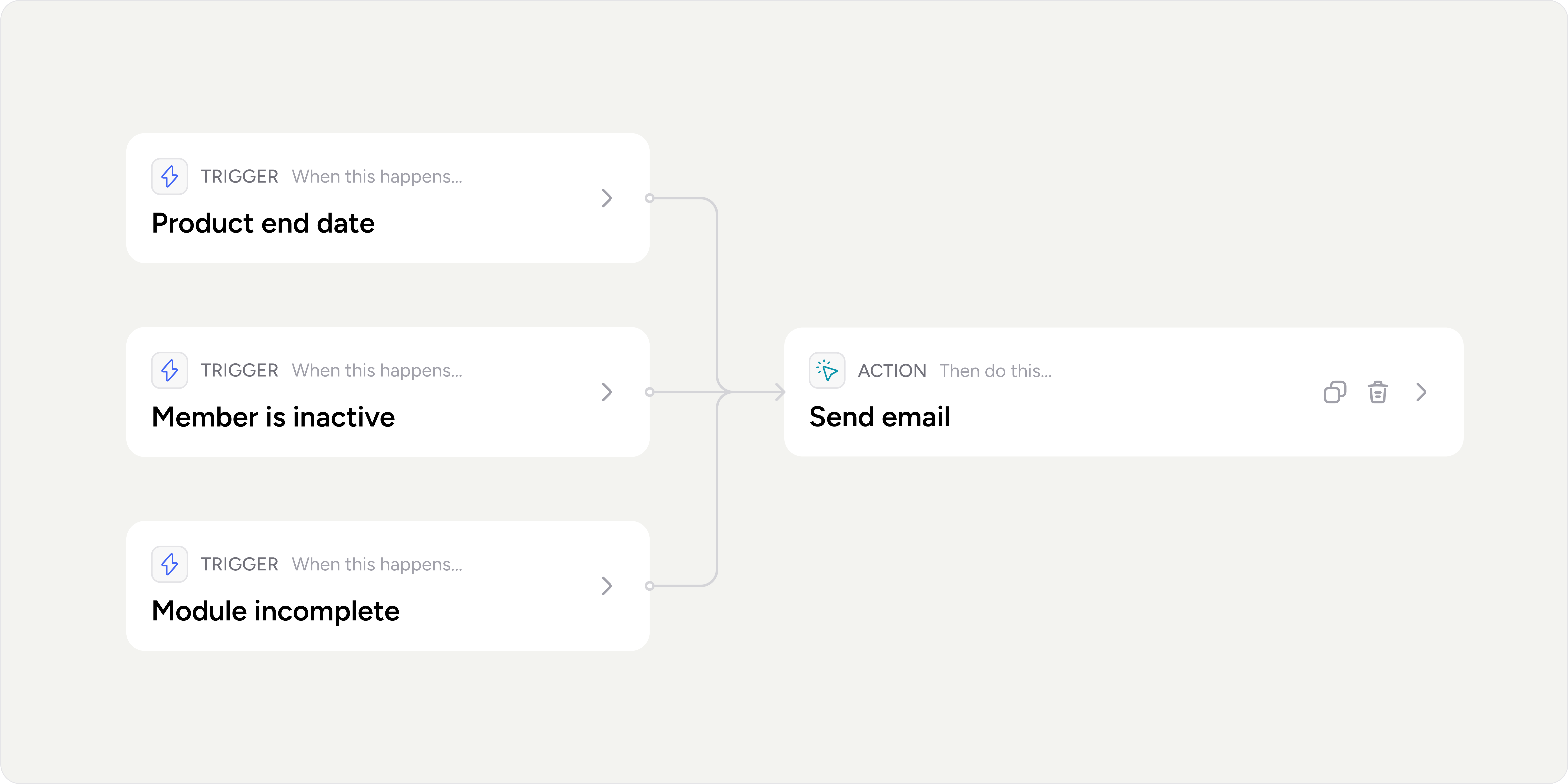
Automations
Save time with automations that act on your set triggers
Powerful automation engine with customizable triggers and actions. Automatically assign groups, unlock content, send notifications, or initiate communications based on learner behavior, course completion, or quiz results. Build complex workflows with delays and branching logic.

Course Duplication
Rapidly expand your offerings with course cloning, saving time and maintaining quality
Duplicate successful learning programs with complete content, structure, and settings preservation. Accelerate program development while maintaining consistency across multiple cohorts or product variations.

Insights & Reporting
AI-powered analysis of engagement patterns and learning effectiveness.
Advanced analytics that identify member engagement, completion rates, and recommend optimizations. AI analyzes engagement data to provide actionable insights for improving course effectiveness and learner outcomes. Track individual progress, event attendance, revenue tracking, and custom reporting with CSV export capabilities.
AI-Powered
All AI-driven capabilities.

AI Content Generation Suite
Generate lessons, images, quizzes, and discussion prompts with AI
Accelerate content creation with AI tools that generate engaging lesson content, custom images, assessment questions, and discussion prompts. Maintains your brand voice while reducing creation time by 80% compared to manual content development.
Disco AI
Your learning community sidekick to save you time and make engagement 10x easier
Comprehensive AI suite including content generation, curriculum creation, image generation, discussion prompts, and engagement automation. AI-powered tools that reduce administrative workload while enhancing learning experiences.

AI Community Engagement
AI suggestions help moderators and experts answer member questions quickly
AI suggested replies that help community moderators and subject matter experts respond to member questions with contextually relevant answers. Reduces response time and ensures no member inquiry goes unanswered.
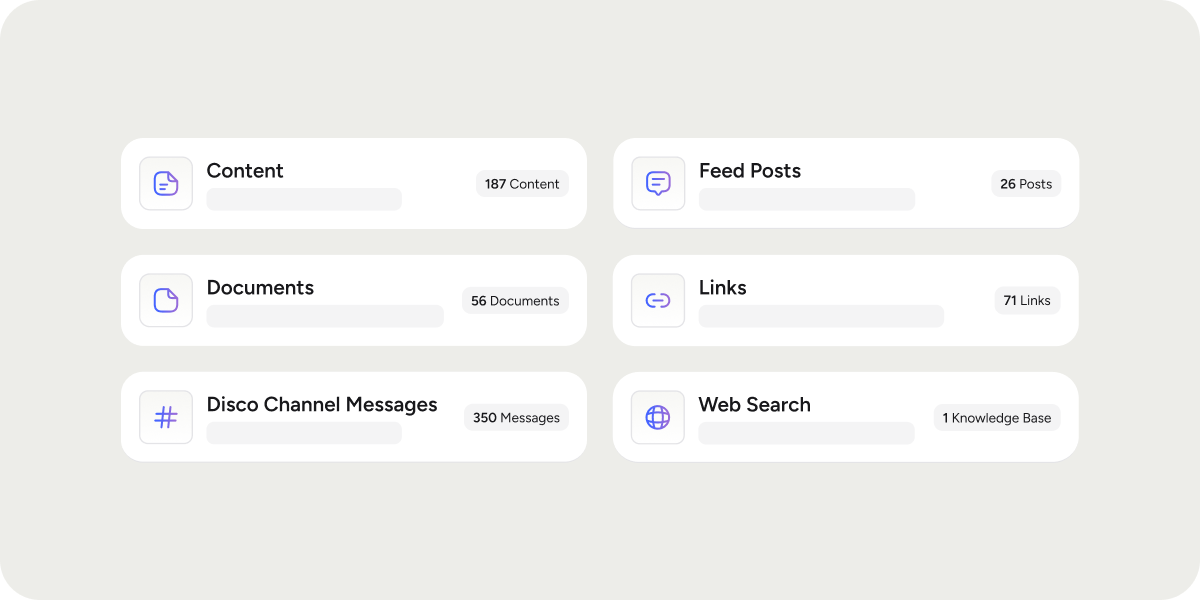
Ask AI
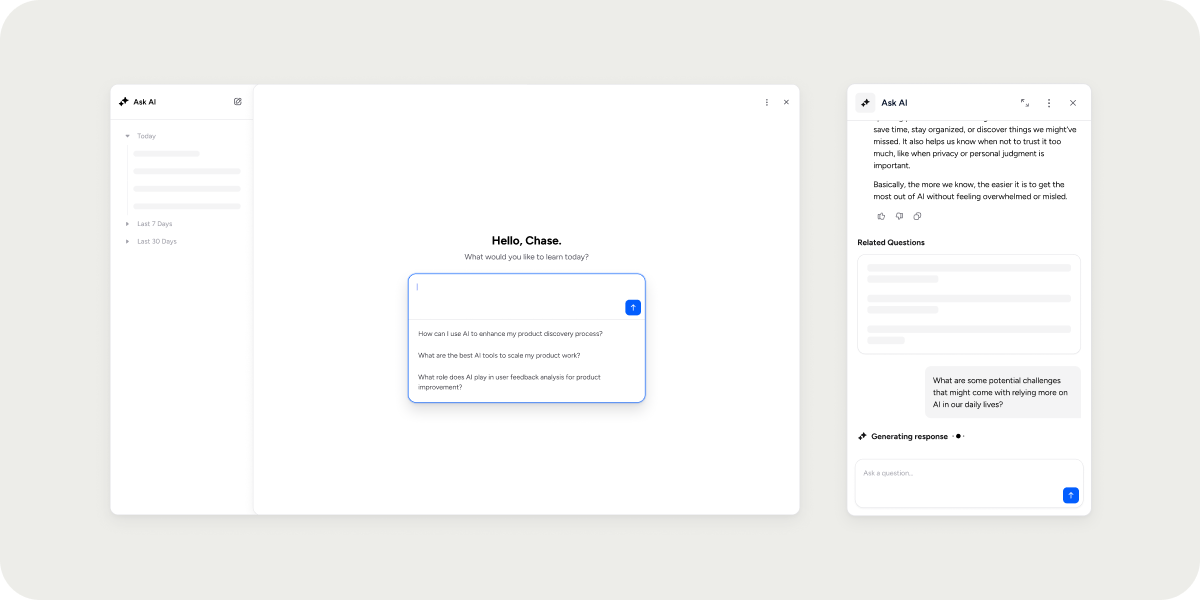
Personal AI coach that learners can chat with directly about your content
Give members instant, in-context answers powered by AI, enhancing engagement and driving deeper understanding. Answers are generated using the most up to date trusted sources that you define such as your course materials, videos, documents and more. Suggested prompts on lessons allow learners to dig deeper and meaningfully engage with content.

AI Video Enhancement
Auto-generate transcripts, summaries, and chapters from video content
Transform video content into accessible, searchable resources with AI-powered transcription, intelligent summarization, and automatic chapter generation. Makes video content more discoverable via AskAI and supports different learning preferences.
Revenue Growth
Monetization and business tools.

Guest Access
Enable external participants in community events
Flexible guest access system allowing external participants to join specific events without full membership. Perfect for public events, partner training, or community outreach programs.

Explore Page
Showcase learning products to members
Product discovery page that enables members to browse and enroll in available learning experiences. Filter by tags to drive course discovery and enrollment.

Payments & Checkout
Ability to charge for programs/memberships with Integrated Strip payment processing
Secure payment processing with Stripe integration, multiple payment methods, subscription billing, discount codes and automated invoicing. Support for split payments, tax calculation, and international transactions.

Revenue Analytics
Track program sales and financial performance
Comprehensive financial analytics tracking revenue streams, member conversion rates, lifetime value metrics, and subscription performance.

Applications & Registration
Custom application forms with approval workflows for exclusive programs
Application system with custom form builder. Perfect for selective programs and coaching cohorts.

Memberships
Harness the power of recurring revenue by selling various membership tiers
Flexible membership system supporting recurring revenue with tiered access controls, Stripe payment processing, discount code management, and automated billing. Create sustainable business models with varied access levels.
Member Management
Use intuitive tools to manage member subscriptions, renewals, and user roles
Comprehensive member administration with subscription management, automated renewals, role-based access control, and member lifecycle tracking. Streamline operations while maintaining detailed member records.
Learning Programs
Build and sell a variety of learning experiences to unlock revenue streams
Complete product management system for creating, pricing, and selling diverse learning experiences. Support cohort-based courses, self-paced programs, coaching packages, and event series with integrated payment processing.
Enterprise
Advanced features for large organizations.

API & Webhooks
Programmatic access and real-time data synchronization
Comprehensive API access for custom integrations and webhook support for real-time event notifications. Enable sophisticated automation and data synchronization with existing enterprise systems.

SAML SSO
Secure single sign-on integration for enterprise authentication
Enterprise-grade authentication with SAML SSO support for seamless integration with corporate identity management systems. Ensure security compliance while simplifying user access.

.png)


.png)






Launch your premium training academy
Start building your branded academy with AI-powered course creation tools that make it effortless to turn your expertise into transformative training programs.